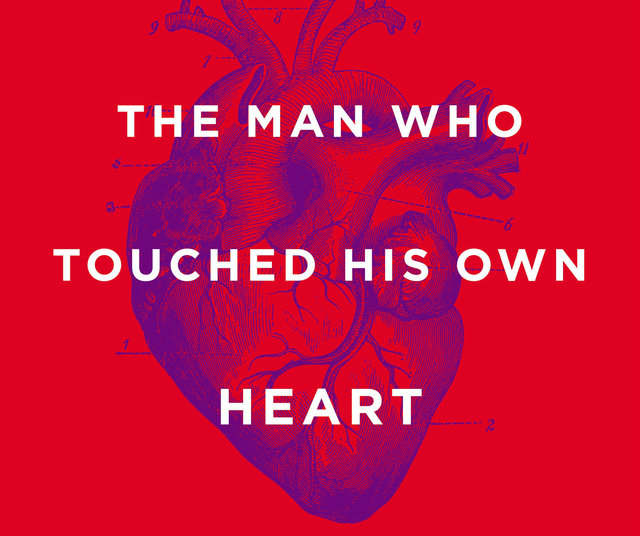
 The heart: vessel of love, number one killer of Americans, and medical enigma. In The Man Who Touched His Own Heart: True Tales of Science, Surgery, and Mystery (Little, Brown and Company, $27), Rob Dunn tells the heart’s story—from a gladiator doctor during the Roman Empire to modern treatments that practically laugh in nature’s face. Dunn will speak about and sign the book on Monday, December 7th from 6:45 to 8:45 p.m. at the Smithsonian’s S. Dillon Ripley Center.
Dunn manages to write both scientifically and poetically about what the heart means to humans. He confronts why hearts literally “break so often, more than any other part of our bodies.” The result is a suspenseful account of our biology and history that reads like a novel.
The book begins with a bar fight in 1893 during Chicago’s World’s Fair, where a young man ended up with a knife wound in the chest. This event led to one of the first African American doctors performing the first known heart surgery. Dunn describes how the heart functions in step with the procedure, and how “all of this is happening in you right now…in waves: contraction, relaxation.” The patient survived.
Dunn quickly rewinds several thousand years in time to put this surgery into context. While humans were long fascinated by the heart, it was viewed as “either functionally or philosophically untouchable” before 1893. But what made this organ so special? “Its movement conveyed meaning that could be felt anywhere in the body,” Dunn writes. “It beat out a story, but what was the heart carrying on about?”
B.C.E., Christians said the heart was the home of God, who wrote notes about you on its inner walls. Egyptians saw it as the home of the soul and consciousness. Trailblazers such as Galen, doctor to the gladiators; William Harvey, the Galileo of blood circulation; and Leonardo da Vinci saw and documented the heart for themselves. And Dr. Werner Forssmann would be “the man who touched his own heart” in 1929 when, based on an experiment in horses, he inserted a urinary catheter into his heart in order to take an X-ray.
Despite how far we’ve come, there is still much to learn about the old ticker. Heart disease kills one in three adults in the United States and is, for a range of reasons, difficult to predict. The book describes studies in chimpanzees and other animals that continue to try. However, Dunn writes that “our modern heart problems are not simply the result of eating the wrong foods but of living long lives in bodies built for shorter ones.”
Dunn is a biologist and writer in the Department of Biological Sciences at North Carolina State University. His writing has appeared in many science magazines, and The Man Who Touched His Own Heart is his third book, following Every Living Thing: Man’s Obsessive Quest to Catalog Life, from Nanobacteria to New Monkeys (2008) and The Wild Life of Our Bodies: Predators, Parasites, and Partners That Shape Who We Are Today (2011).
Tickets are $42 for non-Smithsonian members and $30 for members, and are available here. Books for signing will be sold at the event.