 Photo by Mike
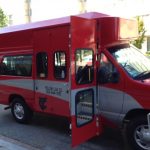
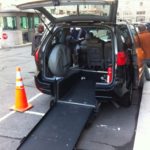
Starting today, Uber is offering wheels for wheelchairs.
“We are proud to announce that starting this afternoon, D.C. riders requiring wheelchair accessible vehicles will have a new on-demand option to get around town,” says Kaitlin Durkosh, Uber spokesperson.
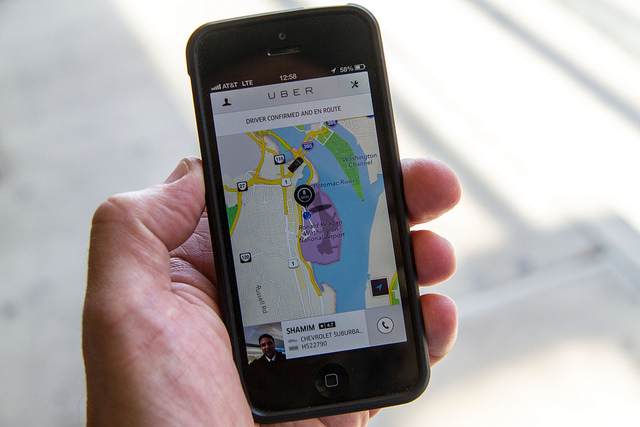
Dubbed uberTAXI ‘WHEELCHAIR,’ the new service can be accessed by using the promo code DCWHEELCHAIR. Riders should then toggle to the uberTAXI option, select ‘WHEELCHAIR,’ confirm, and you’re good to go.
As recently as the summer, disability rights advocates were criticizing Uber’s lack of wheelchair accessible vehicles and the legal gray area regarding whether Uber must comply with the American Disabilities Act.
But the problem wasn’t only among transportation apps like Uber. In 2013, WUSA reporter Russ Ptacek discovered that nearly a full half of taxicabs tested in a sting operation either overcharged, discharged at the wrong location, or altogether ignored customers with disabilities.
Uber’s service charges the standard taxi meter rate, plus the standard uberTAXI $2 booking fee, according to a release. Uber will reimburse riders requesting wheelchair accessible vehicles for the $2 booking fee through January 31, 2016
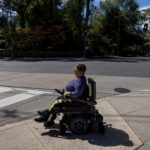
D’Arcee Neal, from the D.C. area, was the first to use the service.
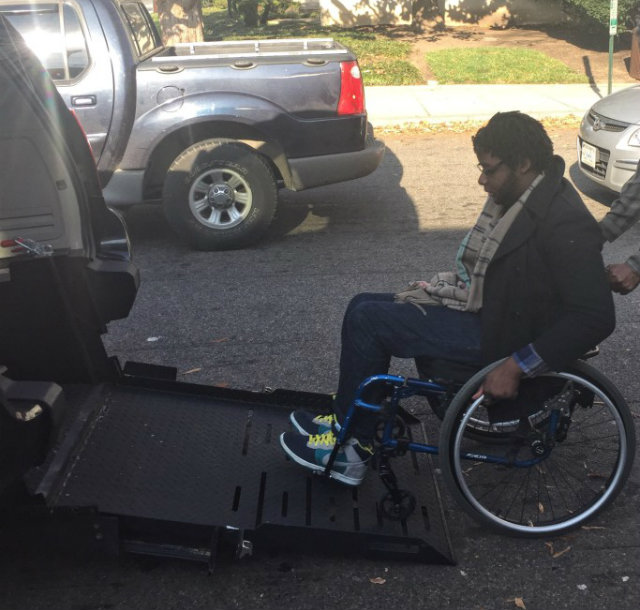 Photo courtesy of Uber
“Before today, people requiring wheelchair accessible vehicles lacked the freedom to move around D.C. at their leisure,” said Tony Coehlo, former congressman and co-author of the Americans With Disabilities Act in the release. “By leveraging the existing wheelchair accessible taxis in the city, more people can get a ride when they need one by simply pressing a button.”
In October, WMATA made headway in improving the quality of transit for people with disabilities. In fear of his service dog being injured, Ryan Honick filed reports about not being able to use emergency exits at Metro stations. Instead, he was often directed to ADA gates. “The gate assumes it can shut once I’ve passed through, and my pup who is behind me gets scared. If that gate clips him—like it has—it can lead to phobias,” Honick told DCist. “And if he ends up being scared of the Metro, I can’t get to work.”
The week after the DCist article, Metro changed its policy to allow passengers with service dogs to use station emergency gates.