 Photo by Clif Burns
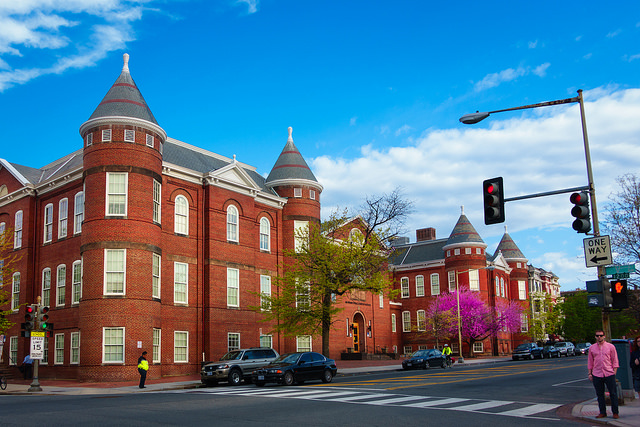
As new developments and residents change D.C.’s landscape, neighborhoods stand the chance of losing their historical identities. A place that often remains, however, is a neighborhood’s school.
Sure, they’re remodeled, but neighborhood schools ultimately hold keys to communities’ roots, says Jennifer Harris, who moved to Hill East in 2011, interested in learning more about her new community. When she went to Payne Elementary School to vote in 2014, she found that schools are gathering places for new and existing residents alike.
Earlier this week, Harris launched Story of Our Schools—a program where D.C. Public School students can explore the histories of their schools and communities, with the end goal of creating visual exhibits. The program’s pilot began at Capitol Hill Montessori at Logan in November with an afterschool group called Thinking Like A Historian—The Logan Project.
Participating students can craft the stories they tell—whether they highlight the school’s alumni, explore the school’s namesake, or delve into sociological changes in the school’s community.
The pilot group has 26 students ranging from first to eighth grade. “If you can read, you can do this project because it’s mostly research-based,” says Harris who attends the group’s weekly meetings to take photos. “It’s fun for me to watch the kids really interact with each other even though they’re at different levels.”
The D.C. Public School System has partially supported the project. “They’ve given us approval and are also providing funding for field trips, curriculum development, and materials,” Harris says.
Field trip destinations might include the Special Collections Research Center at George Washington University or the Historical Society of Washington, or visiting longtime residents of a neighborhood to ask what the community was like decades ago.
Participants will also receive guidance from dedicated teachers, parents, community leaders, curators, and exhibit designers. The pilot participants will continue to research during the 2015-2016 school year.
After students collect the information, they will create the exhibit using things like wall-sized photo murals, graphics, and artifact cases with pennants, trophies, athletic gear, or art projects. Students can also include video and audio components to share oral histories, and interactive elements like flip-books or touch-screen computer modules.
The program’s first exhibit will be installed in Capitol Hill Montessori’s lobby over the summer with a Fall 2016 opening date.
Meanwhile, the Story of Our Schools team is soliciting public and private funding to expand to more schools as “exhibits are pretty expensive,” Harris says.
In the end, the exhibits will allow longtime District residents to take pride in their contributions to their communities and newcomers to learn more about the spaces they inhabit, Harris says.