 Rachel Sadon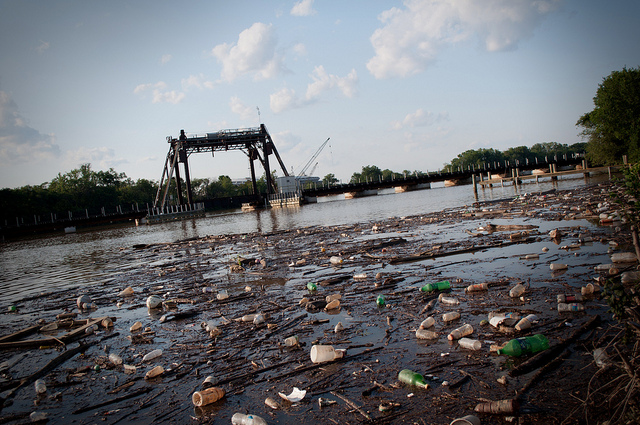
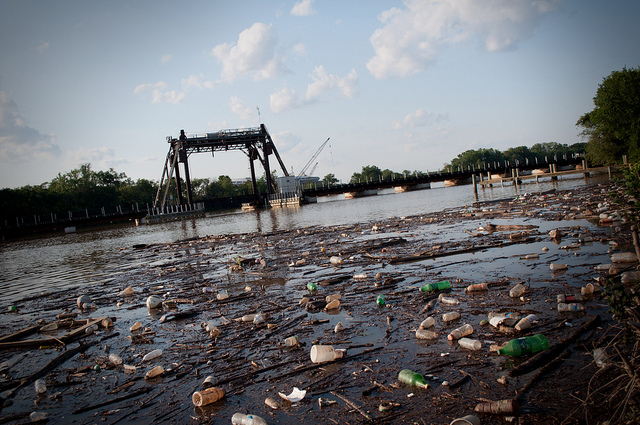 (Photo by John Cochran)
A long-awaited and well-publicized ban on styrofoam polystyrene foam food containers finally arrives in D.C. on New Years Day. But what many people don’t realize is that a similar ban also goes into effect on the same day in Montgomery County, and Prince George’s County will implement its own ban beginning in July. Combined, that makes for more than 2.5 million people who will get their takeout in alternative containers.
Activists have dubbed it a foam trifecta.
Mayor Vince Gray signed the Sustainable D.C. Omnibus Act of 2014 into law last July with the Anacostia River as a picturesque backdrop. Before signing, Gray also announced that a new leadership council would be tasked with leading the effort to clean up the body of water. “This is the first time in history the District government is taking the lead in researching and cleaning up the Anacostia River,” Gray said.
A big part of that effort is getting rid of polystyrene foam, which accounts for as much as 40 percent of the trash in the Anacostia. In addition to the sheer volume, toxic chemicals can be absorbed by the foam particles and harm wildlife.
Under the D.C. law, all food service products made of expanded polystyrene that are meant for one-time use are banned, including plates, trays, and cups. Exceptions to the ban include things that were packaged outside of the District, foam products purchased for home use, and materials used to package raw meat, fish, or poultry. The city has also compiled a handy list of vetted companies that sell alternatives to foam containers.
The District’s efforts to restore the river are bolstered by very similar laws passed in the Maryland suburbs—the home of 80 percent of the Anacostia and its tributaries.
After the District introduced the foam ban, activists pressed Montgomery and Prince George’s Counties to do the same. Like the efforts to simultaneously hike the minimum wage, their respective councils saw the benefits of a regional collaboration.
“There was concern about how much these alternative products are going to cost the restaurants. But once you get one big jurisdiction, that’s going to be a huge demand for these alternatives and drive the price down,” says Julie Lawson, the director of Trash Free Maryland. “When you get three, that makes it that much more effective.”
The efforts follow similar legislation passed in several West Coast cities (including Portland, San Francisco, and Seattle), as well as New York City—though a judge overturned it in October, amid vigorous opposition from the restaurant industry.
There are some subtle differences between the three laws—the laws in D.C. and Prince George’s County will be enforced with inspections by their respective departments of the environment, while Montgomery’s will rely on a consumer tip line, for example—but their end goals are the same. And, advocates say, they’ve already had some successes.
“We’re already seeing better offerings, especially of compostable packaging,” Lawson says. “Companies are carrying more, prices are going down.”
Starting in 2017, restaurants in D.C. and Montgomery County will be required to only use recyclable or compostable containers.
“Nationally, people might know D.C. is sustainable with green roofs and the bag law. But they don’t necessarily think of this region [as green],” Lawson says. That might change, though, with initiatives like these. “It’s a powerful population.”