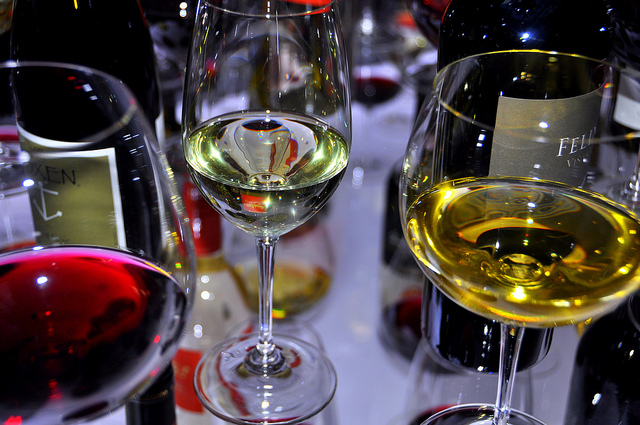
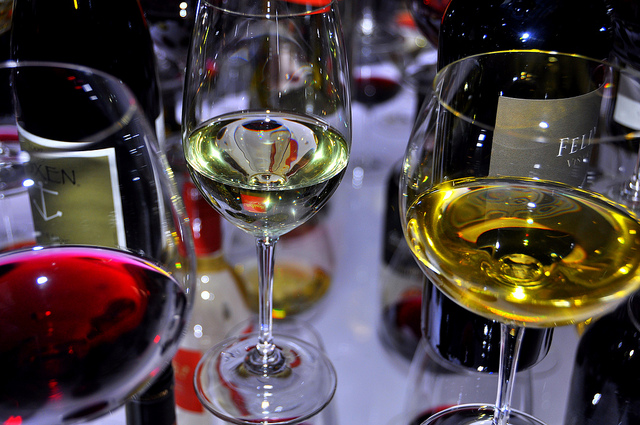
 Photo by Kristen Fletcher.
D.C. is an expensive place to live, and feeding yourself is no exception. Follow Capital Cheapskate each month for a look at the cost side of the ledger, and for tips to enjoy the city’s burgeoning dining scene without breaking the bank.
With New Year’s Eve upon us, I’d like to discuss an important issue: boozing responsibly. And by “responsibly,” I mean on a budget, of course.
Whether you’re attending a blowout bash in your sparkliest sequined attire, joining a low-key dinner party, or rocking the sweatpants on your couch tonight (or any other night), there’s a good chance you may be stopping at your local wine shop ahead of time.
Sure, there are some who love roaming the aisles for a bottle with just the right scent of “freshly cut garden hose“—and I salute their far more advanced palates. The rest of us, meanwhile, can be found in a crouch down by the bottom shelves, trying to find the cheapest acceptable option—white, red or somewhere in between—for our hard-earned dollars. When in doubt, I go for the label with the funny animal on it.
But armed with just a little more information, even the penny pinchers among us can drink pretty well—or at least better than before. Check out some tips below from a few D.C. wine experts for picking out the best vino and bubbly for your buck.
And whatever your plans tonight, let’s raise a glass to full wallets and full bellies in the new year!
Take yourself off the beaten path.
One of the best ways to save is to zig when everyone else is zagging. That means being smart about where your wine is made.
“I look for some place that’s a little less famous,” says Michael Warner, co-owner of wine boutique DCanter in Eastern Market. “Napa Valley has really great wines, but you’re also going to be paying for the name Napa Valley.”
He suggests, for example, going for a cabernet sauvignon from Stellenbosch region, which is sometimes referred to as the Napa Valley of South Africa.
Similarly, looking for options tied to specific areas within a larger wine locale can be a wise move. Bottles labelled as being from Santa Barbara County or Sonoma are “going to be more expressive of the place than being able to source your grapes from anywhere in California,” Warner adds.
Jay Youmans, educational director and owner of the Capital Wine School, takes a similar approach when seeking out a good deal.
“Look for unusual grapes from familiar places and familiar grapes from unusual places,” he advises.
So, instead of going for the ever-popular cab sav from California, consider wines made with petit sirah grapes, which are also grown in the state.
Some of his other low-cost favorites? A chenin blanc white wine from Pine Ridge Vineyards in California, which sells for roughly $10 in D.C., and a garnacha red wine from Bodegas Borsao in Spain that can be found locally for $8-9.
Mix it up.
Wine blends that use several varieties of grapes, especially red blends, are some of the most popular choices on the market today—and for good reason.
“If there’s only one grape, especially when you get into the lower price points, it’s difficult to find a grape that’s really expressive and that’s going to give you a really great experience,” warns Warner.
Blends, on the other hand, add diversity and depth to your drink of choice.
Warner recommends “The Curator,” a popular white blend from Badenhorst Family Vineyards that sells for $14 as well as two $15 red blends: the Viña Siegel 1234 Reserve Red and the Cave la Vinsobres Ambre.
Bubbly by any other name.
First things first when it comes to selecting an affordable champagne: stay away from the Champagne region of France entirely. Sparkling wine is bound to be much kinder on your wallet.
For those still in the market for something French, try crémant sparkling wines, which are made like champagne, just outside of the designated region.
Spanish cavas, particularly those with the words “reserva” or “gran reserva” on the label are another way to go if you want quality without the big price tag.
Thad Parsons, general manager at Crystal City Wine Shop, recommends the Bohigas Brut Reserva Cava, which goes for about $16.
Youmans, meanwhile, recommends bottles from Juvé y Camps, a vineyard in Spain, that sell for as little as $14 or $15.
Still, he adds that for many drinkers “the best value in sparkling wine today is prosecco,” which hails from Italy. Because champagnes (and cavas) are aged longer with yeast, they tend to have a “toasty” or “biscuity” flavor.
“Some people may not like that heavier, yeasty, richer character,” Youmans says. “Champagne is more prestigious, but if you pour both, often people prefer the prosecco.”
One option: Zardetto “Z” prosecco, which goes for about $11 or $12.
When in doubt, seek help.
If you’re still totally baffled when it comes to picking up a bottle, don’t be shy about asking the clerks for suggestions, even if you’re trying to keep your spending down.
“In a really good bottle shop, the staff will have tasted a good portion of what’s on the shelves at any one time—and that resource is invaluable,” says Parsons.
He recommends a Rocca Bella Negroamaro red wine that sells in his shop for about $12—”a wonderful red.”
Some stores even have a “staff picks” section, and many send email newsletters that advertise special deals for readers. Worth considering if there’s a neighborhood spot or two that, let’s face it, you know you hit frequently.
Buy in bulk.
Found a bottle you really like? This is a novel suggestion, but make sure you write it down!
Depending on how often you’re imbibing, investing in a case (12 bottles) of your favorite selections—either for a party or for your own private supply—is almost always a cost-friendly way to go. Youmans also recommends checking out wine-searcher.com, a wine search engine, to get a sense for pricing and where you might score the best deals for individual bottles as well as cases.
“Sometimes you’ll find stores locally, but it’s also a good way to check what the lowest price in the country is, so you can gauge whether you’re getting a good deal or not,” he says.
Don’t forget to ask shops for a bulk discount on cases—customers should expect 10 percent off or more for stocking up, Costco-style.