Rachel Kurzius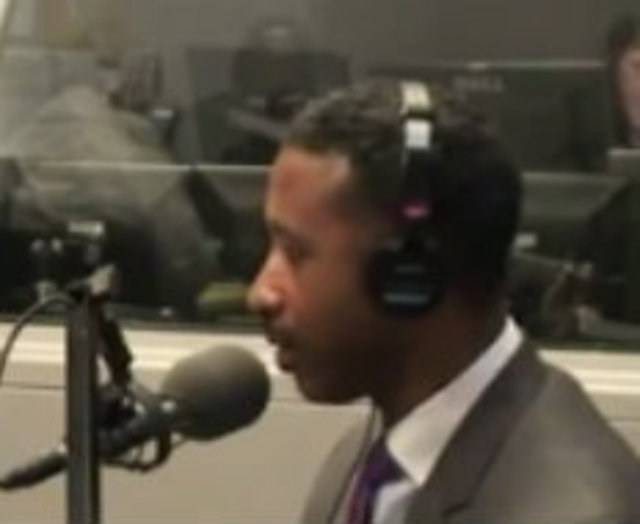
Try as they might, Kojo Nnamdi and Tom Sherwood were unable to get Ward 5 Councilmember Kenyan McDuffie to criticize Mayor Muriel Bowser during his interview on the Politics Hour of the Kojo Nnamdi Show.
In her tour in support of her crime bill earlier this week, the mayor blamed McDuffie, as the chair of the Council Judiciary Committee, for not moving more swiftly on her Safer, Stronger D.C. legislation and on more permanent legislation governing the use of marijuana in private clubs.
“I’m not going to engage in finger-pointing because it’s simply not productive,” McDuffie said in the interview.
But Tom Sherwood, Politics Hour analyst and NBC 4 reporter, said that perhaps the councilmember should fight fire with fire. “This friction with the mayor is very aggressive on their side,” Sherwood said.
McDuffie demurred, saying that he wouldn’t respond to Bowser’s allegations in the press. “We’ve got too much work to do.”
That didn’t get Sherwood and, to a lesser degree, Nnamdi, to ease up on that line of questioning. “I’m trying to provoke you,” Sherwood admitted at one point in the interview.
“I know, but I’m not going to take the bait,” McDuffie responded.
“You’re obviously also not getting the kind of cooperation from the mayor that you would like to get. Why do you think that is happening?” Nnamdi asked.
“I’ve had conversations with the mayor that have really gone well,” McDuffie answered, providing the example of the police body-worn camera legislation, which Bowser signed into law right before the new year. “Although it took us nine months to get to that place where I initially started out, at the end of the day we came up with one of the most progressive and comprehensive and thorough body-worn camera programs in the country.”
He added that body-worn cameras “are not, by themselves, going to be able to account for what has historically been a really contentious, almost adversarial, relationship between law enforcement and communities of color across the country.”
McDuffie did address the mayor’s criticism that his committee was dragging its feet on the crime bill. “We never stopped working on the crime bill,” he said, “But there were parts of the bill that were not supported by data.” McDuffie said that D.C. Police Chief Cathy Lanier had not met with him about his questions, and he was still waiting for data. For instance, he wants to see whether stiffening penalties for Metro crimes worked in other jurisdictions.
“It’s not just simply about arresting our way out of these problems,” McDuffie said.
Nnamdi wondered whether waiting for data before legislating gave the impression that McDuffie wasn’t fully appreciating the urgency of the crime problem in the District.
“I see these as some of the biggest priorities” McDuffie said. “I want to solve these problems, but I don’t want to do it in a way that is going to contribute to mass incarceration, which has proven to be discredited over the years when you resort to these tough-on-crime policies…I’m not going to resort to these knee-jerk policies.”
Chuck Thies, former Mayor Vincent Gray’s ally, appreciated the way McDuffie handled the interrogation.
On @kojoshow, Councilmember @CM_McDuffie doing good job handling grilling by @tomsherwood and Kojo. Good training for future mayoral bid.
— Chuck Thies (@ChuckThies) January 8, 2016
Perhaps the most significant news came at the start of the interview, though, when Nnamdi asked if the councilmember was going to announce his participation in Sunday’s No-Pants Metro ride.
“I had not planned to,” McDuffie said.
But forecasting the tough questioning McDuffie would face throughout the interview, Nnamdi responded, “You can always change your plans.”