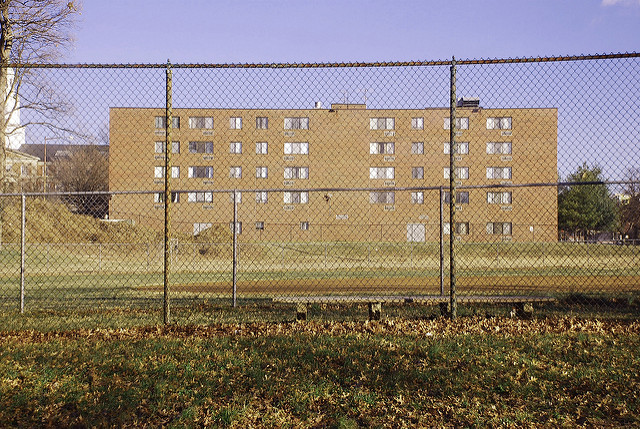
 Photo by Diane Pappafotis
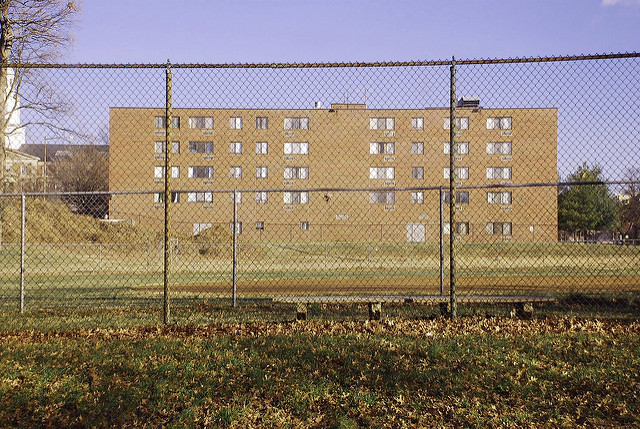
As D.C.’s public housing market struggles to keep up with the demand for affordability, more than half of the city’s public housing projects need major renovations, according to a report released today by the D.C. Fiscal Policy Institute.
Over 6,500 of D.C.’s public housing units—78 percent—need significant improvements, with high price tags to accompany them, according to the report. Upgrades and replacements such as heating and cooling systems, roofs, plumbing, and wire, are estimated at about $1.3 billion.
And, on average, the DC Housing Authority gets about 83 to 86 percent of what’s needed to operate and maintain units. Last year, that came to about $14 million for capital improvements from the federal government, “and much of that went to filling gaps in the agency’s budget,” the report reads.
Several public housing properties in the District are slated for renovations that would yield 2,000 housing units: Barry Farm (Ward 8), Greenleaf Gardens (Ward 6), Kenilworth Courts (Ward 7), Lincoln Heights/Richardson Dwellings (Ward 7), and Park Morton (Ward 1). Three of the properties are being redeveloped by the New Communities Initiative, which only completed 305 units when the group released its first annual report in 2014 (causing the iniative continued criticism). But while some stalled projects are moving forward, challenges still persist for the group.
When/if those projects reach full completion, research shows that some low-income families still suffer. A primary issue is that residents who are displaced during the construction process (which can take several years) are stripped of the support system of neighbors and service providers. In addition, some of those residents may not come back after the remodeling process. The report cites two national studies of public housing redevelopments which found that “14 percent to 18 percent of relocated households were no longer living in subsidized housing two to seven years after redevelopment began.” And most of those families reported “having trouble paying the rent.”
The report outlines a number of suggested improvements that the District can take protect the over 7,300 households who rely on public housing. Primarily, these households include seniors and people with disabilities living on “modest fixed incomes” and families with children “near the poverty line,” according to the report.