Rachel Kurzius
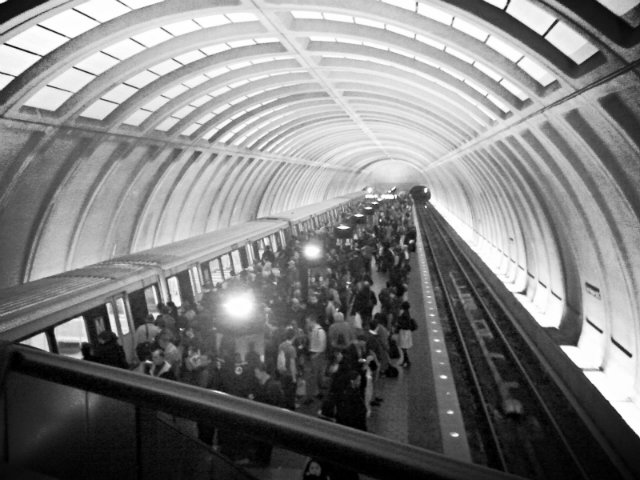 Photo by anokarina.
Metro is facing a decline in ridership—weekday train riders are at “levels not seen since 2004″—and says its own unpredictability and delays are to blame.
Total transit ridership decreased by 9.5 million since last year, amounting to 5.4 percent, according to the second quarter financial update for fiscal year 2016, which the Metro Board of Directors will discuss at Thursday’s meeting.
Passenger fares and parking fees are $18 million short of the projected budget so far.
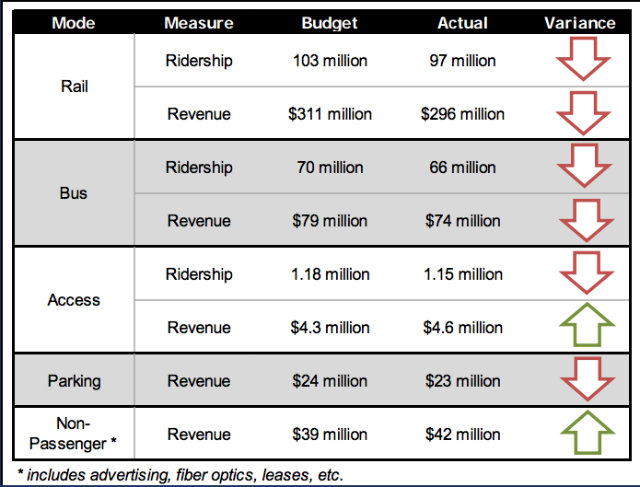 Image courtesy of Metro.
Rail ridership sank the most, declining 6.1 percent on weekdays and a whopping 12 percent on weekends when compared to the previous year. Average Saturday ridership was down 17 percent if the Million Man March bump in October is excluded. “The ridership declines have impacted nearly all stations, time periods and trip types and cannot be attributed to poor weather,” the report says, though notes that limited service on weekends due to track work and rebuilding contributed to the decline.
Metro knows that its riders are unhappy—a survey this fall found that customer satisfaction with rail service fell to 67 percent from 82 percent in the first three quarters of 2015. It attributed the drop to the “impact less reliable service is having on customer experience.”
This new report used the time between riders tapped in and out for their morning commutes to determine that median travel times, the unpredictability of travel times, and frequency of severe delays have all increased, meaning “that riders have been forced to budget more travel time to avoid being late.” Metro surmises that instead, many of them are finding other means of travel.
This drop in rail usage may be affecting bus ridership as well. In November, “bus-to-rail transfers were down more than bus-only trips (8 percent versus 6 percent).” However, Metro isn’t blaming all of its decreases in bus ridership on train service. “Other bus service providers in the region are also losing ridership, and the decline in the outlying areas is
greater than on Metrobus,” the report says.
Both Metro General Manager Paul Wiedefeld and new Board of Directors Chair Jack Evans have said that they want to make reliability and safety priorities for the transit system. A report from Metro Transit Police last week said that crime on Metro trains increased by 8 percent from 2014 to 2015.