 Rachel Sadon
 Via Shutterstock.
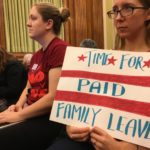
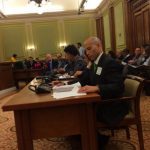
More than 140 people are slated to testify this afternoon at the third hearing for a pioneering paid family leave bill that was introduced in October.
This afternoon’s hearing is meant to air opinions from the public, whereas the previous two featured mostly testimony from advocates on both sides, government officials and experts. Those discussions have been muddled by conflicting financial analyses which forecast very different cost estimates.
As proposed, the bill creates a whole new system for paid leave. Similar to unemployment insurance, the city would set up and administer a fund that all private employers would pay into at a sliding scale pegged to salary. When an employee has a new child or needs to care for an ailing family member, they would file a claim directly from that fund.
Earlier this week, D.C. Council Chairman Phil Mendelson circulated a “discussion draft” of the bill that make several major changes to the original legislation. Among the key updates:
- Changes it from 16 weeks of paid leave to 12 weeks
- Revises the definition of family member
- Lowers the payout from 100 percent to 90 percent for those who earn up to around $50,000 a year (minimum wage workers would receive 100 percent), and lowers the maximum payout to $1,500 a week beyond that
- Makes a sliding scale for people who have been employed less than a year
Advocates have pushed back on the changes. “We applaud the Chairman for taking a step in the right direction to help ease pressures facing low-wage workers in the District. However, we have concerns that corporate lobbyists will continue to try to weaken the bill,” said Jaime Contreras, Vice President of SEIU 32BJ Capital Area District.
Adds Joanna Blotner, campaign manager for the D.C. Paid Family Leave Coalition, in a statement: “The revised draft provides a strong benefit for the people it covers—but it also excludes far too many people who live in the District.”
Meanwhile, Mayor Muriel Bowser remained cautious about the proposal and expressed skepticism about a quick timeline for getting such an ambitious program implemented. “220 people run our unemployment program and I think your estimate is that many more people will use this. What you’re talking about is standing up almost another agency in the government,” she said at a Council breakfast on Tuesday. “We want a successful program that’s going to work, but we have to be at the table.”
Supporters say that more than two-thirds of those scheduled to testify are in favor of the bill. And several recent polls indicate strong support for paid family leave in the District. A Washington Post poll conducted in November found that 82 percent of respondents are in support of the bill in it’s original form, with 15 percent opposed and 2 percent expressing no opinions. A Public Policy Polling survey conducted in October found just 5 percent of people “strongly oppose” the bill, 7 percent “somewhat oppose,” and 6 percent were unsure; more than half of the respondents (56 percent) said they “strongly support” and another quarter “somewhat support” it.
The public hearing is scheduled for 4:00 pm at the Wilson Building.