
By Pat Padua and Mark Lieberman
Now in its 26th year, the Washington Jewish Film Festival is bigger than ever, with over 150 screenings and events in 12 days. Highlights include closing night with Natalie Portman, introducing her feature length directorial debut, A Tale of Love and Darkness; an opening night presentation of Baba Joon, Israel’s entry for the Best Foreign Language Film Oscar; and an homage to veteran actor Armin Mueller-Stahl (The Game, Knight of Cups), who will be honored with the 2016 WJFF Visionary Award. DCist staff previewed a small fraction of the offerings in what looks to be a strong festival.
—

This hour-long documentary looks at the unlikely success of an Egyptian movie-of-the-week on Israeli television. Directors Eyal Sagui Bizawe and Sara Tsifroni interviewed Israeli families who looked forward to these programs that transcended cultural differences, noting that Egyptian films with Zionist villains were naturally excluded. The filmmakers also talked to some of the men who facilitated this unusual arrangement, and who are still reluctant to explain how they got their weekly supply of Egyptian melodramas and musicals. With such a fascinating premise, the film archivist in me is happy to look the other way when he sees 16mm film prints handled without archival white gloves. Most viewers will have no such qualms, and may even wish the DC area had an Egyptian movie-of-the-week program of our own.
Watch the trailer.
Saturday, February 27 at 12:30 p.m. at Landmark E Street Cinema and Sunday, February 28 at 5:00 p.m. at the DCJCC
—

The best-known films of the Czech New Wave range from the avant-garde feminist Benny Hill (Daisies) to the beautifully dreamlike (Valerie and her Week of Wonders). Co-presented with Spooky Fest DC, the festival includes a selection of WJFF classics, including a 35mm print of director Juraj Herz ‘s darkly expressionistic film. The craftsman protagonist lives in Nazi-occupied Prague and believes that cremating bodies frees the souls of the departed. Based on a novel by Ladislav Fuks, the movie was banned shortly after its release and was not released in its native land until 1989. The Cremator‘s morbid subject doesn’t quite sustain its drama for the length of the film, but there are some unforgettable images here.
Watch the trailer.
Friday, February 26 at 1 p.m. at the DCJCC and Sunday, February 28 at 12:30 p.m. at the AFI Silver.
—
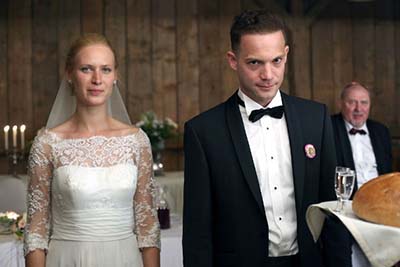
On his wedding night, a young groom (Itay Tiran) finds human bones on his bride’s family farm and becomes possessed by the spirit of a jilted bride. This Polish-Israeli thriller is a moody variation on the dybbuk, and it isn’t the only film in this year’s festival to tackle that Jewish legend (also see The Dybbuk, a Tale of Wandering Souls, which we didn’t get to preview). Director Marcin Wrona and cinematographer Pawel Flis establish a sinister atmosphere, but the characters are not fully developed and the horror is more creepy than frightening. Still, the movie comes off like a strange, unsettled marriage between My Big Fat Greek Wedding and Carnival of Souls.
Watch the trailer.
Thursday, February 25 at 8:45 p.m. at Landmark E Street Cinema and Tuesday, March 1 at 9:15 p.m. at the AFI Silver.
—
 Einstein in the Holy Land
Albert Einstein is in the news again thanks to NASA’s recent discovery of sound waves in black holes, essentially confirming the theory of relativity. This documentary exposes how little of Einstein’s long and complex life is widely known, at least in mainstream American culture. Through talking heads, archival footage, and maps, the film documents the scientist’s 1932 visit to Palestine, where he stayed for twelve days.The filmmakers unearthed the handwritten diary that Einstein maintained during his visit and mined it for insights about Einstein and the public’s perception of him. Jerusalem welcomed Einstein with open arms, as the eccentric scientist was among the most popular Jews of his era. And Einstein himself took to the city, despite personality traits that obstructed his ability to make meaningful social connections while there. Unfortunately, science doesn’t come up much during the film’s sixty-minute runtime. Thankfully, the personal anecdotes and observations offer something almost as fulfilling: a look at the man behind ideas that informed the very nature of scientific inquiry.
Watch the trailer.
Saturday, February 27 at 3:00 p.m. at Landmark West End Cinema and Tuesday, March 1 at 3:30 p.m. at the DCJCC.
—
 The Hebrew Superhero
This straightforward, thorough exploration of the evolution of Hebrew comics eschews voiceovers, unfolding in interviews cut with delicately animated footage of comics appearing to spring from the page as if directly from the minds of the artists. Directors Shaul Betser and Asaf Galay linger on artists’ descriptions of their mental states and cultural positions at the time they produced their influential art. They also frame the story in terms nearly every American audience member will understand, drawing a contrast between the seminal superheroes that make up the backbone of American comics and the far less heroic figures in the annals of Hebrew comic history. Put aside the idea that Israeli comics have never been interested in heroism as a unifying subject. At a tight 57 minutes, the directors stay focused, seasoning their film with enough amusing anecdotes and colorful personalities to make this consistently entertaining and thoughtful. Comic book obsessives interested in seeing their favorite subject tackled at a new angle will find much to enjoy here.
Thursday, February 25 at 7:15 p.m. at the AFI Silver, Tuesday, March 1 at 6:30 p.m. at Landmark Bethesda Row and Thursday, March 3 at 8:30 p.m. at Landmark E Street Cinema.
—

If you had a dollar for every time Michael Solomonov took a bite of food and uttered a grunt of approval in this film, you’d be rich by the halfway point. Writer-director Roger Sherman doesn’t overcome the inherent obstacle of food documentaries. Unless you’ve been there before, you can only judge the taste of the foods on display by the reactions of the privileged few onscreen who actually get to experience it. Still, even without translating that sensory experience, the film has food for thought to spare. As the title suggests, Solomonov spends most of the film hopping from restaurant to restaurant throughout Israel, gathering a sense of how the culinary scene has developed and what separates it from other countries’ offerings. In conversations with chefs and restaurant owners, he covers a wide spectrum of opinions, coming to the ambiguous but nuanced conclusion that Israeli food culture is comprised of several smaller subcultures. When Solomonov periodically hijacks the movie’s spirit of culinary exploration for brief forays into personal biography, the movie grinds to a halt. What’s unique here is the food, full of color and texture, both familiar and foreign. Don’t watch this one on an empty stomach — unless you’ve got a heaping plate of Israeli delicacies waiting for you when you finish. –Mark Lieberman
Watch the trailer.
Sunday, February 28 at 5:15 pm at Landmark E Street Cinema, Tuesday, March 1 at 8:15 p.m. at Landmark Bethesda Row Cinema and Friday, March 4 at 12:30 p.m. at the DCJCC.
—

Director Edgar G. Ulmer is best known for B-movies like the classic film noir Detour, but he also made a number of shtetl films, low-budget melodramas. In this 1939 film, a crippled young man and his blind paramour dream of leaving the shtetl for the big city of Odessa. The film’s production values make Detour look like something out of Industrial Light and Magic, and the melodramatic script and broad performances are terribly dated, but this is a rare window into a world far from the Hollywood norm, and like its hopeful lovers, the film is caught between old and modern times. As part of its WJFF classics series, the DCJCC will be screening a restored 35mm print of this rarely seen title.
Watch a clip.
Tuesday, March 1 at 6:15 p.m. at the DCJCC.
—
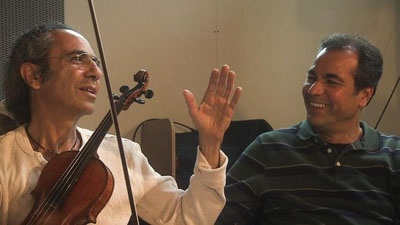 Yair Dalal and Majid Shokor
On the Banks of the Tigris: The Hidden Story of Iraqi Music
When Iraqi Muslim Majik Shokor travels to Tel Aviv, he chats with a cab driver who seems wary of his visit to Israel. But Shokor, who was forced to leave Baghdad after participating in the uprising against Saddam Hussein, is on a personal mission of cultural diplomacy. Director Marsha Emerman joins Shokor on a journey that, much like that of Arabic Movie, finds peace in the middle of a dire conflict through the unifying interest of art. Shokor’s journey began when he discovered that a lot of the Iraqi music he grew up listening to was performed by Jewish musicians. These musicians were not only forced to leave their homeland, but their names were removed from the many popular songs they wrote. The filmmakers move from Australia, where Shokor now lives, to Europe, Israel, and Iraq, and close with a London concert that reunites musicians long estranged from their native land. On the Banks of the Tigris doesn’t yet have a U.S. distributor, so this may be your only chance to see this inspiring music documentary. But I’m hoping the movie gains momentum on the festival circuit—and that a soundtrack album becomes available.
Watch the trailer.
Thursday, February 25 at 8:45 p.m. at Landmark Bethesda Row, Sunday, February 28 at 7:00 p.m. at the DCJCC and Monday, February 29 at 8:30 p.m. at Landmark West End Cinema
—

The emotional beats of this French-language drama will be familiar to anyone who’s seen Dead Poets Society or any movie about a teacher who molds underperforming students into bright, curious academics. But the subject matter is specific and thoughtful enough to outweigh the formulaic structure. Mrs. Gueguen enters her high school history class into a local contest with a Holocaust theme to rally the students’ competitive spirit and drive for intellectual stimulation. Spirited performances from many of the movie’s young cast members make the film palatable even if you see its plot twists coming a mile away. It’s moving to watch as children, most of whom haven’t been exposed to much Jewish culture, discover the brutality of the Holocaust. Gueguen is played with gruff modesty by Ariane Ascaride, who makes the most of the teacher’s authoritative diction and reserved gestures. Director Marie-Castille Mention-Schaar and screenwriters Ahmed Drame make one false step in the movie’s final scene, which places the emphasis on Mrs. Gueguen when it should be about the teenagers, whose growth is the movie’s most delicate and poignant achievement. As a story about the emotional power of an historical event on a group of unsuspecting teenagers, though, Once in a Lifetime has much to offer.
Watch the trailer.
Saturday, February 27 at 4:15 pm at Landmark E Street Cinema, Tuesday, March 1 at 8:45 p.m. at Landmark Bethesda Row and Thursday, March 3 at 8:45 p.m. at the DCJCC.
—
 Portrait of a Serial Monogamist
This romantic comedy is set in Toronto — not “Toronto New York” or “Toronto Chicago,” as its main character and fourth-wall-shattering narrator Elsie Neufield (Diane Flacks) points out in one of its few inspired jokes, a jab at the Hollywood tendency to let the anonymous Canadian city stand in for recognizable American cities. Elsie opens the film lamenting the difficulty of executing a successful breakup, and spends the rest of the movie struggling with singlehood and trying to stop it, all while bantering with friends and staying afloat as a local TV producer. Filmmakers John Mitchell and Christina Zeidler have a lot on their minds: journalism, music, sex, dating, love, pets, friendships, Canada, Judaism. But execution doesn’t match ambition, with uninspired dialogue and voiceovers that undermine the story instead of enhancing it. The tone wobbles from verbal comedy to existential drama without marrying or balancing the two. Cliches are too abundant for a movie that seems designed to subvert romantic comedy tropes. It’s refreshing to see a movie told from the perspective of a gay woman, and much of the cast shows promise, particularly Carolyn Taylor as the hapless but sympathetic Robyn, who endures a breakup amid a messy meal of ribs. But the film falls far short of its lofty goals.
Watch the trailer.
Monday, February 29 at 6:15 p.m. at the DCJCC, Tuesday, March 1 at 8:30 p.m. at Landmark E Street Cinema and Wednesday, March 2 at 8:15 p.m. at Landmark West End Cinema.
—
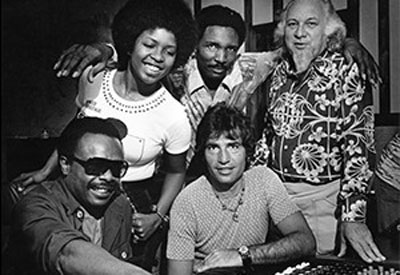
Producer Henry Stone (1921-2014), who founded T.K. Records in the 1970s, is the subject of this informative and entertaining but slightly meandering film. Stone released what was arguably the first disco record, George McRae’s “Rock Your Baby,” and picked aspiring musician Harry Wayne Casey out of the stockroom for the producer’s most lucrative discovery: KC and the Sunshine Band. Mark Moormann’s nearly two-hour film documents Stone’s long and eventful career from his formative years as a trumpet player in the 1940s through his success as an unlikely disco mogul and beyond. KC’s breakout hit “Get Down Tonight” is the film’s narrative peak, but the movie takes time to get there. Then again, Stone’s early accomplishments include helping a young blind singer get past his Nat “King” Cole impersonation and become Ray Charles as well as getting James Brown signed to King Records. Disco eventually failed Stone, and in present-day interviews with some of his once-glittering charges, you find stories like those of Anita Ward (“Ring My Bell”), who lived through overnight success as a one-hit wonder and now happily works as a schoolteacher. The Record Man is about the enduring impact of a legendary music producer, whose faith in disco is vindicated by the contemporary dance music he influenced. It’s also about the quiet and meaningful careers of those who left their mark on music, then moved on.
Watch the trailer.
Sunday, February 28 at 2:30 p.m. at the AFI Silver, Monday, February 29 at 8:15 p.m. at the DCJCC and Wednesday, March 2 at 8:30 p.m. at Landmark Bethesda Row.