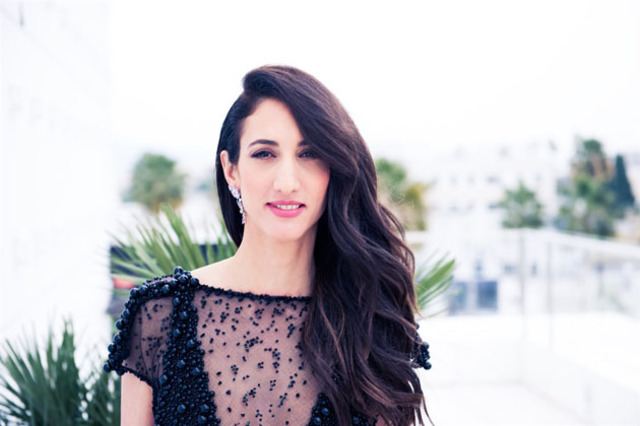
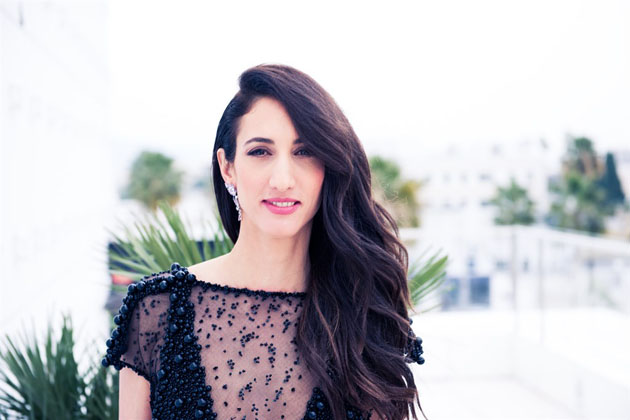
 Deniz Gamze Ergüven (The Coveteur/Trunk Archive)
By DCist contributor Orrin Konheim
This weekend’s Oscar nominations for Best Foreign Language Film include the debut feature from Turkish-born director Deniz Gamze Ergüven. Mustang is the poignant, socially conscious story of five orphaned sisters in a Turkish town. The girls come of age under what is effectively a house arrest imposed by their conservative aunt and uncle in order to preserve the family reputation. The film’s dark undertones are countered by the sisters’ family ties and their resilience in a seemingly impossible situation.
Though raised in Turkey, Ergüven studied directing at France’s state film school, La Femis. Her graduation film “Bir Damla Su” screened at Cannes and won a Leopards of Tomorrow award at the Locarno Film Festival. Mustang has already won the Label Europa Cinemas at Cannes and the New Auteurs Audience Award at the AFI Fest. Though the film was shot in the remote Turkish village of Inebolu on the Black Sea, Mustang is France’s official entry in the Oscar race. We recently spoke with Ergüven about her film. Portions of the interview have been edited for length and clarity.
DCist: What were you trying to bring to the table with Mustang?
Deniz Gamze Ergüven: The thing I wanted to say very much is, if you’re wondering what it is to be a woman in Turkey, the specific thing I wanted to tackle was this filter of sexualization through which women are perceived in every action.
DCist: I have some family in that part of the world and I know a few young men who found such conditions quite difficult, as well.
Ergüven: Men are in a place where every single look can be perceived as sexual. So yes, they can feel pressure as well.
DCist: I actually have some cousins here in the states being set up in modernized versions of arranged marriage, though in a more modern than the way their grandparents. Has Turkey evolved that way too?
Ergüven: Turkey is a country that’s extremely complex. We have parts of society that are completely free to be modern and others that go by more traditional codes. There is not one way of being Turkish. The only thing is that now these two different attitudes are more in conflict. There’s a government in place that’s more vocal about the choice in society which would be much more conservative; they expect that women should be mothers, that they should have three children, and they want to micromanage every moment of their lives. So yeah, it’s probably more dynamic than a straight line.
DCist: Did you have any reservations about submitting this as a French rather than a Turkish film. Does that mean, as in World Cup soccer, that you are forever part of the French film industry?
Ergüven: As a filmmaker, I was born in France. We work with people in that [French] film industry [at La Femis]. There was something about France embracing French identity in all its diversity which was already there and was already very strong. Of course, the Centre National du Cinema (the French selection committee) went with a very radical choice and a very modern choice, so I’m very moved for the honor and responsibility we’ve been given.
Of course, it’s a complex discussion for a film like this one, which is shot in Turkey. But the film and the creative team, myself in addition to the financing, were French. If it wasn’t from France, it wouldn’t have existed.
DCist: What were your experiences like with the actresses at the center of the film?
Ergüven: Four of them had never acted before. It was a long process of distributing these five parts, which was really one character with five heads, so we had to find great harmony among them. We had to have them work in a very safe and risk-taking environment. The work, people ask me if it’s difficult, it was so playful.
DCist: You said it’s a playful environment, but these are people who are also tackling very sad characters. A couple of them were on the brink of desperation. How did you find the balance between being playful and also portraying other dark emotions?
Ergüven: Before starting to work, we covered every uncomfortable aspect in the script. All these things, from extreme joy to the moments you’re referring to, are part of the human experience.