 Rachel Sadon
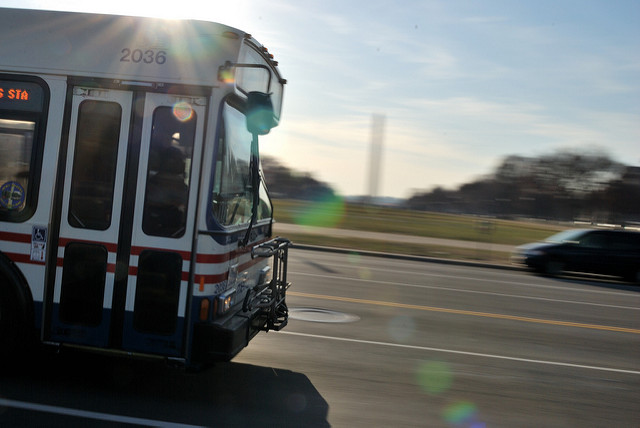 Photo by d’namur
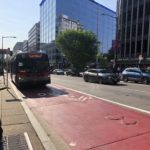
WMATA knows that there are several important corridors that become molasses slow during rush hour. Now, one of their solutions to get buses moving along at a slightly faster pace—transit signal priority—is almost a reality for many bus riders.
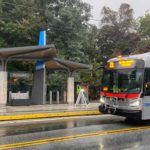
By putting transponders on Metrobuses, and upgrading transit signal software, stoplights can give an early green for a bus or hold the green light just as one is pulling up. In addition to speeding up bus traffic, it also can be used to make the headways, or time between two buses, more evenly spaced.
Metro said today that they have finished upgrading the software and put transponders on 144 Metrobuses, which will run on seven high-ridership corridors.
By June 30, once local jurisdictions have finished making upgrades to the stoplights, transit signal priority will be fully implemented for some of the routes that run on Wisconsin Avenue, 16th Street, Georgia Avenue, 14th Street, and 18th and 19th streets in D.C. as well as Leesburg Pike and Beauregard Street in Virginia. That means that riders of the 37, S9, 79, 16X, 53, 11Y, 16Y, 3Y, 28X, and 7AEY should be getting to and from work faster.
“Traffic signal prioritization will provide better on-time performance and faster commutes for our bus customers,” new Metro General Manager Paul Wiedefeld said in a release. “I am pleased with our collaboration with regional and state departments of transportation to introduce this needed investment and look forward to opportunities to expand TSP throughout the region.”