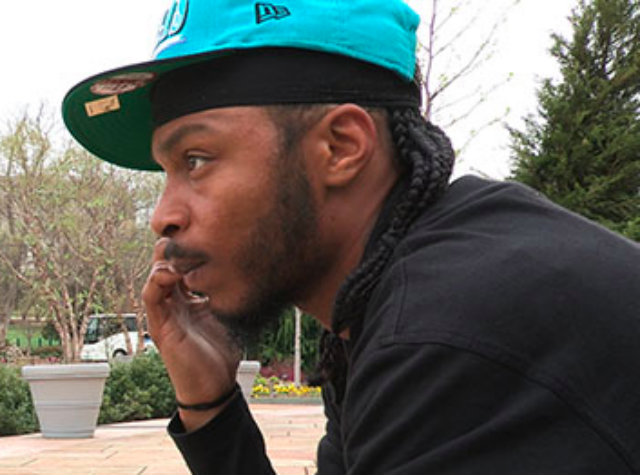
 Charles Holcomb, who participated in the green jobs program. (Meridian Hill Pictures)
Washington, D.C. is home to what may be the country’s highest concentration of politicians per capita. The city also boasts one of the greatest concentrations of parkland. Green space and politics come to a head in a documentary that makes its local premiere at the Environmental Film Festival this week. City of Trees follows nonprofit Washington Parks & People at a pivotal moment. Launched in 2010, the green jobs program provided job training to residents of Ward 8 and has helped revitalize neglected green space east of the river, but as the film opens, that grant is about to run out. Director Brandon Kramer follows Steve Coleman, executive director of the program, in his efforts to keep the green jobs initiative afloat.
Elegantly filmed, City of Trees looks at the human side of policy, and the struggles of a community to revitalize itself. What makes this more than just a film about policy is its focus on the people of Ward 8—like Michael, trying to rebuild his and his mother’s lives after doing time for a drug infraction; and Charles, who, as the film nears its end, is desperately trying to find work for when the grant runs out.
Green Corps Director Karen Loeschner (who argues that Green Corps today is “a greatly stripped-down program…from 40 full-time trainees per cohort to maybe 5 or 6 part-timers”) answered some of the questions I had about the program and its aftermath.
DCist: What is the current status of the Washington Parks & People grant depicted in City of Trees?
Loeschner: The grant under which we operated had a hard deadline of April 30, 2012, and it was not extended. Unfortunately, [Executive Director of Washington Parks and People] Steve Coleman was unable to secure funds from other sources to continue the program past that date. A problem he encountered with his funders is that once his existing funders saw him being handed a $2.7 million grant they assumed, wrongly, that he didn’t need as much of their money anymore. So the grant really was a blessing and a curse, in some ways.
DCist: There are a couple of moments in the film where you appear to have some conflict with Coleman, and more than one person in the film notes that he may not be the best person to run the Ward 8 project. Was there any opportunity for someone else to step into that position—and do you think that would have helped the project get more consistent support?
Loeschner: Interesting question. The source of my conflict with Steve was perhaps similar to what held us back in getting traction in Ward 8: when you hire talented people—partly because they have skills you don’t—you need to get out of their way and let them do their jobs. I don’t know if you noticed, but at the eventual community meeting held at Oxon Run Park with Brenda Richardson (from then-councilman-at-large Marion Barry’s office), Jeff Catts (WP&P) and Brian Rodgers (WP&P), Steve was not there. Although not pointed out in the film, his absence was not a coincidence. If I recall, that was the only way the meeting was going to happen.
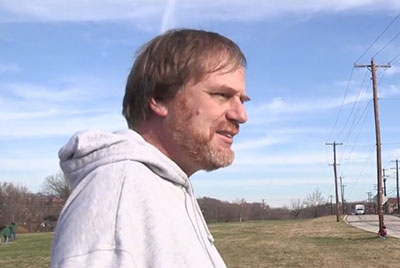 Steve Coleman, Executive Director and President, Washington Parks & People
 In hindsight, we should have pulled Steve back a lot earlier. While Steve’s motives are unassailable and his heart is firmly in the right place, he can be an imposing figure, with his physical stature, impatient approach (born of a genuine desire to address injustice) and passionate rhetoric. If you’re representing a group whose history has been to get screwed over and someone like him walks in and starts telling you what he wants to do for you, the default assumption is just not going to be in his favor. In Ward 8, you need to be prepared to do a lot of reassuring and even some ring-kissing, and he had an uphill battle to fight. He probably continued to choose that battle for too long instead of letting others take over after initial introductions. I’d like to think we would have had more support had we gone that route, but I can’t say for sure. Some of us were flabbergasted by the resistance we got because it’s just not part of our culture to be suspicious of altruistic gestures. But we were bringing our trucks and tools and trainees into a community whose reaction was often, “You say you want to do this for us, which means we must have something you want.” People would walk by and comment that we were making the park look nice, but they were also afraid of it being “too nice” and thus attractive to outsiders. There are some very complex issues with doing this kind of work east of the river, which I think the film touches on.
DCist: As the project is winding down, you lament that there is no plan to follow up with graduates. Their struggles to find jobs after the project ends is one of the most powerful parts of the film. Have you or anyone else in the program kept in touch with James and the others?
Loeschner: I do keep in touch with a couple of trainees, one in particular, RonDell Pooler, who was hired by WP&P (but not featured in the film—and he is its greatest success story, too). Connection with others has been difficult. It really takes a sustained effort to keep people moving in a forward motion: not just with tangible resources but also psychological and emotional support. As you see with Michael, he needed to leave the area in order to not slide back into the life he had in D.C. Charles [pictured above] has been my greatest concern. While he found another job just when the program ended, he has been very difficult to connect with. I worry about him. I know the pull of his old life is strong. I know he’s very aware and sensitive about not receiving things he had a right to as a child—like an education or a stable home—and how that lack holds him back today. James is around but connects on his own terms. Brandon Kramer has had some luck with James, but it’s sporadic. I’m sure if you went down to parts of Wards 7 or 8 and asked around, someone would be able to tell you how to find him! Another trainee, Darryl Pixley (pictured but not featured), was hired by DCUSA a month after the program ended and he is still working there; I ran into him a couple months ago in the mall. He’s another fantastic success story but honestly he came to us with everything he needed…our work was just getting an employer to recognize it.
My concern stemmed from my years as a high school teacher, and with this program I was a little surprised to find there was no difference between worrying about the teenagers who are in your care and the adults. You send them out with the best tools you had to offer and hope something sinks in, takes hold and gives them the momentum to make some good choices for themselves. It’s a lot easier with children though, I will admit.
City of Trees screens March 16 at the Carnegie Institution for Science, 1530 P St NW ($10; Sold out, but standby tickets may be available) and March 23 at Town Hall Education Arts Recreation Campus, 1901 Mississippi Ave SE. (Free; seats still available, but registration required; register here).
Watch the trailer: