 You may have heard about some concerns with our banking system lately. Mervyn King is not surprised. While we were starting to grapple with the recession in 2007, he was all over it on the other side of the pond.
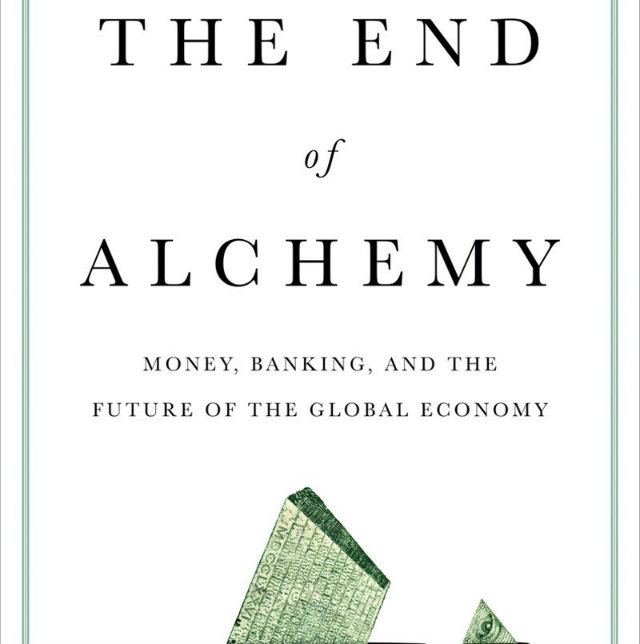
The former governor of the Bank of England has written a new book on the financial crisis that focuses on the history of banks, loans, and economic growth. King will be at Politics & Prose talking about The End of Alchemy: Money, Banking, and the Future of the Global Economy (W.W. Norton, $29) with Washington Post writer David Ignatius on Tuesday, March 22 at 7 p.m.
King opens the book with some profound thoughts on hindsight: “History is what happened before you were born. That is why it is so hard to learn lessons from history: the mistakes were made by the previous generation.” Whoa.
He compares the 1960s, when he was studying modern economics, to the disastrous ’30s and the Great Depression. It seemed like those mistakes could not be repeated. But wars, inflation, and an increasingly industrialized global economy over the next half-century would present their own challenges.
The ’90s saw a time of macroeconomic stability, King writes, but concerns emerged at IMF meetings about “global imbalances” that no one country could do much about. Before spending patterns could play out as policymakers had predicted, the banking crises of September and October 2008 hit North America and Europe.
King masterfully puts the “crisis,” as he refers to it in the book, into context. He addresses how capitalism versus communism came to a head with the fall of the Berlin Wall in 1989. He calls this “the key turning point” where other (sometimes socialist) countries began embracing international trade. Interest rates were cut to boost growth, bank balance sheets “exploded,” and institutions took on more risk.
Soon, those “global imbalances” discussed at IMF meetings turned into a “serious disequilibrium in the world economy.”
While he cites quotes that “love of money is the root of all evil” (the Bible), and “evil is the root of all money” (from a 2002 paper by Nobuhiro Kiyotaki and John Moore), King says most bankers he’s met were neither wicked nor incompetent. “Because they could not affect the behaviour of others, all the key actors in the drama were understandably acting in their own self-interest—given the actions of everyone else,” he writes. “Since, for one reason or another, they could not cooperate with the other players, they all ended up worse off — an example of the prisoner’s dilemma.”
As King turns the discussion to banks’ role in financial markets, he points out the patterns that inevitably occur. Although the 2007-2009 crisis was not exactly like those of previous decades, “there were uncanny parallels,” King says.
He also warns of still-impending disasters, and explains the reforms that must be enacted. The “alchemy” of the banking system, where paper money and credit are as good as gold, is still a powerful idea, but King believes that we must fix the institution’s weaknesses in order to benefit from its strengths.
King is currently a professor at New York University and the London School of Economics. He joined the Bank of England in 1990, and after completing his 10-year tenure as Governor, he was appointed Baron King of Lothbury in 2013, a Knight of the Garter in 2014, and a “life peer” by Queen Elizabeth II for his “contributions to public service.”
The event is free and open to the public.