 Batman will invade movie theaters across America once again this Friday, this time in the image of superstar Ben Affleck, one of the stars of Batman v. Superman: Dawn of Justice. The character has been a mainstay of comic books and all manner of popular culture for more than 60 years. But why?
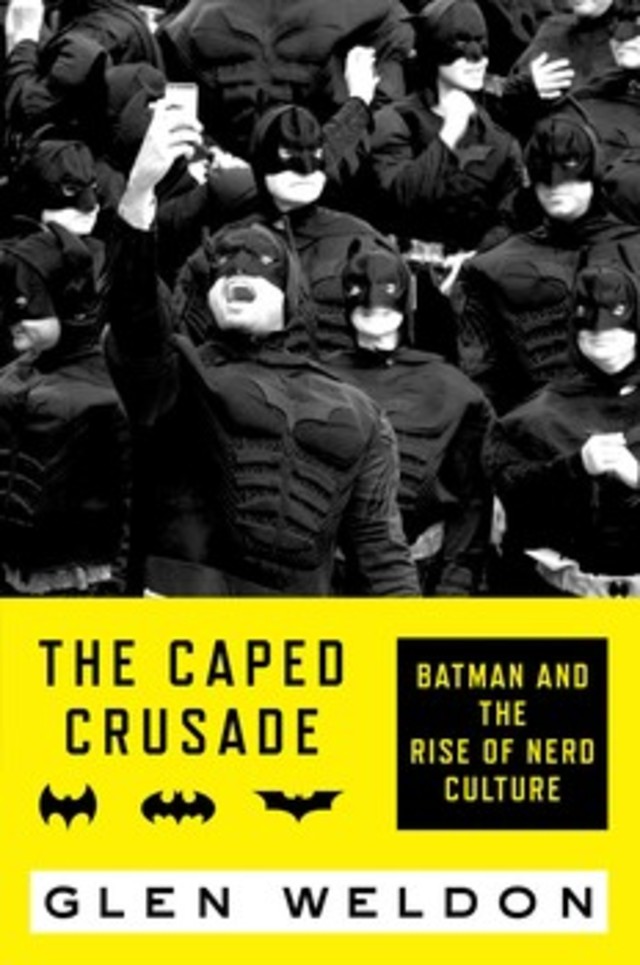
NPR columnist and podcast host Glen Weldon endeavors to answer that question and ask a few more of his own in his new book The Caped Crusade: Batman and the Rise of Nerd Culture, on sale starting tomorrow. Weldon previously tackled similar questions about the Man of Steel in his 2013 book Superman: The Unauthorized Biography. Now, he’s cast his spotlight—his bat-signal, if you will—in the direction of Gotham City’s richest and most powerful crime fighter. The book moves briskly through the decades, offering nuggets of trivia, dollops of sociological analysis, and sizable swaths of unrepentant nerdery. Weldon will discuss his deep dive into Dark Knight comics, movies, TV shows and more in conversation with his Pop Culture Happy Hour co-host Linda Holmes at Kramerbooks next Tuesday.
The Caped Crusader, Weldon argues, provides a window into the evolution of fandom, the shifting loyalties of comic book readers, and the perpetual clash between commercial and artistic interests. Batman arrives on the comics scene as an unusually earthbound hero, lacking the supernatural intervention that gives heroes like Superman their otherworldly sheen. Bruce Wayne is a just a man wearing a costume, gathering skills through training and discipline, fighting villains who threaten the moral fabric of his city. Though many aspects of his character evolve as new artists present alternative interpretations, one of the most persistent through-lines is the character’s motivation: the death of his parents at the hands of a ruthless murderer. That backstory provides the emotional hook for the character even as the rest of him changes with the times.
Anyone familiar with Weldon’s frequent NPR appearances will delight in this book’s near-perfect translation of his verbal and comedic sensibilities. Its tone is reverent and analytical, acknowledging the absurdities of Batman and celebrating its wondrous appeal in equal measure. The sarcastic barbs Weldon occasionally dishes out on air also crop up here. He drily notes at one point, “Any adult readers determined to mine gay readings from these Batman comics would not have found it a particularly difficult process of excavation.” Later, he responds to the notion in the 1992 film Batman Returns that Catwoman finds empowerment in the abuse she endured at a young age with a terse, “That’s messed up.”
Despite the accessibility of the prose, Weldon’s scope of analysis is academic and even literary in ambition. He links the many iterations of Batman to issues of politics, gender, and class, positing that the character holds a mirror up to society even as he seems to occupy a place unfamiliar to those in the real world. Weldon also draws a distinction between “nerds” and “normals” that, while arguably reductive in its binary view of cultural consumers, brings the appeal of the character and the tension that’s kept him alive over three quarters of a century into sharper focus.
The Caped Crusade reveals that each new iteration of Batman says something about the previous one, as well as the response to that previous one from hardcore fans and casual observers. This weekend, millions of Americans will flock to theaters to see director Zack Snyder’s take, with some judging it based purely on the merits of Affleck’s performance and others digging deep into the annals of their Batman knowledge to profess their support or disappointment. In a nod to this model of ownership, Weldon shrewdly frames the book around personal anecdotes — brief encounters with the character and his fans that illustrate his popular appeal. The author’s conclusion will resonate with anyone who harbors a strong investment in Batman or knows someone who does: from the moment he leaps off the page or the screen, Batman leaves the hands of its creators and becomes all of ours. In his book, Weldon tackles what we’ve done with him so far. What we’ll do with him next remains to be seen.
Weldon will be in conversation with his Pop Culture Happy Hour co-host Linda Holmes at Kramerbooks on Tuesday, March 29 at 6:30 p.m.; the event is free.