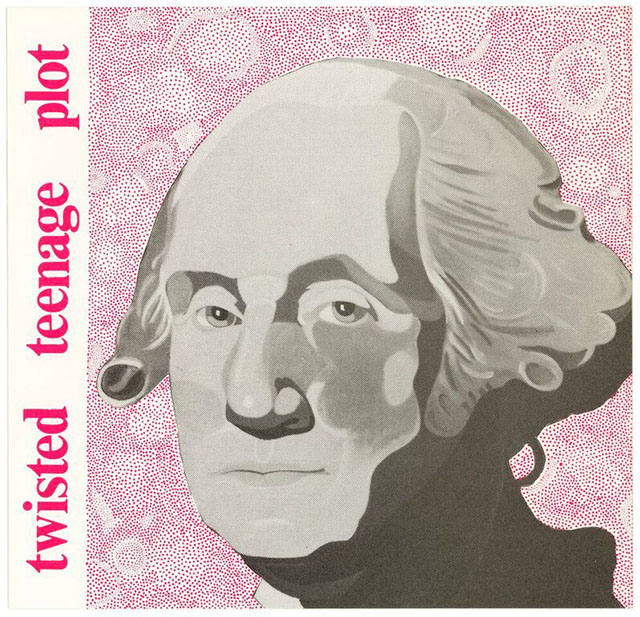
 The artwork for the sole release by Twisted Teenage Plot (Alper Initiative for Washington Art)
A new group show at the Alper Initiative for Washington Art at American University documents a period in D.C.’s cultural history when the visual art world met the underground music scene. Artist Robin Rose, who was a member of local bands Urban Verbs and Twisted Teenage Plot, explains their approach to instrumentation: “We’d just go over and turn it up.”
The latter band lends its name to the show, Twisted Teenage Plot, which documents the work of the group and other Washington area bands of the late ’70s and ’80s that met at the intersection of punk and art.
The name originally came from a San Francisco Chronicle story about two brothers who killed their parents and ran off to Vegas with the family money. This violent incident inspired a band that, according to one member, “didn’t care about key.” The members of Twisted Teenage Plot were for the most part visual artists before they were musicians.
Running concurrently with a show that features the work of band member Kevin McDonald, Twisted Teenage plot features work by all of the band’s members: Washington Color School painter Clark Fox (aka Michael Clark), artist/guitarist Joe White, art conservator and keyboardist Judith Watkins Tartt, and artist-synth whiz Robin Rose. It also includes visual work by other area musicians like Razz lead singer Michael Reidy, Slickee Boys frontman Kim Kane, and the late Ken Mackenzie, aka Root Boy Slim.
Washington was a undoubtedly a very different city at the time. In the show’s catalog, Steve Ludlum describes an unrecognizable downtown: .“Large areas were abandoned, including blocks with big, obsolete department stores. Partially filling the vacuum were wig shops, rent-by-the-minute hotels, stinky gay bathhouses, X-rated theaters, and cut-rate liquor stores besieged with derelicts.” This was the era of d.c. space and the Atlantis, which became the old 9:30 Club.
Artist Robin Rose took a particularly long, strange journey to the Washington scene. Born in Ocala, Florida in 1946, Rose joined his first band, the Wombats, when he was 16, and played in a blues rock outfit that became the house band at Smitty’s Club in the Florida Panhandle. “We were a bunch of freaks and hippies,” Rose explains, “and nobody could remember the lyrics, so we only got so far.” One day Rose’s friend Terry VanBrunt suggested they visit his friend Bob, who turned out to be pop artist Robert Rauschenberg. Rose crashed in Rauschenberg’s New York loft for a month, but admits, “ It was a total scene up there, way over my head. I was too young.”
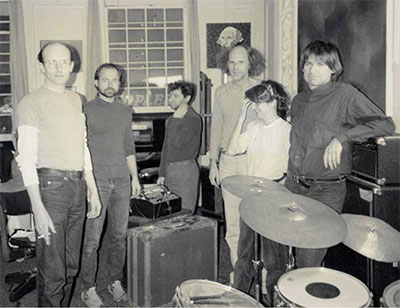 Twisted Teenage Plot, as seen in the June/July 1985 issue of the Washington Review. Photo by Mary Swift. From left: Kevin McDonald, Robin Rose, Robert Goldberg, Joe White, Judith Watkins Tartt and Clark Fox. (Alper Initiative for Washington Art)
Rose left New York’s art and music scene just before it was about to explode, but it was the right choice for him. “In all honesty, I probably would have died in New York…I was a Southern boy from Florida and was just out of my water.” He moved to Washington, where he quickly met a number of local artists. He found the city a welcome change of pace, “slower and more sane.” Yet when the Metro opened in 1979, the city was changing. “The subways gave the city an interface. The arteries were finally in the body,” Rose explains.
The city’s music was changing as well. “The music scene was bluegrass, blues, folk—even with pop music it was always really grounded in craftsmanship, with [guitarists like] Danny Gatton and Roy Buchanan. “
It was around this time that Rose joined the Urban Verbs, which he calls “the first real art rock band in D.C.” “I crossed over between the art world and the music world and vice versa….we had an intelligence level you didn’t find in your average rock and roll band. The ideas were more expansive, more conceptual, more symphonic.” Rose’s artists friends, including Kevin McDonald, Michael Clark and Joe White, looked at the Urban Verbs and were inspired to form their own band, and when Rose left the Urban Verbs, grateful that “I didn’t die as a rock and roll musician,” he signed on for Twisted Teenage Plot.
Art patron Herb White gave the band a rehearsal space and encouragement, and Robert Goldstein got the band studio time.
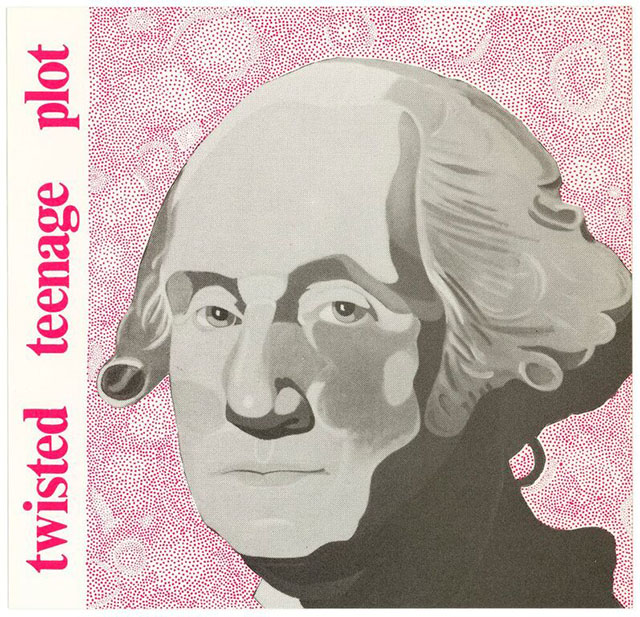
The result was the band’s sole release. “It’s terrible,” Rose admits. “It was so bad it was good. It was so primitive and so ultimately unconscious, it was probably closer to the truth than most people get.”
I asked Rose how a seasoned veteran of bands that knew how to play their instruments felt about going into this completely different territory. “ A relief! Total relief. Total freedom. Not necessarily total freedom, let’s put it this way: enlightened irresponsibility. “
Twisted Teenage Plot runs from April 2 through May 29 at the Alper Initiative for Washington Art, American University, 4400 Massachusetts Ave NW. Free. Open Tuesday-Sunday, 11:00-4:00. The show opens Saturday, April 2 with a gallery talk at 5 p.m., followed by an opening reception from 6-9 p.m.
Listen to Teenage Twisted Plot perform “Oil in the Soil”
Listen to some of the other bands associated with the show here: