By DCist contributor Bridget Dicosmo
Flowers are tasty, as I recently learned on a nature walk that focused on spring wildflowers and other edible ephemerals.
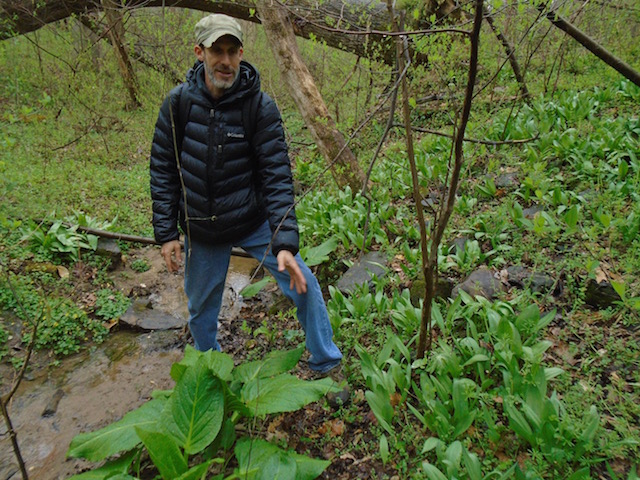
While we tend to look at flowers to adorn a centerpiece on the dining room table, but violets also make a good addition to salads, says Matt Cohen of Matt’s Habitats. A landscaper who got interested in foraging after spending some time working on an organic farm, Cohen hosts between 10-15 walks each year in the Takoma Park and Silver Spring area, and occasionally in the District. The nature walk I joined included roughly a dozen neophyte foragers who followed Cohen through damp woodlands in Carderock, MD, in search of wild edibles such as henbit, a member of the mint family, which can put a gourmet touch on a pesto that Cohen prepared at home and brought for sampling.
You never know quite what you’ll find underfoot once you start learning to identify the local flora. A wildflower known as the Virginia springbeauty yields not only mild-tasting flowers but has roots resembling tiny potatoes (it’s also been given the whimsical nickname of “fairy spuds”), which turn out to be rich in carbs and can be boiled like their larger namesake. “Some wild foods are really packed with vitamins and nutrients,” Cohen says.
Knowing how to identify and safely —and legally— collect wild plants, fruits, and nature’s other noms can net nutrition benefits and help supplement your grocery bill with fresh greens, especially this time of year, when young plants boast the sweetest flavor from warm days and cool nights.
During the walk, Cohen points out more than two dozen types of plants and trees, giving a bit of historical background on some and cooking recommendations on others. For example, the tiny, aggressive hairs that give stinging nettle its name can be neutralized by just one to two minutes of boiling, and the plant can be substituted for spinach in many recipes.
Interest in foraging has grown in recent years, particularly as home cooks embrace both locally grown foods and the “no waste” movement. And nothing could be more local, and less wasteful, than eating the weeds from your own backyard.
For those who want extended instruction on cooking wild plants and other facets of foraging, Charm City Farms near Baltimore might be worth the drive, where Victoria Greba offers a Saturday course called The Foragers Apprentice.
“We find it’s kind of turning into a folk school,” says Greba, noting they now offer classes and workshops in everything from cheesemaking to home fermentation to grafting.
Learning from the experts is an important first step because not all plants are edible and not all foraging is legal. While foraging on county or state parkland, Cohen advises focusing on invasive species like the garlic mustard, which harm biodiversity, and be aware even then that foraging may be still prohibited — as it is in Rock Creek Park — making backyard foraging a safer bet.
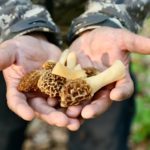
“Sometimes I’ll see a flush of mushrooms in someone’s yard and knock on the door,” Cohen says, adding the owners often are eager for the chance to rid their yard of the edible fungi.
Greba says that many of the wild plants she uses to supplement her diet are found right in her own garden, saying ”I eat all the weeds in my garden — dandelion, chickweed — I eat those as often as the kale.”
Both Greba and Cohen caution that it’s important to know what you’re noshing. Watch for signs of spraying, regardless of where you forage, Cohen warns, while Greba says, “Don’t put anything in your mouth unless you’re 200 percent sure you know what it is,” adding, “I do that even now” — and she’s studied herbal medicine, ethnobotany, and other plant-related topics for years.
No matter how eager you are to dive into a salad of hand-picked wild greens, Greba advises new foragers to take their time. “Give yourself permission to go slow,” she says. “You’ve got to have field guides, go for walks, and look at things gradually, and that recognition will happen.”
Other D.C.-based foraging opportunities include Red Bird Botanicals (which focuses on herbal medicine) and Bill Schindler‘s classes with the Hill Center and elsewhere.
Cohen recommends building up your wild edible arsenal by learning three to five new plants each year. To those attending the nature walks, he offers to assist via texted photos with identifying plants.
During the April 2nd walk, for example, I pointed to a patch of something growing near the edge of the trail. To my untrained eyes, it looked parsley-ish. Cohen wasn’t certain, but pointed out that it looked like a member of the carrot family. Wild carrots are edible, but the family to which they belong can be a dangerous crew because it includes the deadly hemlock and other poisonous plants.
The following day, after Cohen did some research on the mystery plant, I got my answer in the form of an email, theorizing that it appeared to be a type of wild chervil. “Since it’s in the carrot family, I would be leery of it being edible even though at least one internet site reports that it is,” Cohen wrote, adding, “Better cautious than nauseous!”