Rachel Kurzius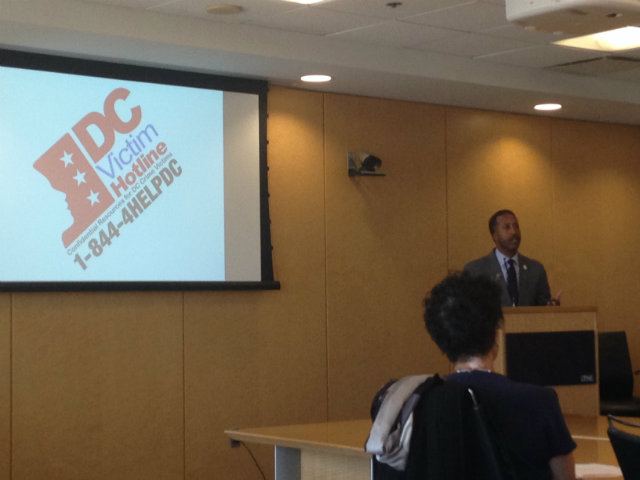
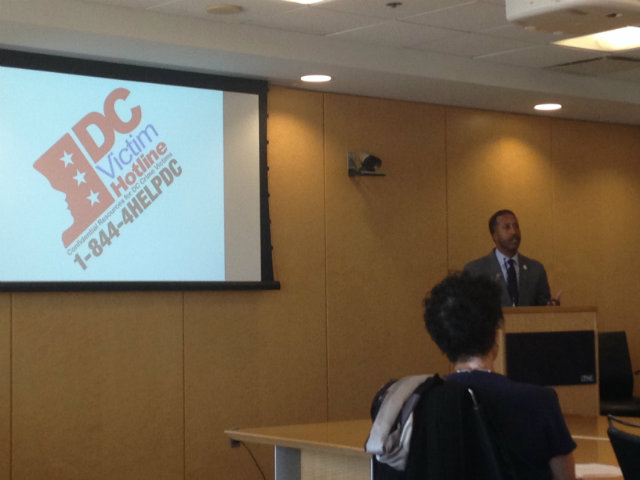 Councilmember McDuffie speaks at the launch of the D.C. Victim Hotline. (Photo by Rachel Kurzius)
“Policing has become a drive-thru 24 hour McDonalds of services,” Police Chief Cathy Lanier said in the fall, noting that people often call 911 when they don’t know who to contact.
Now the city is launching the 24/7 D.C. Victim Hotline— to connect victims of any crime to free services—1-844-4-HELP-DC. The number isn’t meant for those seeking an immediate emergency response, but rather additional aid in the aftermath of a crime (that could include things like counseling, financial services, or help understanding legal documents).
The idea is that people aren’t always victims of one crime, and this hotline provides a “single point of entry,” as Michelle Garcia, the director of the Office of Victim Services and Justice Grants, describes it. “Victims have diverse and many needs, and this minimizes the number of times they have to tell their story and the doors they have to knock on.”
The confidential service lets people call, text, or online chat in more than 200 languages. (For now, only the phone line is 24/7, whereas texting and online chatting is available from noon to 5 p.m.)
The soft launch occurred in October of last year, and the most common types of calls are for domestic violence (specifically intimate partner violence), sexual assault, stalking, elder abuse, and financial crimes, according to Victoria Hougham, the director of victim services at the National Center for Victims of Crime.
Hougham says that while some of the information the hotline provides is available by calling 311, the D.C. Victim Hotline provides “a very personal, empowering, supportive voice on the other end.”
Hotline staffers received a month-long intensive training process, according to Hougham, who says that “we went to intake centers, we went to some shelters, so we could really tell people what it would be like.”
For Garcia, part of the help they’re providing victims is the “process of being able to make an informed decision. Reaching out can have immediate positive consequences,” even if people aren’t ready to take the next step just yet, she says.
Ward 5 Councilmember Kenyan McDuffie, the chair of the Judiciary Committee, was at the breakfast that officially launched the hotline, pledging his “continued support and commitment” to victims of crimes in D.C. Mayor Bowser, originally billed as a speaker, was not there.
The launch also featured William Kellibrew, a survivor of violent crime turned advocate. There was one message in particular he wanted to impart to public officials—”Keep the funding coming.”
The hotline, launched during National Crime Victims’ Rights Week, comes from the National Center for Victims of Crime, in partnership with the DC Mayor’s Office of Victim Services and Justice Grants.