 Photo courtesy of Uber
Your next Uber driver may not be able to hear you, but they will be fully capable of taking you on a ride.
Uber announced today that it’s partnering with the non-profit Communication Service for the Deaf to get more drivers with complete or partial hearing losses on the road. The initiative includes creating video support guides in sign language, hosting outreach events, and providing orientation services through CSD’s customer service team.
The District is home to more than 4,400 adults with some type of hearing disability. But in 2014, only about 40 percent of working-age people who are hard of hearing were employed full-time in D.C., according to statistics from the American Community Survey. That’s only four points higher than the national average.
“This partnership with CSD will provide more than a simple opportunity for Deaf driver-partners to give rides to people on the road,” said Chris Soukup of CSD. “It’s an opportunity to build bridges between people and influence a new perception of the abilities and humanity of deaf people.” Across the country, Uber’s deaf drivers have raked in more than $10 million, according to the company.
Alicia Johnson, a hard-of-hearing Uber driver, can attest to that, saying that she gives rides to people “who have never interacted with the deaf community before.” She’s completed more than 1,500 trips in the District.
And while Karen Cook, director of the career center at Gallaudet University, says she doesn’t know exactly how many students and personnel use Uber at the liberal arts university for the deaf, she does know that folks are taking advantage “because we see Uber stickers on cars” around campus. And across the D.C. metro area, there are “hundreds” of Uber drivers who have hearing disabilities, according to Kaitlin Durkosh of Uber.
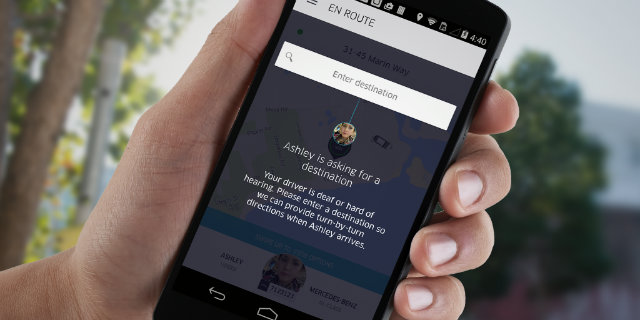
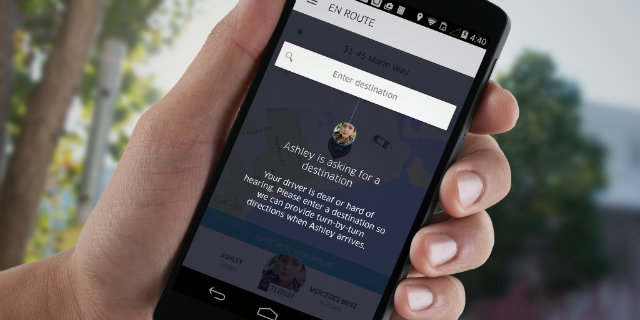
Last year, the ride-hailing giant announced app updates designed specifically for deaf and hard-of-hearing drivers. Those additions include signaling a new trip request with a flashing light, providing a text-only communication option, and letting riders know of their driver’s disability.