 Rachel Sadon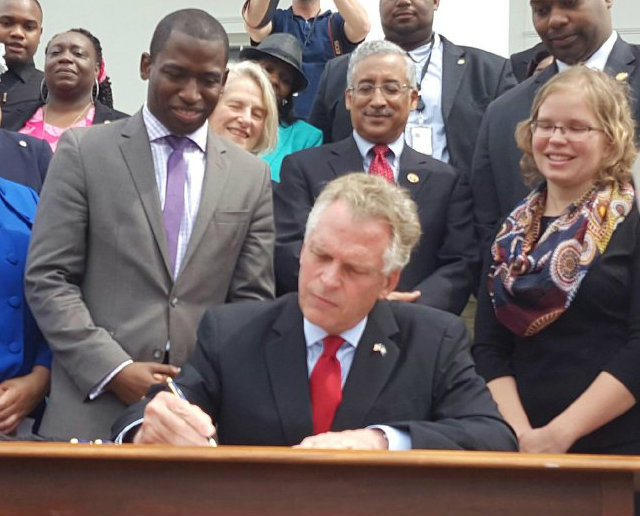
 (Via Twitter)
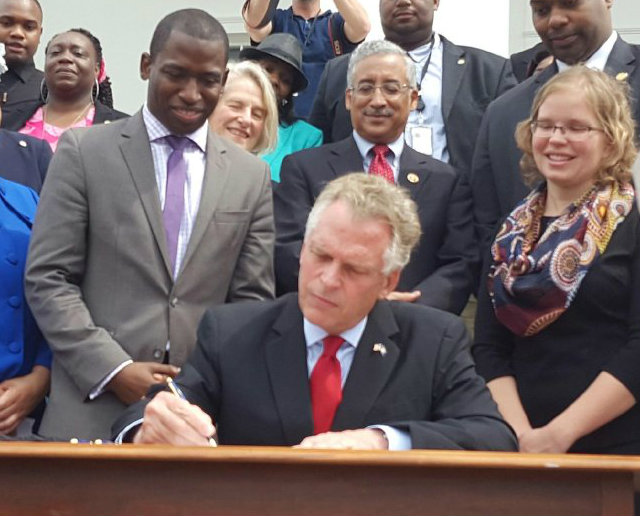
With the stroke of Virginia Governor Terry McAuliffe’s pen, 200,000 people can now vote, serve on a jury, become a notary, and run for office.
Side stepping the Republican-controlled legislature, McAuliffe signed an executive order today to restore voting rights to convicted felons who have served their time and completed any release requirements.
“Too often in both our distant and recent history, politicians have used their authority to restrict peoples’ ability to participate in our democracy. Today we are reversing that disturbing trend,” McAuliffe said.
The order could potentially “play a role in deciding the November presidential election,” given that Virginia is a swing state, the New York Times points out.
It also comes amid an intensifying debate about voting rights for convicted felons. Only Maine and Vermont impose no restrictions; at the other end of the spectrum, Kentucky, Iowa, and Florida have laws on the books that permanently ban anyone with a prior felony from voting (Kentucky’s new governor immediately overturned an executive order from his predecessor that gave felons voting rights, though there is debate in the legislature about how to restore them). The ACLU lays out a full picture in this map.
In D.C., anyone who is not incarcerated can vote, though the ACLU is critical of unclear instructions on the District’s voter registration forms. The city also passed one of the country’s strongest “ban the box” laws, which prohibit employers from asking about prior criminal convictions, and a newly introduced bill at the D.C. Council could do the same for housing.
Back in Virginia, the Attorney General applauded McAuliffe’s move. “This is a life-changing day for hundreds of thousands of Virginians who will once again have a voice in the direction of their Commonwealth and their community,” Mark Herring said. “For too many, that right was beyond their reach because of a mistake made years or decades ago.”