 Why do you like what you like?
You might be tempted to dismiss this question as unnecessarily philosophical or, at the opposite end of the spectrum, utterly meaningless. Preference is inherently personal. Why draw vague, generalized conclusions from ideas that are by definition diffuse and diverse?
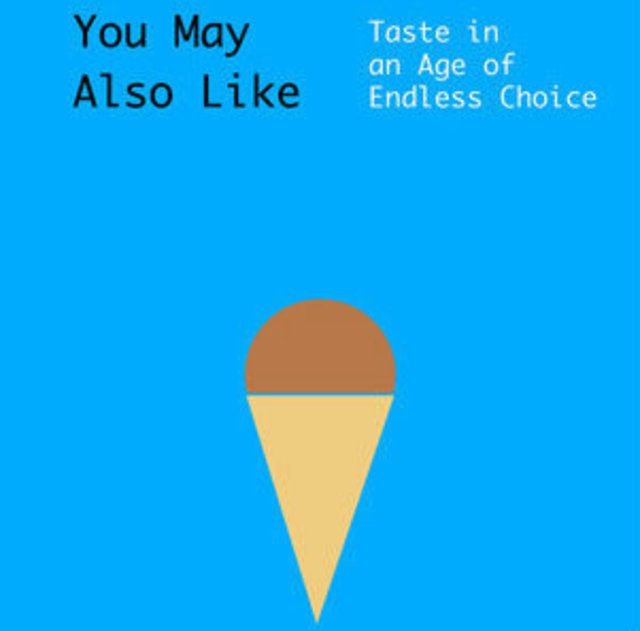
For Tom Vanderbilt, the answer is a lengthy one — 226 pages long, with 64 pages of additional notes, to be exact. The longtime freelance journalist and author explores a complex web of ideas across genres and categories in his new book You May Also Like: Taste in an Age of Endless Choice. He’ll discuss his findings, and perhaps elucidate some of his own preferences, at Politics & Prose on Monday.
The book opens with a dialogue between Vanderbilt and his five year-old daughter, who wants to know her father’s favorite color and compare it to her own, which changes on a weekly basis. The rhythm of the conversation will be familiar to anyone who’s ever spoken to a young child in a thoughtful mood. Most people engage in these kinds of conversations and then immediately toss them away.
But Vanderbilt sees something profound in his daughter’s pensive ramble. Even at five, without feeling social pressure from classmates or consuming an undue amount of popular culture, Vanderbilt’s daughter has begun to distinguish between likes and dislikes, haves and have-nots. The desire to express individuality through hierarchies of choice must be in some way innate, then.
But how much so? That’s the central question animating Vanderbilt’s study, which encompasses music and food, celebrity and art, experts and amateurs. Nothing, and no one, exists in a vacuum, Vanderbilt argues. All humans are the sum of their experiences, and also of their exposure to forces that shape their sense of themselves, whether consciously or not.
You’ll never be able to peruse Yelp or surf a Spotify playlist the same way after this book. Vanderbilt acknowledges the systems we use to create our personalities, and then interrogates them with research and reflection. He questions his own choices and asks readers to examine theirs, adding a personal dimension to what could have been a purely academic exercise.
Fans of Vanderbilt’s previous work will notice a distinct departure from the norm in this latest effort. His three previous books go deep on specific topics: Cold War architecture, traffic patterns, and sneakers. This one is about, well, almost everything: choice and preferences and pop culture, yes, but also the psychology of human behavior, the far-reaching effects of capitalism and the insidious influence of unconscious forces on malleable ideas most people accept as fact.
It’s a lot to handle in a relatively short span of pages, but Vanderbilt’s nimble approach keeps the thematic churn from overwhelming his overall intent. It’s your choice whether you want to read the book…or is it? Perhaps reading the book will help you decide.
Vanderbilt will be at Politics & Prose in conversation with WAMU’s managing producer for new content and innovation Brendan Sweeney at 7 p.m. on May 16; the event is free.