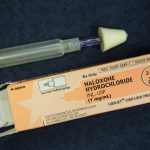
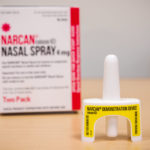
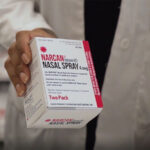
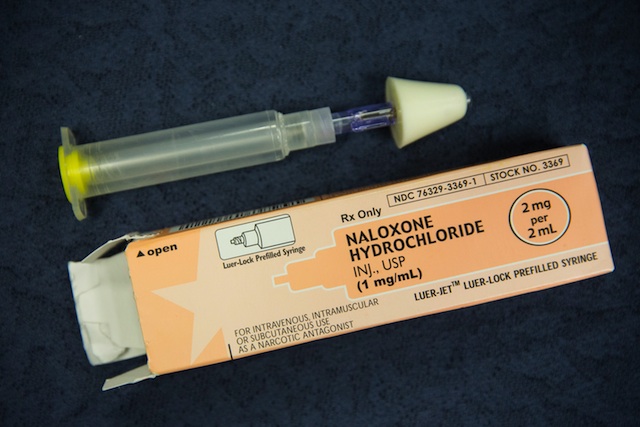
 Naloxone in an atomized nasal spray. (Getty Images)
Following in the footsteps of New York and other states, the D.C. Department of Health has launched a pilot program to expand distribution of the opiate overdose-reversal drug Naloxone.
In March of 2014, D.C. Police Chief Cathy Lanier warned that an extremely potent type of heroin was “the next big drug threat” to the city. The D.C. Office of the Chief Medical Examiner found that, in that same year, there were 116 cases in which death was directly related to drug abuse.
Many such deaths may be preventable, according to HIPS, one of two groups that has been handing out naloxone kits to clients for the past two weeks. The organization, which supports people engaged in sex work and drug use, has been trying for the past few years to make the drug easier to access. Naloxone (also known by the brand name Narcan) works by blocking the physical effects of opiates, including heroin and prescription painkillers like oxycodone and morphine.
Previously, a person in need of a supply had to wait in line to at one location in D.C., Bread For the City, HIPS’ Andrew Bell told DCist. After proving to a physician that she is at risk of an overdose, a person could receive the antidote. A heroin user from Southeast told the Washington City Paper last year that he made the trip every three or four days, using the drug to save at least 50 lives.
But with the pilot program, individuals can now also pick naloxone up at HIPS and Family and Medical Counseling Services, where they can learn how to administer it—free of charge and hassle.
After obtaining the drugs from DOH, trained employees at HIPS have given out about a dozen kits to people in the organization’s syringe program, Bell says. They also plan to hand them out through their mobile van, drop-in center, and at community classes.
Last fall, HIPS joined Bread for the City, the Drug Policy Alliance, the National Safety Council, and other organizations in forming a coalition to lobby for the Substance Abuse and Opioid Overdose Prevention Amendment Act of 2016. The bill, which was introduced to the D.C. City Council in February, would allow doctors and pharmacists to prescribe naloxone to patients as well as third parties.
Currently, a doctor cannot give out the life-saving treatment to friends and family members in the District, even though they are often the first people on the scene when a loved one overdoses, said the Drug Policy Alliance’s Kaitlyn Boecker.