Rachel Kurzius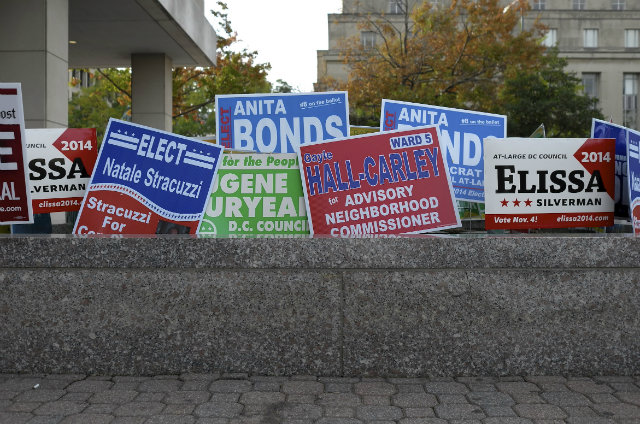
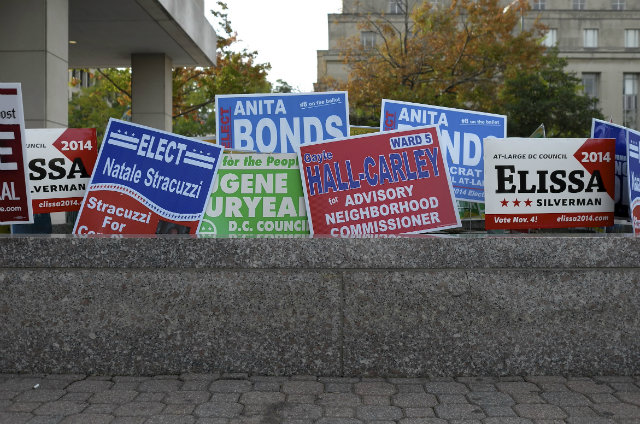 Photo by washingtonydc.
Vermont Senator Bernie Sanders spends a lot of time talking on the stump about how his average campaign donation is $27, but most District politicians can’t say the same.
The majority of funds for competitive D.C. races in 2012 and 2014 did not come from District residents or small donors, according to analysis from U.S. PIRG Education Fund. A new report examines the contributions for D.C. mayor, councilmembers, and attorney general as a way to advocate for a small donor matching program.
More than 60 percent of fundraising for competitive candidates came from individuals and corporations outside of the District, the report finds. And of those District donors, only 5 percent of campaign funding came from D.C. residents contributing less than $100.
As rent and cost of living continues to increase, many families have far fewer dollars to direct towards a political campaign.
That’s where the proposed small donor matching program comes into play. If candidates forgo big campaign donations, they receive public funds that correspond with the small contributions they raise.
At-large Councilmember David Grosso introduced legislation that would match small campaign contributions to public funds at a factor of five-to-one this December if candidates forgo donations above $100. The Citizens Fair Election Program Amendment Act of 2015 was co-introduced by Chair Phil Mendelson, At-Large Councilmember Elissa Silverman, Ward 1’s Brianne Nadeau, Ward 3’s Mary Cheh, and Ward 6’s Charles Allen.
“Establishing a publicly funded campaign system will enable candidates to rely less on big donors, resulting in more individuals making small dollar donations to campaigns, and in turn helping to not only boost civic engagement but also hold candidates accountable to the constituents they are seeking to serve,” Grosso said in a statement yesterday regarding the new report.
If the program were in place during the 2012 and 2014 elections (also assuming that the candidates all chose to participate in the voluntary program), it would have upended the ratio of local to out-of-state and small to large donors.
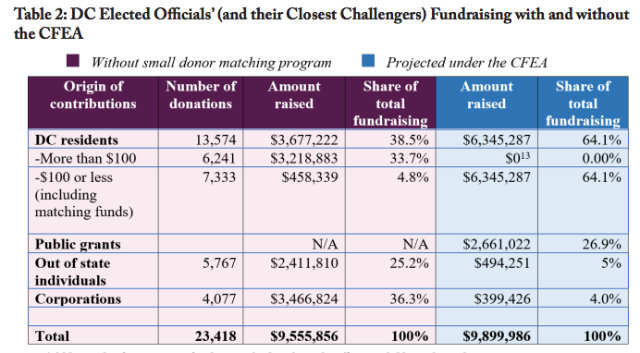 Image courtesy of U.S. PIRG.
Silverman says that the report “confirms that big money donors, corporations, and entities based outside of D.C. have an outsized voice in fundraising and elections; however, it also presents a path toward using a small-donor matching system to make people-powered campaigns viable across our city.”
Her colleague in Ward 1 agrees. “Matching small campaign donations with public funds reduces the influence of special interests and gives more power and influence to the people,” Nadeau says. “I will continue pushing for a hearing on the bill so we can make this system a reality in the District.”
The legislation remains under council review, after being referred to the Committee on the Judiciary.
A Washington City Paper poll released earlier this year showed that 53 percent of District residents “definitely favor” a small donor matching program and 27 percent “probably favor” one.