 Rachel Sadon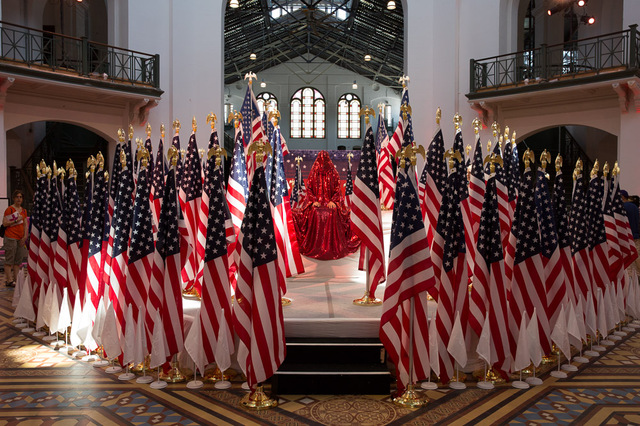
While in line for concert tickets on Friday night, I found myself rambling to a total stranger about CrossLines: A Culture Lab before I’d even seen the art exhibition, which ran May 28-29.
“It’s about intersectionality, and it’s temporary, and there will be a lot of interactive art,” I lamely told this gentlemen, a visual artist visiting from Philadelphia for a museum conference. He seemed nonplussed—after all, none of those are are particularly groundbreaking in the art world. And then I explained that this was a Smithsonian project, and he started nodding along. A large-scale, temporary, interactive exhibition that highlights diversity is rather unusual for an institution that tends to move at the pace of bureaucracy.
The idea was for an exchange of ideas—across mediums, between artist and audience, through performance—that explore the connections of race, class, gender, sexuality, and other identities. “We’re not expecting it to be a quiet place, with people walking around with their hands behind their backs,” Adriel Luis, a curator at the Smithsonian Asian Pacific American Center, which mounted the exhibition, told DCist.
That was indeed the case, with live screen printing, poetry readings, tea service, a lowrider rickshaw tour, a food-based pharmacy, live painting, and performance art making for a bustling hall until 9 p.m. both nights. Two of the halls had large-scale works that were particularly poignant on Memorial Day weekend, challenging visitors to ask how Native Americans and Muslims are excluded from displays of patriotism. Perhaps most unusually for the Smithsonian, about a third of the artists were local.
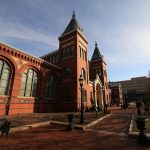
As an extra draw, it was the first time the Arts and Industries Building was open to the public in 12 years. Originally called the National Museum Building, it is the second-oldest Smithsonian building on the National Mall. It closed in 2004 for renovations, but the institution hasn’t quite figured out what to do with it.
Lacking proper heat controls, the building can’t be used as a fine art museum, according to Smithsonian spokesperson Linda St. Thomas. “Until they come up with the funding to make it a proper museum,” she says, the institution will use it on the occasion for temporary things. Next up is the marketplace for the Folklife Festival (highlighting Basque Country this year, it kicks off on June 29 through July 4, then picks back up July 7 through July 10). Incredibly open, with light streaming in on to period detailing, we can’t wait to see what else they do with it.