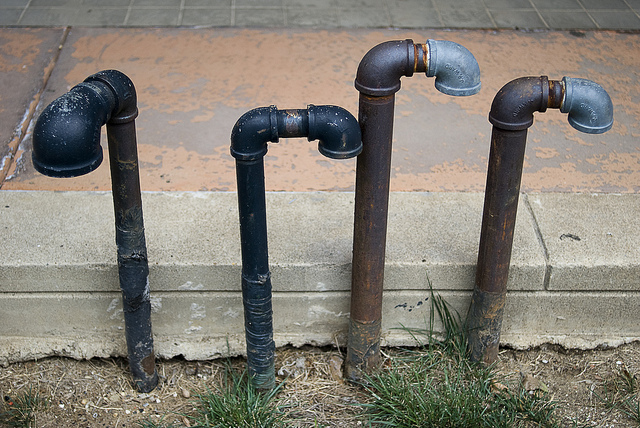
 Photo by Amber Wilkie
Wondering if your pipes are made of lead? There’s a map for that. DC Water announced yesterday that it has created an interactive tool that gives District residents access to information about their water pipes.
While tests show that the city’s overall lead levels are historically low, “every property is unique and we want our customers to have easy access to all of the available information about their service lines, so they can make informed decisions to minimize their exposure to lead in water,” George Hawkins of DC Water said in a release.
The best way to decrease lead exposure is to get rid of contaminated sources including service lines, or pipes that connect a household’s plumbing to the the water main in the street, he continued. And if property owners want to replace their portion of the lines, DC Water will pay to replace the public side.
The District’s data for service lines comes from permit records, water main tap records, meter records, and maintenance, repair and replacement work. After entering an address, the map populates with dots that indicate if either side of the pipe (in the household or outside of it) has lead. It also tells if DC Water has no information at all. If you click on a dot, users can also find out if pipes are made of copper or other materials.
In March, District residents got a scare after Shawn McCoy, publisher of InsideSources, tweeted that residents should not drink their tap water. McCoy based his theory on a story about lead content in city water more than a decade ago. In response, a DC Water spokesperson John Lisle called tweet the “very irresponsible.”
Lisle told DCist that “since 2004, lead corrosion has been controlled at the Washington Aqueduct. We do a great deal of testing and continue to monitor lead levels.” Having lead pipes—even now—is not unusual, he says. “A lot of cities have lead pipes and lead service lines, and there are a lot of properties in D.C. that still have lead pipes.”