Rachel Kurzius
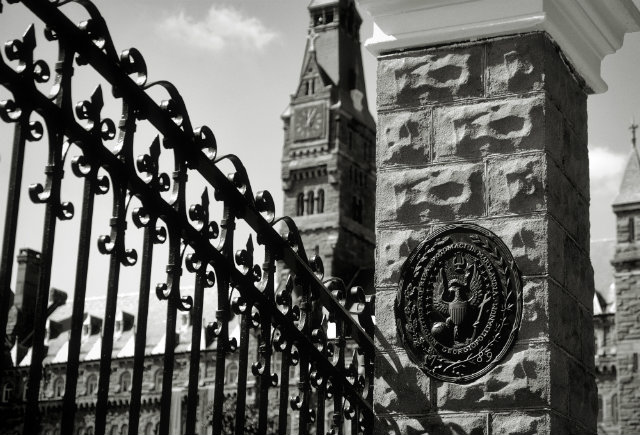 Photo by Brendan Ross.
After its first comprehensive student survey on sexual assault and misconduct, Georgetown University found that its younger students were more likely to experience harassment and non-consensual sexual contact.
Among female undergrads at the university, 31 percent report experiencing non-consensual sexual contact because of either physical force or incapacitation since arriving at Georgetown—14 percent experienced unwanted penetration and almost 24 percent experienced unwanted touching.
A little more than one in 10 male undergrads say they’ve been a victim of unwanted sexual contact through physical force or incapacitation as well. (The Georgetown Voice published the story of one male victim in 2014, who said “It would definitely be sexual assault if it had happened to a woman, whereas I didn’t even consider anything wrong had happened until I thought about it afterwards.”)
Both male and female freshmen reported about twice as high a prevalence rate of unwanted sexual contact by force or intoxication than their senior counterparts.
University President John Degioia said the findings were “unacceptable” and “underscore an urgent and critical need to continue to address sexual assault and misconduct and provide us the information we need to better target and focus our work,” in a letter to students sent out yesterday.
In response to the survey, Georgetown is establishing student focus groups and a task force of students, faculty, and staff to come up with long-term approaches.
A little more than half of Georgetown students invited to participate in the survey back in January completed it, a total of 7,926 respondents. First reported by The Washington Post, it comes out as the sex assault trial and sentencing of former Stanford student Brock Turner, and the powerful impact statement of his victim, has continued the vigorous conversation about rape on college campuses.
The survey also asked Georgetown students about whether they had experienced unwanted sexual contact resulting from coercion or the absence of affirmative consent, which were both far more rare than from intoxication or force. “We are aware that alcohol and drugs can facilitate sexual assaults, and our survey confirms that this is true at Georgetown also,” Degioia wrote.
Nearly half of all students, 47 percent, reported sexual harassment since starting at the university, with students who identify as transgender, genderqueer or non-conforming, questioning or not listed reporting rates of nearly 86 percent, followed by female undegrads with 75 percent. Compare that with a survey of Metro riders, which found that 21 percent of people in the D.C. region have experienced sexual harassment on public transportation.
The survey also asked about bystander intervention, which has become a focus of advocates against sexual assault and harassment in D.C. and elsewhere. While around 50 percent of students said they’ve seen a drunken person heading off to a sexual encounter, that becomes about three out of four undergrads. Among those who saw this, 77 percent say they did nothing to intervene.
“The survey data indicate that many students do not feel comfortable intervening when they witness troubling situations,” wrote Degioia. “And although this finding is consistent with national trends, we must do better as a community to care for one another.”
Report on the Georgetown University Sexual Assault and Misconduct Climate Survey