By DCist contributor Bridget Dicosmo
It’s the height of summer and farmers markets are bursting with berries, greens, and other at-its-peak produce, so we’re delving into some of the ins and outs of organic eats. This month’s Federal Forager marks the first in a series examining what goes into growing, selecting, and saving pennies on organic produce. Up first: a chat with Stacey Carlberg, farm manager at The Farm at Sunnyside in nearby Rappahannock County, Virginia.
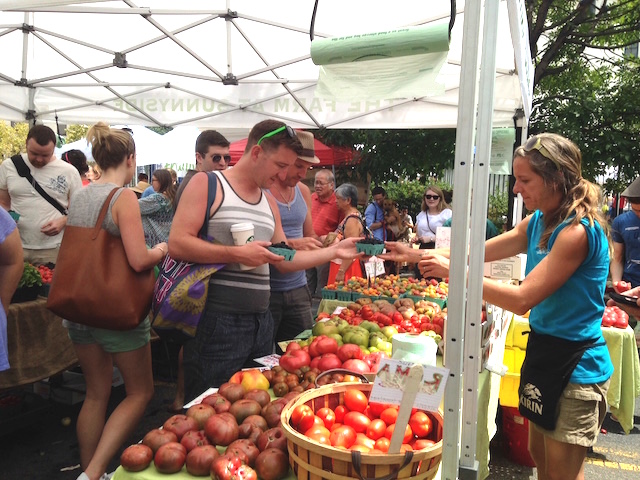
The Farm at Sunnyside, owned by the Lapham family and managed by Stacey Carlberg and her husband, Casey Gustowarow, has been certified organic since 1996. They currently grow more than 40 types of vegetables, plus apples, Asian pears, and blackberries. You can sample their wares at the Dupont Circle and Reston farmers markets on weekends.
Carlberg studied ecology at The Ohio State University and worked for several environmental non-profits before trading an office environment for an outdoor one. She took her first farming job about 10 years ago in Virginia and enjoyed it so much that she never looked back. I had a chance to catch up with her recently to learn more about her experiences with organic farming.
DCist: What does a typical work day look like for you?
Stacey Carlberg: My husband and I would answer that question differently. He gets up at 5:30; I get up around 6:30, we have breakfast and talk a little about the day ahead before our morning meeting at 7:30 [with farm staff]. We talk about the jobs we might accomplish for the day. This morning was a harvest day. Because we hire people with no agriculture experience, training is a big part of our system; we like to teach folks about farming. Noon is lunch, and Casey and I come back to the house and talk more about the farm, check the weather. This afternoon we have our CSA pickup, and wholesale orders to pack. Today is more of a picking and packing day; tomorrow will be weeding and planting.
DCist: Why did you choose organic farming versus conventional agriculture?
Carlberg: I just want to grow food that I think is safe for the environment and the consumer. For me, it’s very clear that organic uses less input, and you can be trying to look at what’s going on on the farm [to adapt practices as needed].
DCist: How has living and working on an organic farm influenced your own meals?
Carlberg: We buy very little at the grocery store. We just really eat from the farm and other folks at market for meat and things not produced at the farm. Olive and coconut oil we get from the store, since we can’t grow or get those at market, and we opt for the organic version.
DCist: What are some of the factors that contribute to the higher cost associated with organic produce?
Carlberg: We’re trying to grow a wide variety of crops on a smaller space. The cucumbers you see at the grocery store, they come from farms where you have acres and acres of cucumbers, and you can treat them all the same. Here, with more diversity, you can’t just come up with one system for the entire farm, making it far more labor intensive, and that trickles down to price.
DCist: What advice would you give readers interested in keeping costs down while still choosing organic fruits and veggies?
Carlberg: Make time to get into the kitchen. The more you can cook fresh and cook in big batches, the better. It’s all about prioritizing how you spend your money.