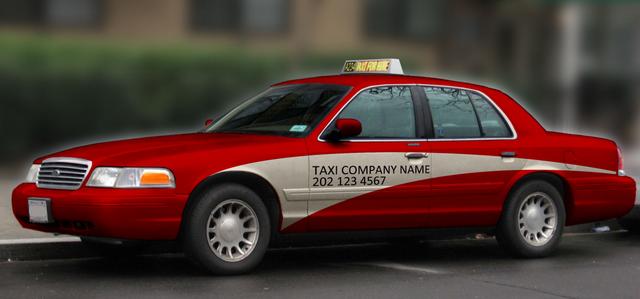
 Photo courtesy of D.C. Taxicab Commission
In the beginning of 2014, only 8 percent of business travelers who filed with expense-reporting firm Certify said they used ridesharing services like Uber and Lyft to get around across the country, while 37 percent of them used taxis, according to a report released today. But earlier this year, those numbers were essentially swapped—46 percent of Certify users said they hopped in ridesharing cars, while 14 percent of them rode in taxis.
In a new report called Rethinking Taxi Regulations: The Case for Fundamental Reform, which uses D.C. as a case study, three research fellows at George Mason University’s Mercatus Center (which describes itself as “a source for market-oriented ideas”) say that taxicab regulators need to lead a full fledged reform if they want to keep up with the shifting vehicle-for-hire industry.
A major problem with the taxicab industry is how much it costs for drivers to get up and running. They can easily spend upwards to $2,000 due to regulations, according to the report. “This means that trying to open and compete as a taxi company in the District of Columbia requires more procedures than starting a small business in China, Venezuela, Mozambique, or Bolivia,”—countries that have “become notorious for their excessive barriers to entry” and are ranked “near the bottom of the World Bank’s economy rankings on the ease of doing business.”
Another issue is the specific types of background checks that taxi drivers need, which the report says discourages other approaches to passenger safety like written reviews of drivers and GPS tracking. There are also several policies in place that allow some cab companies to monopolize the space, and “the protection from competitive pressure also allows companies to be less attentive to customers’ desires,” according to the report.
In order to increase returns for cab companies, regulators need to prioritize the needs of consumers, according to Matthew Mitchell, one of the paper’s authors. “The regulatory process and, unfortunately, the legislative process are skewed toward businesses because the businesses are well organized. They understand the regulations and technology and they have a strong incentive to apply pressure to policymakers, whereas consumers do not,” Mitchell told WAMU, which first reported about the paper.
After years of fighting ride-hailing services, the D.C. Taxicab Commission has done a few things recently to emulate these services such as offering the delivery of lunch orders, creating an app to hail cabs, and mulling their own system of vehicles-for-hire called Xclass.