 Rachel Sadon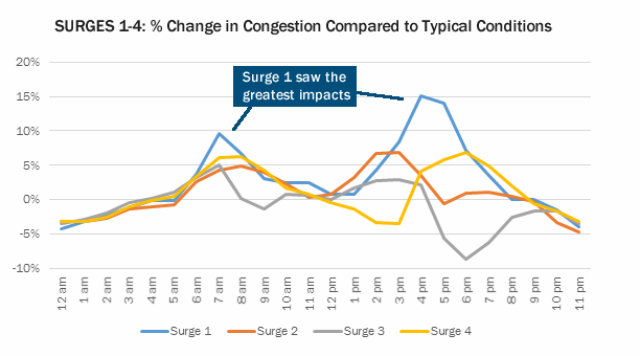
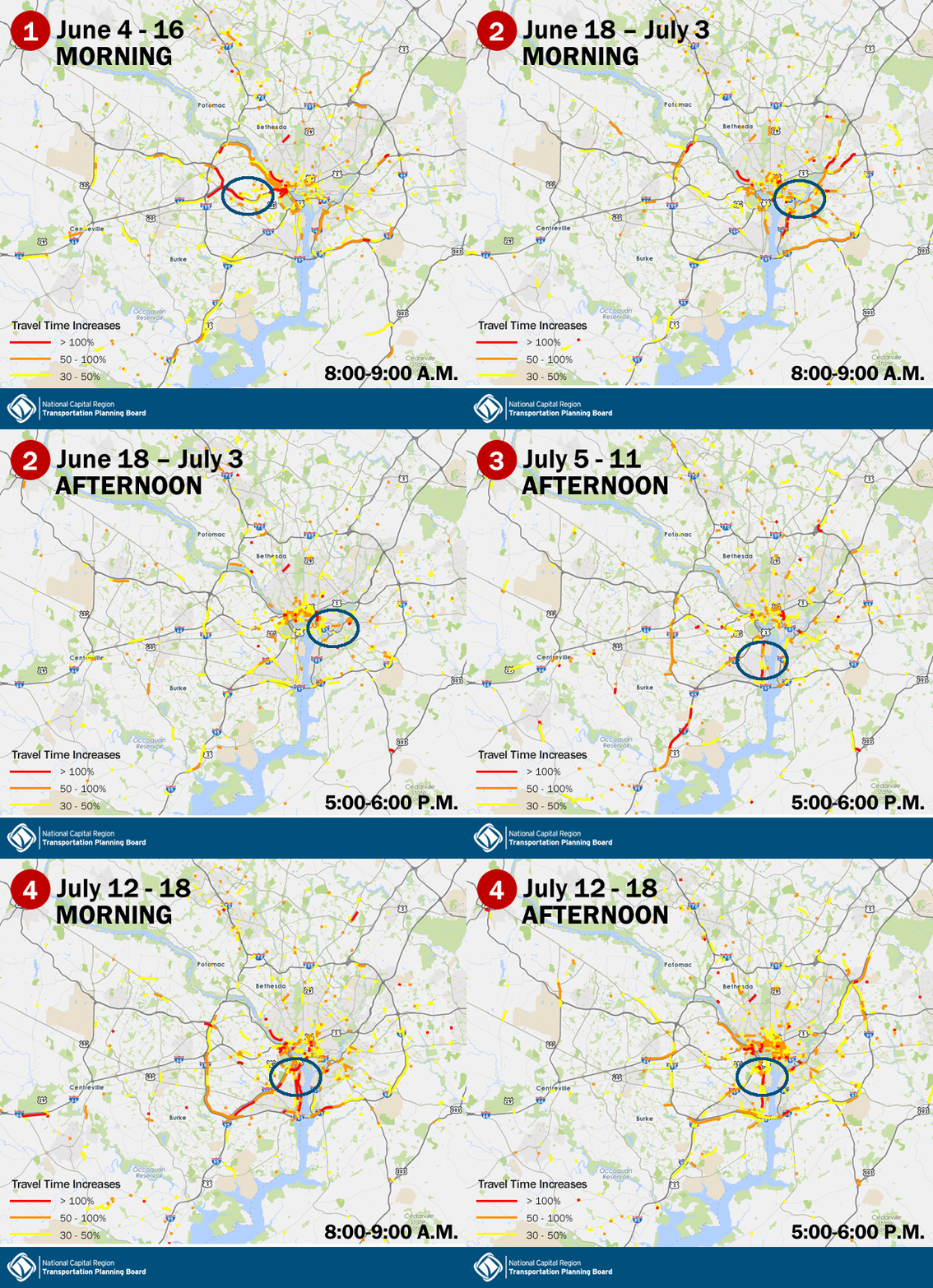
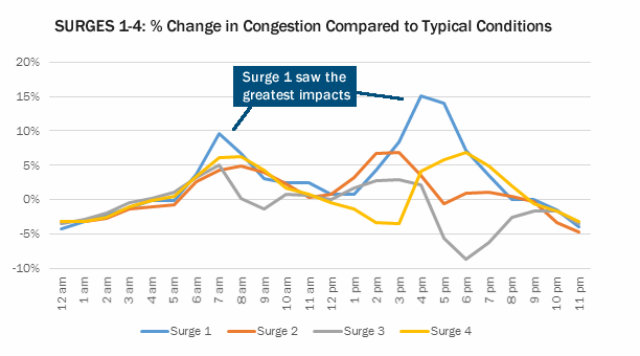 Traffic during each of the first four surges tended to be worse than the same days in 2015, but Surge 1 saw the greatest impacts. (Courtesy of the Transportation Planning Board at the Metropolitan Washington Council of Governments)
During each of SafeTrack’s first four surges (the fifth began today), Metro estimated that between 30 and 40 percent of daily train trips were affected. In turn, area roadways saw heavier use than last year, by as much as 15 percent, according to an analysis by the Transportation Planning Board at the Metropolitan Washington Council of Governments.
The TWP notes that comparing traffic to last year is an imperfect method, because a number of other factors could have affected travel times. Still the authors note that the analysis still found “relatively large magnitude regional overall congestion increases on freeways in Surge 1 and localized congestion increases in the vicinity of SafeTrack work zones in the AM peak in all surges, an indication of likely SafeTrack impacts in those cases.”
While there were impacts across each period of work, Surge 1 saw the most significant uptick, with congestion up about 10 percent during the morning commute and 15 percent in the afternoon. The data indicate both an earlier start to rush hour as some commuters left earlier and an increase in the number of people on the road. Surge 5 is currently affecting the same portion of the system.
The good news, according to AAA anyway, is that gas prices are really low: averaging $2.44 in D.C. and $2.19 in the greater D.C. area this week (meanwhile, in the entire state of Virginia, the average is $1.99).
The second, third, and fourth surges, meanwhile, saw increases of between 3 and 7 percent on area roadways. The analysis notes that there are several potential causes for the lower impact: different details of each surge, more information about SafeTrack and alternatives, and a regular decrease in summer travel. Typically, travel delays drop by between 15 and 20 percent during the summer, according to the TWB.
As one might predict, the most significant traffic increases were near or parallel to the affected portion of the Metro track. TWB points out, for example, that parts of I-66, VA-267, and the George Washington Parkway saw travel-time increases of 100 percent or more during the morning commute of Surge 1. But the most consistent impact has been on routes in downtown D.C., which have faced travel-time increases of 30 percent or more during each of the surges.