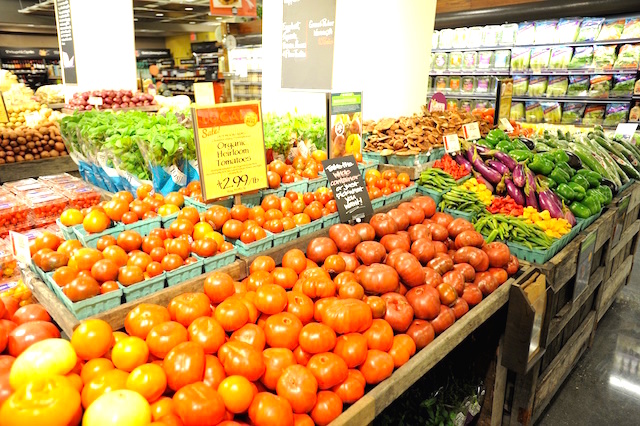
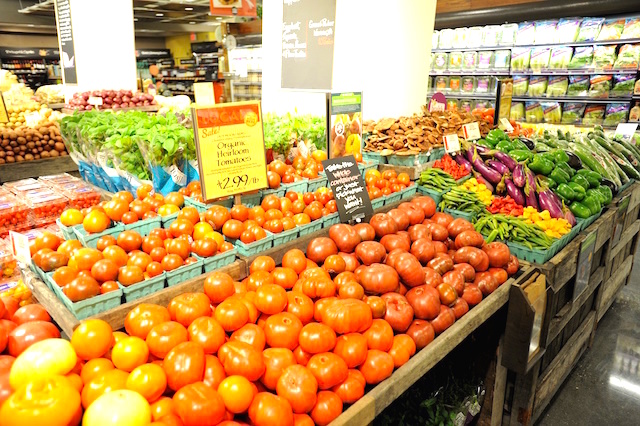
 A display of organic seasonal produce at Whole Foods in D.C.’s Foggy Bottom neighborhood. (Courtesy of Whole Foods Market)
by DCist contributor Bridget Dicosmo
Farmers markets are bursting with berries, greens, and other peak produce, making it a good time to delve into the ins and outs of organic eats. This month’s Federal Forager marks the second in a series examining the thoughts and feels that go into growing, selecting, and saving pennies on organic produce.
When Pearl Wetherall first began working on an organic farm, she grew slightly overwhelmed with the cooking choices presented by unfettered access to fresh produce.
“I really love to cook,” says Wetherall, who manages the New Morning Farm stand at Dupont Circle FRESHFARM Market. At the outset, though, she found herself struggling with trying to cook all of the many fruits and vegetables available to her so that nothing was wasted.
An overabundance of fresh organic produce seems like a good problem to have, but sometimes it’s hard to know how important it is to make organic food choices. Is it about health, the environment, or flavor? Is it vital to have organic cornflakes for breakfast? And does having a limited budget put organic food out of reach?
It helps to start with a definition of “organic”, courtesy of Whole Foods Market, the nation’s first certified national organic grocer. According to Mid-Atlantic Region spokeswoman Annie Cull, organic food is food grown with USDA-regulated farming standards that protect land and water supplies, prohibit use of toxic and persistent pesticides, and prohibit use of genetically modified organisms and irradiation.
For Wetherall, choosing organic is about having a mindfulness of how farming practices affect “not just the farm, but the environment around us.” That means relying on microbials rather than synthetic chemicals for fertilizers, along with a long list of federal standards that regulate everything from how many days a year livestock must be out at pasture (not less than 120) to labeling requirements (95 percent of ingredients must be certified organic in order for a product to be labeled “organic”).
For many shoppers, the number one benefit to eating organic is that the animals and the land are treated in what seems a much kinder and more sustainable way, says Anne Mauney, a nutritionist based in the D.C. region. “It’s voting with your dollars,” she says, allowing consumers to prioritize sustainable land management and animal treatment as a business practice they want to support.
While some consumers may look to organic farming as a way to support a healthy environment, even following organic standards won’t necessarily net completely pollutant-free products, according to the USDA, because the methods are aimed at minimizing releases from air, soil and water, meaning that the produce itself can still contain at least some pollutants.
If you’re shopping on a budget, Mauney suggests starting with the Environmental Working Group’s “Dirty Dozen”, a list that helps consumers understand which types of produce typically contain higher amounts of pesticides, thereby influencing their organic purchases. It can be a good idea, for example, to choose organic versus conventional berries, because they tend to be more porous than other types of produce.
“I focus mostly on organic produce,” says Mauney of her own choices, “especially where the part you’re eating is on the outside. Something like bananas, I don’t worry about as much.”
Wetherall says regional differences matter as well. For example, in the Northeast, orchard fruits such as apples, peaches, plums, and nectarines are more difficult to grow than in California, so they could require a greater amount of pesticides.
According to Whole Foods’ Cull, while many of their shoppers opt for organic over conventionally grown options, “there are other factors they consider as well, like whether the product was locally grown, if it is part of our Whole Trade ethical sourcing program, or just in peak season.” Sometimes it also takes time for certain varietals to be grown in accordance with organic standards; for example, the stores have been selling “cotton candy” grapes for a few years, but this is the first year they’ve been able to source the sweet varietal organically.
Regarding cooking oils, baking flours and mixes, and boxed items like cookies and crackers, personal concerns about GMO issues may influence what goes into that shopping cart. “Shoppers often prioritize organic—which always means non-GMO—when it comes to grocery items,” says Cull.
If “organic” is the word that you look for when purchasing, you can rest assured that it’s a term that’s taken seriously, notes Cull. The supply chain of a product with multiple ingredients is more complex, but the same USDA standards apply to each component, “going all the way back to what the cow was fed,” she says.