Rachel Kurzius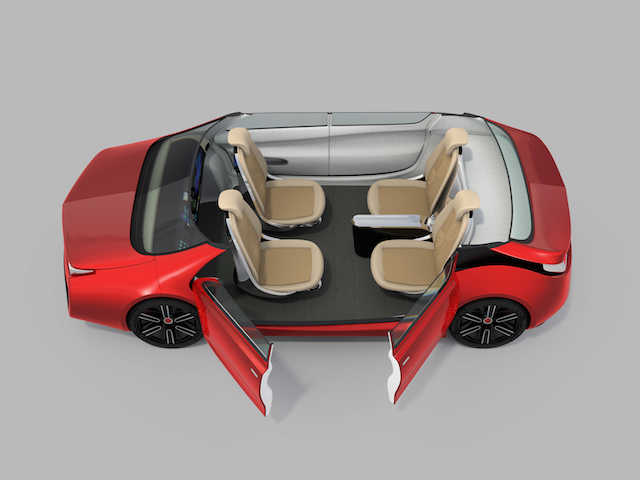
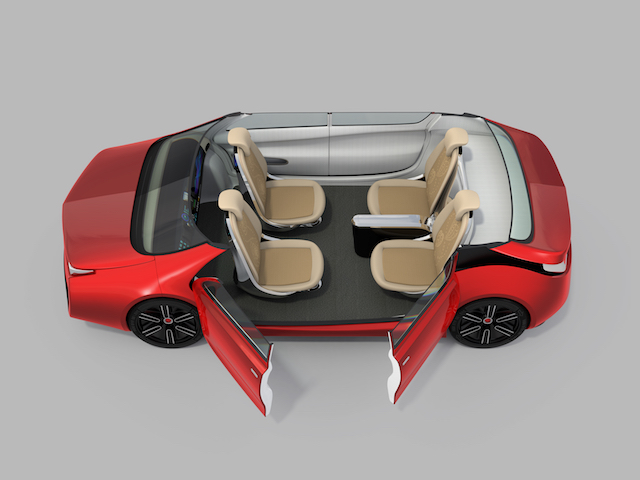 Self-driving car cutaway image courtesy of Shutterstock.
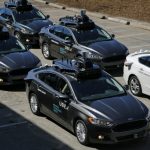
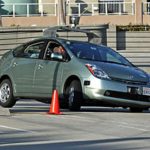
Uber announced that it will roll out a fleet of driverless cars in Pittsburgh this summer, making it the first company to bring autonomous cars to the ride-sharing market. As Bloomberg Businessweek puts it, there is one goal: “to replace Uber’s more than 1 million human drivers with robot drivers—as quickly as possible.”
While the venture is limited to the City of Bridges for now and the self-driving cars will still have “safety drivers” in the front seat ready to take over the wheel in case of any snafus, it’s clear that this is a gamechanger, and not just for Uber (which did not respond to requests for comment).
Its main competitor, Lyft shared a statement: “We remain focused on our work with GM to develop an on-demand network of autonomous vehicles. We are confident in our approach and continue to make progress in this area.”
Also confident in its approach, somewhat surprisingly, is the District’s taxi regulator, which says it has been preparing for this development.
The Department of For-Hire Vehicles—then called the D.C. Taxicab Commission—waged a brutal and losing battle against more stringent regulations for ridesharing companies like Uber and Lyft. It has recently tried help traditional cabs catch up with the newcomers; taxis now offer food deliveries, have an app for hailing cabs, and the regulator has proposed rulemaking for its own “XClass” ridesharing service.
“Next year will be a turning point,” says Ernest Chrappah, the acting director of what is now D.C.’s Department of For-Hire Vehicles (the name change says a lot about their shift in focus). “Do you remember this lady Cleo? I don’t want to be her, but what I can tell you is that [autonomous cars] will be here next year. In what shape or form, I don’t know. But we’re educating the industry that driverless cars are already here, and it’s all about adapting them.”
According to Neville Waters, a spokesperson for DFHV, there are more than 100,000 private vehicles (think Uber, Lyft, Split, etc.) and nearly 7,000 public vehicles (traditional taxi cabs) operating in D.C., though the DFHV mainly regulates the latter. It does enforce some private car compliance—for instance, making sure private drivers don’t pick up street hails, etc. And a lot of them are worried about what driverless cars could do to their bottom line.
“Drivers and everybody, really, are concerned about something new,” Chrappah says, but suggests that drivers could pool together to invest in driverless cars and treat them like rental properties.
“There’s a tremendous upside in terms of business opportunities if you can work with the technology. We’re finding the value and promise, rather than focusing on obstacles.” He maintains that something like this would turn drivers into business owners, “which is a good thing. If you’re a driver, you get paid by the hour.”
Michael daCosta, who drives primarily for Lyft but also does some rides through Uber, scoffs at the idea. “I’m never investing in anything like that,” he says. “It is never going to take off, not in D.C., not in Maryland, not in Virginia.”
But Chrappah disagrees. Driverless cars are “already here,” he says. There’s one autonomous vehicle that’s been cruising around National Harbor—Olli, which is equipped with IBM’s supercomputer Watson and can drive 12 people at a time while learning from them and gathering data. After a 30-day delay for updates and changes, Olli is now up and running.
While Local Motors’ original plan was for the vehicle to give tours to the general public, it has instead been carting around corporate reps and policymakers. “The response to Olli was pretty incredible,” says Tracye Johnson of Local Motors. “We’re addressing corporate interest first.” She says Local Motors still plans to use Olli for run-of-the-mill customer tours remains, probably in the fall.
Are we all going to be getting around in Ollis? Chrappah doesn’t think so. He says that he sees the near-future more in terms of retrofitting, meaning making existing vehicles autonomous. “Critical mass will only happen when people will retrofit their existing vehicles,” he says.
DFHV says it is also trying to integrate driverless vehicles into the regulatory landscape. The proposed rules for XClass include a definition for a “semi-autonomous vehicle,” as “a vehicle which has automation of at least two primary control functions designed to work in unison to relieve the operator of control of these functions, such as adaptive cruise control with lane centering.”
Driverless cars might not necessarily mean the end of drivers, though. Timothy Lee of Vox points out the case of ATM, which people thought would result in the end of bank tellers. “But that didn’t happen. ATMs made it cheaper to open a bank branch, allowing banks to open many more branches in the 1990s. As a result, teller employment has actually grown slightly over the last 40 years.”
daCosta says that he’s “not panicked because it’s going to take a long time for this to happen. I know that many passengers or riders will not want to do it for now, and there’s going to be somebody in the car anyway so it’s going to be five or 10 years from now” before driverless cars could threaten his job. By that time he sees himself returning to Ghana, where his mother lives and he retains business contacts.
But daCosta says that his confidence puts him in the minority of drivers he’s spoken to about the shift. “Most of the Uber drivers I talk to are worried and they think it’s going to happen soon, and they’re going to be jobless,” he says.
Updated to clarify how the DFHV regulates private vehicles.