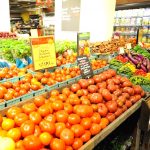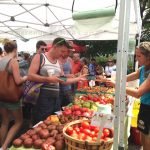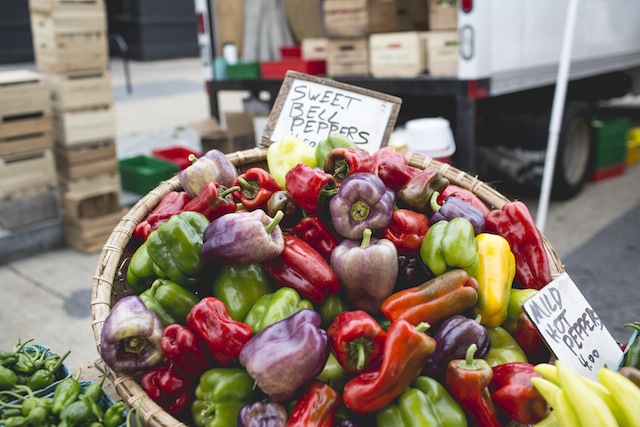
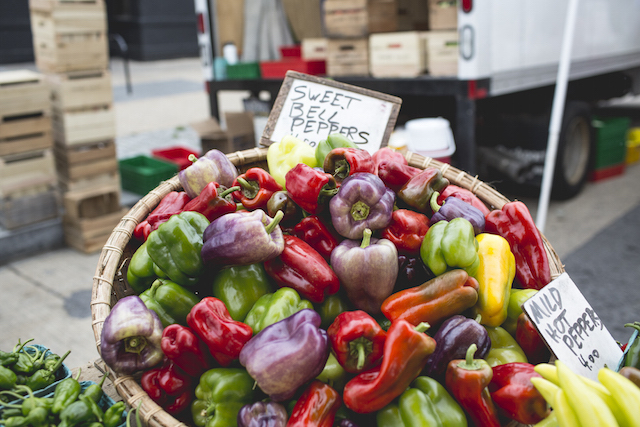
 Fresh local peppers on display at the H Street Farmers Market. (Photo courtesy of FRESHFARM Markets)
by DCist contributor Bridget Dicosmo
This latest edition of the Federal Forager marks the third in a series examining what goes into growing, selecting and saving on organic produce. Last time, we talked about zeroing in on the types of foods where going organic can make the biggest difference in terms of health and environmental benefits. One of the trickiest parts of buying organic is getting used to spending a little more. Organic produce can often be pricier than its conventionally-farmed counterpart, but we have some tips from experts on how to stretch your dollars when it comes to selecting organic fruits and veggies.
Know what you’re paying for
There’s a reason organic tends to cost more. Many of the same factors driving prices for conventional products—growing, harvesting, processing, and transportation—also affect organic items, says Annie Cull, spokeswoman for Whole Foods Market’s Mid-Atlantic region. On top of that, organically-produced foods must also meet stricter regulations governing each of those factors.
One key aspect of pricing comes from economy of scale. Small, local farms that adhere to organic standards and grow a variety of crops generally tend to be more labor-intensive than large conventional farms with “acres and acres of monoculture,” says Pearl Wetherall, who manages the New Morning Farm stand at Dupont Circle FRESHFARM Market. When you have a smaller amount of land and the crops are diverse, things like fertilizing practices and field rotation carry more labor costs.
Even if local produce doesn’t have organic certification, it tends to be pricier because it often comes from smaller farms, according to Emily Best, who manages Tuscarora Organic Growers Co-operative.
The Rodale Institute’s Organic Price Report offers an interesting side-by-side comparison of the wholesale prices of organic versus conventional produce in different parts of the country, costs which eventually impact the consumer. For instance, the wholesale price of 4.5 pounds of blueberries in the northeastern U.S., whether conventional or organic, was roughly the same in mid-August, $32 vs. $33.50. Conventional blueberries in Los Angeles were wholesaling for $16 for the same quantity. Organic blueberries from the West Coast, however, came in at more than twice that amount, nearly $37.
Buy in season
“It’s cheaper when it’s more abundant,” Best says, pointing out that consumers often pay a higher premium for produce that shows up before its time, like Early Girl tomatoes. “At peak season times, you’ll probably get a lower price,” she says.
There are lots of guides out there for identifying growing seasons, but Best suggests just doing some seasonal scouting at your local farmers market. Make a list of everything you see on display, and then take that list to your local grocery store to look for more affordable organic products. Large chain grocery stores often buy from more commercial organic farms, which means the produce often has a lower price tag.
Compare prices online
The Organic Consumers Association (OCA)—a nonprofit that helps consumers find the organic products—offers a way to comparison shop online. OCA provides excellent resources detailing local co-ops, community supported agriculture, farm shares, and other options for buying directly from farmers, which can also help slash costs.
Give leftover produce some love
“People on a limited budget should feel free to ask about what is leftover,” says Best. Farmers often have a surplus they would rather not transport back home. They are also more likely to display their prettiest product samples,—but ugly fruits and vegetables taste just as good, so make sure to ask about what is not on the table.