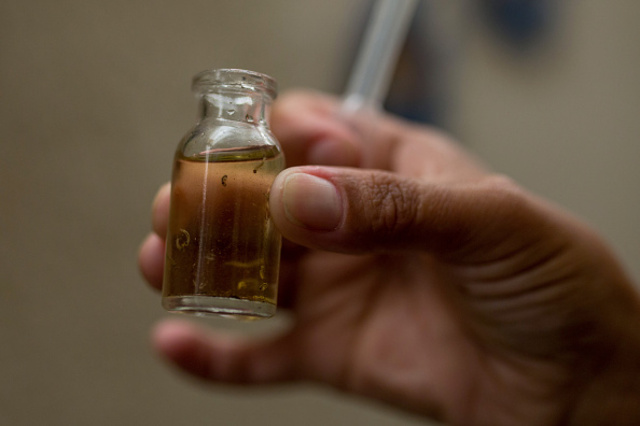
 Photo by Victor Moriyama/Getty Images
The Food and Drug Administration is expanding its guidelines for protecting the country’s blood supply against Zika. The agency issued a notice today that urges all U.S. blood centers to start screening for the mosquito-borne virus.
The announcement comes as officials remain uncertain about how the virus could spread throughout the country, the FDA’s Peter Marks said in a statement. Up until this point, the agency only recommended that areas with local transmissions perform the screenings, which are currently taking place in Puerto Rico and Florida, among other places.
In most cases, people are infected with Zika through mosquito bites. However, there have also been cases of intrauterine, perinatal, sexual, laboratory-acquired, and transfusion-associated transmissions, according to the FDA. Symptoms show up in the form of fevers, joint pain, and rashes. More alarming, infections during pregnancy can cause serious birth defects. However, four out of five people infected with the virus never develop symptoms.
The Pan American Health Organization issued an alert about the first confirmed Zika virus infections in Brazil last May. Since then, outbreaks have occurred in more than five dozen countries. And in February, the World Health Organization declared it a public health emergency of international concern.
When Zika hit the U.S., it was found in people who were infected while traveling overseas. The first report of the virus being transmitted within the U.S. and its territories was last December in Puerto Rico, which now has more than 8,700 cases of local transmissions. The first Zika-related death in the U.S. was reported in Puerto Rico in April.
Soon after Puerto Rico, local transmission were reported in American Samoa and the U.S. Virgin Islands. And last month, Florida reported local transmissions that have occurred in Wynwood and Miami Beach. The state currently has more than 40 cases, according to Florida’s health department.
The FDA’s expansion of blood screenings will be in effect “until the risk of transfusion transmission of Zika virus is reduced,” the agency says.