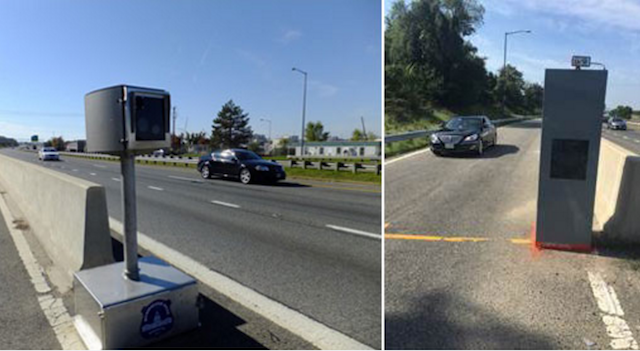
 Speed camera on northbound DC-295 in 2014 (left) and 2016 (right). Photos courtesy of AAA Mid-Atlantic.
The thought of getting a ticket in the mail after whizzing past a D.C. speed camera can make anyone anxious, but the potential of crashing into a speed camera has some folks even more concerned.
AAA argues that the location of a speed camera apparatus on the northbound side of DC-295 poses a safety threat to drivers and doesn’t comply with federal guidelines. Its current position takes up lane space in an area where drivers enter a truck inspection site from the highway.
The device’s position affects the safety of drivers who operate big trucks, rigs, and commercial vehicles, according to AAA Mid-Atlantic. In addition, they say, it’s also dangerous for everyday drivers who accidentally pull into the inspection area after mistaking it for an exit lane. Possible outcomes raised by the camera’s position range from a car crashing directly into the camera or the device, which is mounted in a nearly 8-foot-tall steel box, toppling onto a vehicle as a result of another crash.
Last year, this particular speed trap was the third most lucrative in D.C., responsible for nearly 70,000 tickets and $7.1 million in revenue, according to an investigation by WJLA.
Initially, a smaller camera was placed at the site in front of a Jersey wall. However, this sleeker model was replaced with a “bulkier steel-reinforced model,” John Townsend of AAA Mid-Atlantic said in a statement.
D.C. police spokesman Dustin Sternbeck told WTOP, which first reported the complaints, that officials moved the camera late last year because of safety challenges associated with it being placed in front of the barrier. “The service road is not a through-traffic road, which factored into the decision to move it over a couple feet,” Sternbeck said.
But the changes in design and location raise the question of “whether the District is more concerned about raising revenue or paying lip service to road safety,” according to Townsend. “For optimal safety, camera units must be re-located from the edge of traffic lanes to a safer place that doesn’t put lives and limbs at risk,” he said.