Rachel Kurzius
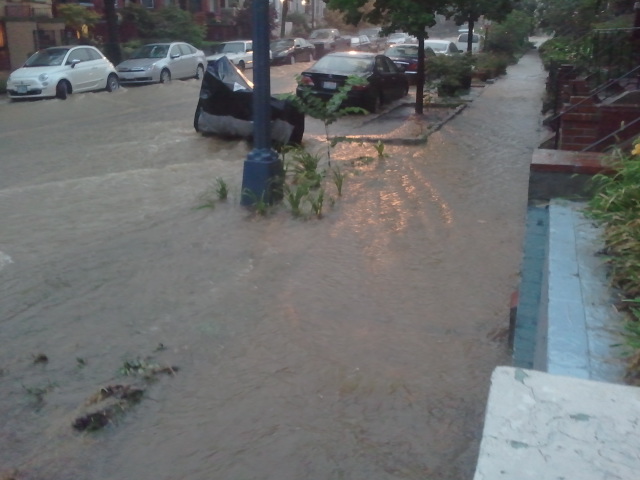 Bloomingdale flooding in July 2012. (Photo by@kgaines)
For years, extreme rain meant flooding for houses in Bloomingdale and LeDroit Park. (Remember 2012, when torrential storms gave us Lake Rhode Island again and again?)
While the First Street Tunnel is part of a long-term infrastructure project intended in part to alleviate the problem, DC Water is also offering homes in the neighborhood rebates of up to $3,000 for protection from sewer-related flooding. Examples of measures that would be covered include doorway barriers, window well protection, and yard regrading.
To be eligible for the rebate, you need to have your plan pre-approved by the agency, which will be offering free home consultations. DC Water will consider homes outside of the designated area on a case-by-case basis.
“Even with the tunnels in place and the other measures we’ve done, if you had a 100 year storm there’s still a possibility that you’re going to have some flooding,” says John Lisle, DC Water spokesperson. “This is an additional layer to protect people.”
DC Water previously offered rebates of up to $6,000 for homes to install backwater valves, focusing on pipes, whereas this rebate is about “overland protection,” Lisle says. Around 75 households took them up on the offer, but he doesn’t think as many will go for the rebate this time around.
“I’d be surprised if that many people take advantage of it,” Lisle says. “It’s been four years since we had the most severe flooding in that neighborhood.”
The First Street Tunnel itself is complete, though Phase I won’t be finished until it’s connected to existing sewers with diversion chambers, shafts, and adits (mini tunnels). DC Water expects that work will all be done by late October, Lisle says, which is when they expect to re-open traffic on First Street and Adams Street NW. (Initially, DC Water anticipated a March 2016 end date, and the website’s FAQ still reflects that.)
For now, the First Street Tunnel will essentially be a storage tank, holding up to 3 million gallons of water until storms pass. The water will then be pumped into the sewer system. DC Water projects that this will reduce the probability of flooding in a year from 50 percent to 15 percent.
Then, during Phase II, they’ll build the Northeast Boundary Tunnel, which will connect to the First Street Tunnel and others to bring the water directly to Blue Plains Advanced Wastewater Treatment Plant. DC Water says that will further reduce flooding to 7 percent.
If you want to learn more about the rebates, go to www.dcwater.com/bloomingdale.