
The AFI Silver’s 27th annual Latin American Film Festival opens tonight and runs through October 5. We previewed opening night film El Amparo yesterday; here’s a look at more of the festival’s offerings. A full schedule and tickets are available here.
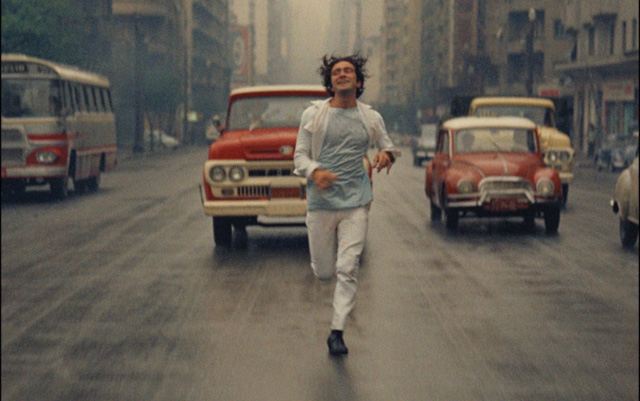
The social unrest of the 1960s led to aesthetic experimentation around the world. In Brazil, this took the form of Cinema Novo, a movement of young middle-class filmmakers who strove to depict the reality of Brazilian life in a new and exciting way. Director Eryk Rocha has made a loving tribute to the movement’s politics and freewheeling visuals. With clips from the movement’s landmark films and vintage interviews with directors like Carlos Diegues (Bye Bye Brasil), Joaquim Pedro de Andrade (The Priest and the Girl), and Eryk’s father Glauber Rocha (Black God, White Devil), the film vividly demonstrates an aesthetic that moved from raw, neorealist-inspired drama to the kind of wild exercises you expect from late ’60s underground filmmakers. But the film is not friendly to those unfamiliar with this cinema, only occasionally identifying the many film clips shown. For instance, the movie doesn’t identify scenes of a grown man falling from an elderly woman’s womb; further research tells me this is from de Andrade’s notorious 1969 comedy Macunaima (could the AFI please screen this someday please?), one of the most intriguing entries in Amos Vogel’s essential book Film as a Subversive Art. Cinema Novo, which makes it’s North American premiere at the festival, will lead the adventurous on an unforgettable cinematic journey. But good luck matching the footage you see with the long list of movies in the credits.
Watch the trailer.
Tuesday, September 27 at 7:15 p.m. Filmmaker Eryk Rocha will appear at the screening for a Q&A.

Calling to mind both Gus Van Sant and Gregg Araki, this idiosyncratic film is built on a unique twist of crime fiction tropes. Miguel (Diego Calva) is a clever, sullen young man trapped in a love triangle with his best friend Johnny (Eduardo Eliseo Martinez), the son of Miguel’s family’s maid, and Johnny’s girlfriend Adri (Shvasti Calderón). Splitting the difference between the art house coming of age tone of Y Tu Mama Tambien and the lo-fi street noir of Mean Streets, Anarchy also chronicles Miguel’s side hustle as the ringleader for a gang of skate kids who donate blood to drug dealers. It’s an interesting, if fundamentally flawed narrative balancing act. The stakes of the crime drama never quite feel high enough, while the emotional charge of the love triangle is far more engrossing. Calva delivers a stirring performance at the film’s heart, buoyed by a hip needle drop soundtrack and wistful cinematography, but the movie functions best as a portrait of the peculiar, intersectional crossroads between love and friendship, sex and class, age and emotional maturity.—Dominic Griffin
Watch the trailer.
Monday, September 26, at 7:15 p.m. and Wednesday, September 28 at 9:25 p.m.

Elderly residents of the small Paraguayan town of Cateura remember that 25 years ago, the area boasted clean rivers with potable water. But now the town is essentially a landfill, its citizens making their living as gancheros, sorting through garbage for recyclables. When Favio Chavez began to offer free music lessons to the children of Cateura, interest was so great he didn’t have enough instruments for everyone, but Nicolas Gomez, a local ganchero who also worked as a carpenter, offered to build instruments from trash. Thus the Recycled Orchestra was born. The movie depicts a heartbreaking way of life that makes you appreciate the easy availability of music here; one ganchero, the father of a young musicians in the orchestra, explains that he found all sorts of cassette tapes in the trash, and that one of his favorite finds was an album by Phil Collins, you want to cry that he can find such joy in someone that we jaded music snobs in America generally take for granted.
The music of the youth orchestra is raw at first, but hard work and determination gets them to a festival in Brazil, and they soon become a worldwide viral sensation, playing alongside Megadeth and even touring with Metallica. However, the orchestra’s success presents new challenges, and doesn’t fundamentally change the situation in Cateura. The movie raises questions it doesn’t answer: is there anything patronizing about the heavy metal world’s embracing of these young metal musicians? Maybe. But this is still a heartbreaking and inspiring movie.
Watch the trailer.
Saturday, September 17 at noon. Filmmaker Graham Townsley and co-producer Jorge Maldonado will appear for a Q&A.
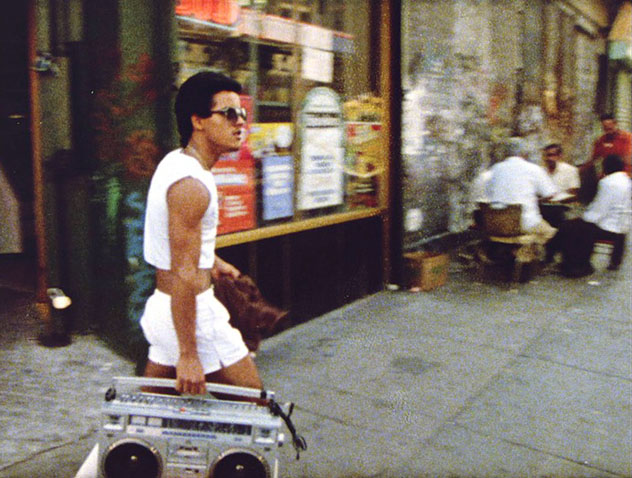 South Williamsburg circa 1984
Williamsburg has been one of the hippest parts in Brooklyn for years now. But in the early ’80s, it was a predominantly Puerto Rican neighborhood that was one of the poorest in all of New York. Chilean-Puerto Rican filmmaker Diego Echeverria captured this stunning portrait of South Williamsburg on grainy 16mm film, following the lives of petty criminals, single mothers, and working class residents just struggling to survive. Los Sures is a time capsule of life before gentrification, but it’s also a reminder of what documentaries looked like before animated reenactments, with the kind of shot coverage and editing rhythms that you could see on public television any time in the ’80s, a visual style that has given way to increasingly slick productions. Living Los Sures, a project that expands this one-hour film with updates on the incredible changes the neighborhood has seen, is in the works.
Watch the trailer.
Friday, September 16 and Monday, September 19-Thursday, September 22. Tickets for these screenings are only $5.
 (Kino Lorber)
Director Gabriel Mascaro’s largely plotless film is made whole by mesmerizing, evocative imagery and a keen eye for detail. Neon Bull follows Iremar (Juliano Cazarré), a bull handler with an eccentric side hobby as a fashion designer. We see his esoteric works put to use by Galega (Maeve Jinkings), a rodeo driver who moonlights as an exotic dancer. There’s something both haunting and beguiling about watching a woman in a horse mask writhing in the dark, as if Lady Gaga was channeling Madonna’s iconic “Take A Bow” video on mescaline. Mascaro observes this traveling band of outsiders with a sentimental scope, capturing the fascination in the chasm between their rustic surroundings and the loftier, dreamlike nature of their rich inner lives. In one scene, Iremar transforms a tattered nudie rag into his personal canvas, sketching panties over a naked model while conjuring his next outfit. Sexuality is depicted with a curious warmth, both as the physical expression of closeness in this washed out world and as fodder for off kilter humor, particularly in a strange heist scene of sorts when Iremar and a cohort attempt to spirit away with prime stock horse semen. Perhaps the most visually lyrical film you will see this year to feature a man surreptitiously jerking off a horse.—Dominic Griffin
Watch the trailer.
Saturday, September 17 at 9:30 p.m. and Wednesday, September 21 at 9:30 p.m.
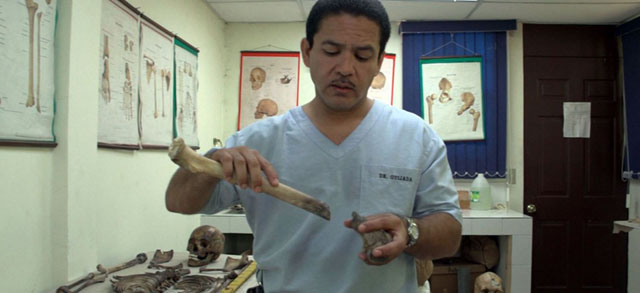 Dr. Quijada demonstrates evidence of a decapitation
In a region of El Salvador considered one of the most violent in the world, a team of forensic anthropologists have spent decades sorting out the unidentified remains of those murdered or disappeared during the Salvadoran Civil War. To help families find out what happened to their missing loved ones, severely decomposed bodies are “skeletonized” for reassembly in a small room at the Legal Medicine Institute. Though only an hour long, this procedural is of course difficult to watch, less for grisly shots of examiners scraping decayed flesh from bones, but for painful testimony, as of a woman who lost most of her family to war and gangs, and of an examiner who unemotionally pieces together a brutal narrative from skeletal remains. Director Marcela Zamora Chamorro has assembled an unflinching, quietly powerful portrait of a gruesome and never ending task.
Watch the trailer.
Monday, October 3 at 7: 30 p.m.