Rachel Kurzius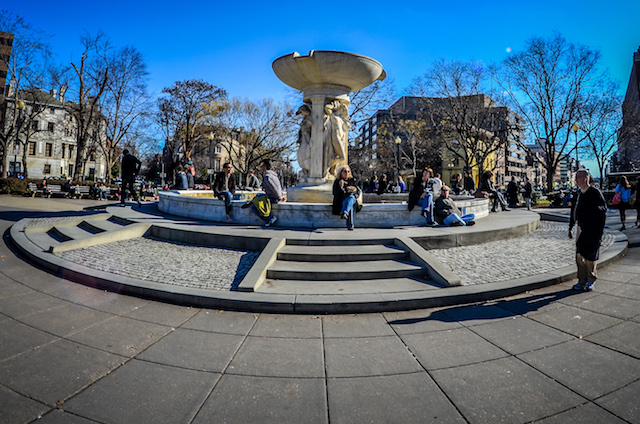
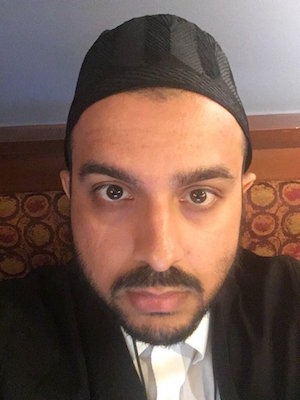 Rashid Dar. (Photo via Twitter)
This afternoon, Rashid Dar was walking with his brother in Dupont when a man he didn’t know approached him and punched him in the throat, all without saying a word.
Dar, a researcher at Brookings and a Muslim man, was about to finish up a sermon he was set to give downtown. “I believe I was attacked for the way I was dressed,” he says.
As is his tradition on Friday afternoons, he was clad in a black overcoat often worn by imams and a taqiyah, a hat worn to pray. “It is generally my habit to wear overtly Muslim clothing on my way to Friday prayer,” Dar says. “I’m a proud Muslim. I don’t feel the need to apologize for it.”
Dar’s brother went after the man, Dar says, and the two were circling one another for a moment, before the alleged attacker ran away.
Dar reported the incident to the police and says a detective has been assigned to the case. D.C. Police does not comment on ongoing investigations, but confirmed they received a call about an unprovoked assault in the 1200 block of 19th Street NW.
“Given the unprecedented rise in anti-Muslim sentiment, we’re concerned about a possible bias motive,” says Ibrahim Hooper, the communications director for the Council on American-Islamic Relations. “We don’t know what the motive is now, but we’re looking into it. The fact that he was dressed in quote Islamic attire is one of the things, just as headscarves seem to be.”
Dar says this is the first time that he has faced harassment in D.C., but his wife, who wears a headscarf, has dealt with Islamophobia on a more consistent basis. “Muslim women go through a hell of a lot more than Muslim men,” he says. A Muslim woman was attacked by a self-proclaimed Donald Trump supporter in Chevy Chase this May.
Both Dar and Hooper mention the Republican nominee as contributing to a more hostile environment for Muslims in America. “He has mainstreamed Islamophobia and anti-Muslim beliefs,” Hooper says.
Dar says that, in his experience, Muslims are facing more discrimination now than after September 11. “Things that were previously kept in the shadows and not within polite company could now happen in broad daylight,” he says. “This happened in broad daylight.”
All in all, he says he’s lucky. He points to the outpouring of support he’s received from colleagues and even strangers. “Aside from getting punched in the throat, I think I had a pretty good day. This incident hasn’t decreased my faith in the kind of people I am surrounded by, even on the streets.”
Physically speaking, he’s doing fine. “I’m okay, I’m speaking to you right now,” he says. “I’d like to use this incident to raise awareness about what happens when someone dares to be proudly Muslim. I’m just a guy who happened to have a Twitter account and an online presence, but there are so many other Muslims who are facing victimization on a daily basis.”
Dar still gave his sermon about the mercy of God. “I went on to give a fine sermon, if I do say so myself,” he says. “I made a joke about how I came here to give a sermon to you about the fundamentally merciful nature of God and he sent someone to punch me in the throat on the way here.”