 Abacus: Small Enough to Jail (Kartemquin Films)
When Diana Schemo was working as a print journalist from the 1980s to the late 2000s, readers consumed investigative reporting primarily on the printed page. Around the time she left the New York Times in 2009 to work on a book, a shift happened, as if right before her eyes.
“Suddenly there was this outpouring of great journalism,” Schemo tells DCist, but it wasn’t happening at traditional outlets like the Times or The Washington Post. “Every one of these places was losing great talent. We felt that was too important for great democracy.”
In 2011, along with her colleague Philip Shenon she started 100Reporters, a consortium of investigative journalists from across the country and around the world. One of the organization’s biggest projects, the Double Exposure Film Festival, is about to start its second year tomorrow at the National Press Club and National Portrait Gallery with eight films and several dozen speakers.
To help merge the worlds of film and investigative journalism for the benefit of both, Schemo hired former AFI Docs festival director Sky Sitney as her co-director.
“We saw this interesting intersection because you had so much great work coming out at completely different points of departure that actually seldom talk to each other,” Schemo says. “We felt like, let’s put them together.”
The festival launched last year in a splashy fashion. The eventual Oscar-winning Best Picture Spotlight opened the event with a screening and panel discussion moderated by The Wire creator David Simon and featuring director Thomas McCarthy and the real-life reporters depicted in the film. Later, Edward Snowden appeared via Skype during a symposium discussion of the whistle-blowing documentary 1971.
This year’s offerings promise to continue that tradition. On opening night, visitors will screen The Ivory Game (October 6 at the National Portrait Gallery), a documentary narrated by Leonardo DiCaprio that exposes the dark underside of the elephant trade in Africa. Schemo and Sitney chose the film because it represents a more traditional form of investigation coupled with an experimental twist—one of the main characters is a reporter who gradually takes on a more participatory role. Several of the movie’s subjects will discuss their experiences in a panel after the screening.
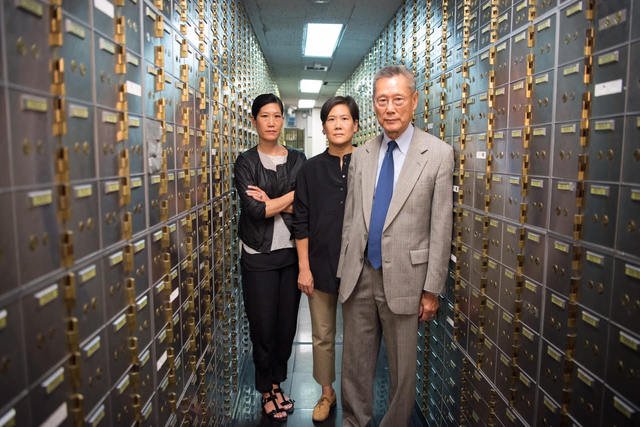
The event will wrap up Saturday night with the D.C. premiere of Abacus: Small Enough to Jail (October 8 at the National Portrait Gallery), the new film from legendary documentarian Steve James. The 90-minute documentary follows a Chinese immigrant’s New York-based bank as it becomes the only U.S. bank to face criminal charges in the wake of the 2008 economic crisis.
Meanwhile, a sprawling list of speakers includes such luminaries as Ezra Edelman, a D.C. native who directed this year’s massive ESPN documentary series O.J.: Made in America; Kirsten Johnson, whose new film Cameraperson opens in D.C. next Friday; and Caitlin Dickerson, an award-winning reporter formerly of NPR who now writes for the New York Times. Investigative journalists and other staffers from The Washington Post, The Atlantic, Fusion, The Intercept, and The New Republic are also set to appear, as well as several freelancers.
“We want to be known not just for the films that illustrate the points we’re making about the boundaries being expanded, but also a place where the practitioners, the funders, the editors, the distributors, they can come to connect with the people who are producing the content,” Schemo says.
The shift Schemo witnessed a few years ago wasn’t just one of personnel. People now seem more willing to connect with complex yarns when they’re sitting in front of a screen instead of scrolling through a dense article or picking up a newspaper, Schemo says.
Now the kinds of reporting that’s widely sought out are available on a wide array of platforms, Sitney says. Popular works like HBO’s The Jinx, Netflix’s Making a Murderer and — of course — the landmark podcast Serial have further exacerbated the hunger for revelatory storytelling. (Schemo and Sitney invited Koenig to participate in this year’s festival, but alas, she had a prior commitment.)
Both years, Schemo and Sitney chose films and events that they thought represented the best, and the most up-to-date, vision of what this new landscape has to offer. Looking ahead, their plan is to add new features like grants for aspiring documentarians and showcases for ultra-modern media like virtual reality. Ultimately, they want to be at the cutting edge of innovation for the kinds of storytelling they think is vital.
“This is a place where there’s such interesting work happening, especially as we’re heading into the election,” Schemo says. “I think it’s kind of an idea that’s right for the times.”
Double Exposure screenings take place at the Smithsonian’s National Portrait Gallery and National Press Club from Oct 6 through 8.