Rachel Kurzius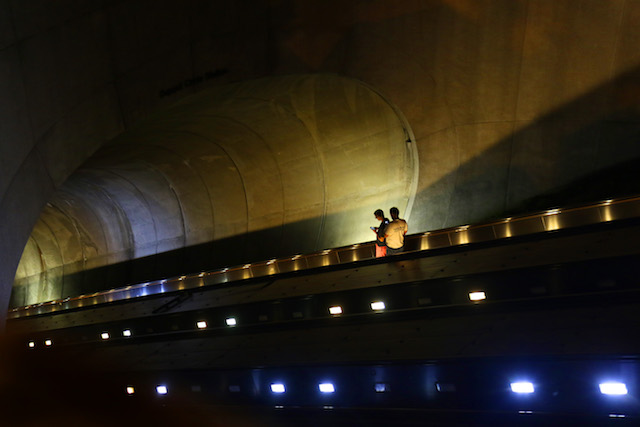
 Photo by Fritz Myer.
United for the past year about what it will take to pull WMATA back from dire straits, the two public faces of Metro—General Manager Paul Wiedefeld and Board Chair Jack Evans—now disagree when it comes to bringing back late night train service.
For the duration of Metro’s yearlong maintenance program, the system has nixed its late-night weekend rides and extended hours for events.
When SafeTrack ends, though, Wiedefeld wants the rail system to continue operating for eight fewer hours per week so that crews have more time for maintenance. Here are the four proposals Metro introduced in September to get those extra hours:
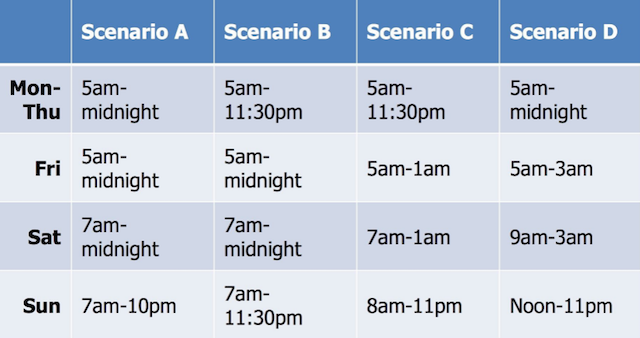 Image via Metro.
“The additional track time increases safety and reliability by giving workers the time and space they need to keep Metro’s infrastructure in a state of good repair,” WMATA said in a release back in July.
To make up for the decrease in service, the agency said it would add more bus routes and increase their service frequency. Metro fleshed that out yesterday by introducing its supplemental service plan.
But Evans, who also serves as the Ward 2 councilmember, is introducing a resolution at the council on October 11 to “declare the sense of the Council in support of maintaining late night service hours.” He has previously said he would oppose anything that would shorten operating times for the system.
The resolution calls late night service key to the region’s economic and safety needs, and would add to a growing clamor for its restoration. A group of 40 Maryland officials requested that Metro reconsider its plan, citing concerns about public safety, people who work late-night shifts, and developments built around Metro stations.
Michael Sampson, an organizer with Project Retail, a network of food and retail workers, says that the plan would disproportionately affect their members. “How are they going to accommodate working people in D.C. who need to get home and see their kids?” he asks. “Just because you have to deal with those issues now doesn’t mean you have to take it out on the backs of working people.”
Even ace Nationals pitcher Max Scherzer weighed in, tweeting that a 10 p.m. closure during SafeTrack was “nonsense” as the team began its playoff journey.
From what it sounds like, fans need a Midnight Train… A Midnight Train going anywhere. https://t.co/7rdeO0rcrs #DontStopBelieving
— Max Scherzer (@Max_Scherzer) September 30, 2016
So far, Metro has not granted any special accommodations for different events throughout the region during SafeTrack, despite a request from Mayor Muriel Bowser.
Public comment on the plan opened up on October 1 and lasts through the 25th, in addition to a public hearing on October 17—both are necessary components if the agency intends to change hours on a permanent basis. Metro would then present these findings to the board in December.
If the board approves of one of the scenarios, the changes would begin on July 1, 2017.
Sense of the Council Metro Late Night Hours EMER by Rachel Kurzius on Scribd