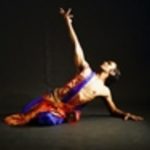
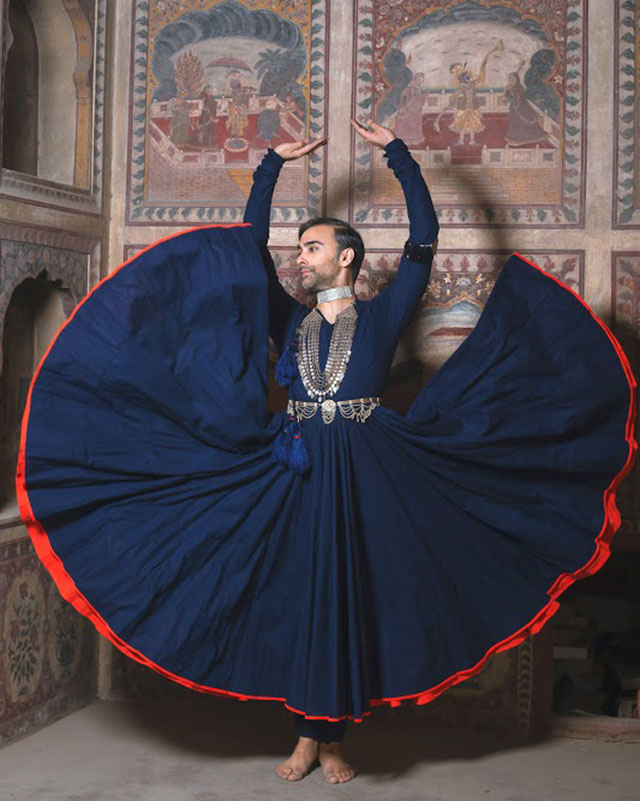
 Rehan Bashir, Photograph by Rehan Khan.
By DCist contributor Elena Goukassian
Think of Daniel Phoenix Singh as the South Asian dance ambassador of D.C. In 2003, he founded the Dakshina/Daniel Phoenix Singh Dance Company, which fuses traditional Indian and modern western dance, and launched the Annual Fall Festival of South Asian Arts, bringing dancers and musicians from South Asia to perform in D.C.
Singh started the festival because there were few examples of classical Indian dance in town. Unless you’re already a part of the Indian-American community, he explains, traditional South Asian dance isn’t easy to come by.
“I wanted to present Indian dance on mainstages,” Singh says. “You often see it at weddings and temples—which is how dance is traditionally performed in India—but it doesn’t get the same professional respect as ballet.” He sees the festival as an opportunity to introduce D.C. residents to Indian dance and prove its worth.
Singh takes frequent trips to India, where he goes to performances and invites his favorite dancers to the festival. This weekend’s performers hail from Pakistan, India, and Bangladesh. Singh is particularly looking forward to the appearance of Pakistani Kathak dancer Rehan Bashir.
“I saw a YouTube clip of him and I was so inspired,” Singh says. “Both his stillness and the movement feel like dancing.”
For those unfamiliar with traditional South Asian dances, Singh provides brief explanations of the basic dance movements you’ll see at this year’s festival. The accompanying videos show some of the dancers performing this weekend.
Kathak: “Kathak is a traditional northern South Asian dance influenced by the Mughals,” Singh says. It has a strong Muslim influence and lots of rolling dervishes, but the facial and hand gestures are softer.
Mohiniattam: “It looks like a dance of the palm trees in Kerala, on the southwestern coast of India,” Singh says, “It’s very lyrical.” The steps include figure eights and the footwork is subdued, with most of the attention paid to the upper body.
Bharatanatyam: This dance has very elaborate footwork, facial expressions, and hand gestures. This is probably what you think off when you think of classical Indian dance—and Bollywood movies.
Kuchipudi: Singh says that Kuchipudi used to be a folk dance, but now it’s numbered among the classical arts. It’s characterized by its bouncy walks and stomps.
One thing these dances all have in common is the importance of facial expression. “The facial expression highlights the storytelling,” Singh says, noting that all these dances have a specific story or myth to tell. “The facial expression is the soul of the dance. Rather than a neutral or painted-on look, you go through an emotional arc.”
Dakshina’s 13th Annual Fall Festival of South Asian Arts is at Atlas Performing Arts Center, October 21-23. Buy tickets here.