Coffee has long had the advantage over tea in America, with a stronger caffeine content than even the blackest of teas. But tea is making a comeback. This is partly due to a growing appreciation for the varieties of Japanese, Chinese, Indian, and Kenyan single leaf teas that are now available, but also because of the more relaxed, all-day sipping lifestyle that a whole pot, with its potential for multiple infusions, has to offer. For those who know where to seek it out, tea is taking center stage from side street cafes with carefully selected stocks to the grandest of hotel tearooms.
 Ching Ching Cha’s Kung Fu tea preparation involves several steps of rinsing tea and warming small containers with hot water. The Yi-xing teapot is porous, which aerates the tea and retains heat. (Photo by Nathan Wilkinson.)
CHING CHING CHA: Of all the tea-producing countries in the world, China has the greatest variety of flavors, from the needle-like buds of airy white teas and light, grassy greens to the toasty or milky oolongs and rich or smoky black teas. Ching Ching Cha has a wonderful selection of all of them. Ching Ching has owned and operated the little tea shop in Georgetown for more than 18 years. She specializes in Chinese tea service known as Kung Fu, meaning skills that require practice to master. These teas are steeped at the perfect temperature in Yi-xing clay pots and served in small white china cups that accentuate the teas’ colors. The other style Ching offers is Gaiwan, or the use of a simple personal tea cup with straining lid for a more casual drink. There’s a plethora of iron and ceramic teapots for purchase in the tea shop as well as an excellent representation of China’s bounty in bulk teas.—Nathan Wilkinson
Ching Ching Cha is located at 1063 Wisconsin Avenue NW
 Teaism offers a respite from busy cafes. (Photo by The Spider Hill)
TEAISM: Striking the perfect balance between casual café dining and a superior and unadorned tea selection, Teaism is my first choice for everyday sipping. The Dupont Circle location opened in 1996; now the city has three restaurants with accompanying tea shops for bulk leaves and accessories. You won’t find any trendy fruit blends or mass-produced bag tea here. Teaism’s philosophy is to allow the quality of the tea to shine through. This makes it a great starting place for tea novices who are looking to taste properly steeped (or whisked) single leaf teas. They’re not snobbish about their tea service either: you pick your order up from a window when they call your number. No muss, no fuss. The café’s name references a 15th century Japanese aesthetic movement that bordered on a religion that was all about adoring the beautiful among the sordid—a perfect description of the dining experience. When I go to the Penn Quarter location, I hurriedly leave the first floor (where lines of impatient lunchers toe tap and talk loudly on their phones) to find a cozy spot downstairs by the koi pond.—Nathan Wilkinson
Teaism locations are at 2009 R Street NW, 800 Connecticut Avenue NW, and 400 8th Street NW.
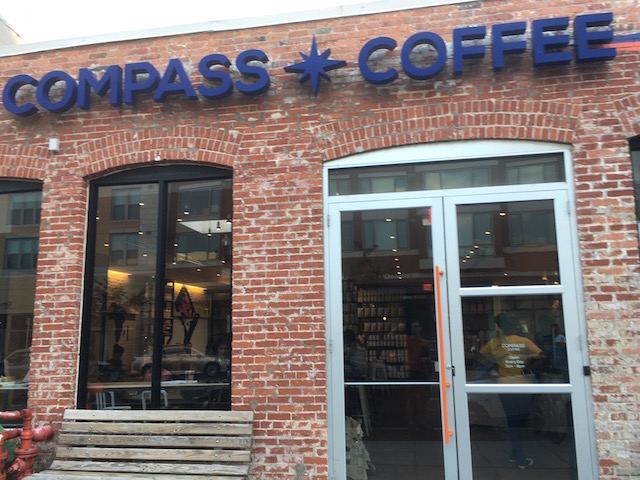 Compass Coffee’s original location in Shaw is where it all started for Michael Haft and Harrison Suarez. (Photo by Nathan Wilkinson.)
COMPASS COFFEE: Tea often gets second-class status at coffee shops that put an enormous emphasis on their coffee. Not so at Compass Coffee. When former U.S. Marines Michael Haft and Harrison Suarez started roasting their own coffee beans at their shop in Shaw, they rejected the oft-maligned practices of gigantic coffee franchises. Coffee needn’t be over roasted and bitter, and tea is more than an afterthought, a low quality teabag thrown into a grande-sized cup and left to steep weakly into too much water. Haft and Suarez were optimistic that their tea selection could match the quality of their coffee blends. When they couldn’t find a tea importer that could provide that kind of quality they wanted, they decided to do it themselves. While the tea menu doesn’t rival boutique shops specializing in tea, they have a great Lavender Earl Grey, a Jasmine Green, and a handful of herbal blends like Raspberry Rose Petal and Moroccan Mint that should satisfy most tea aficionados. —Nathan Wilkinson
Compass Coffee is located at 1535 7th Street NW and 1921 8th Street NW.
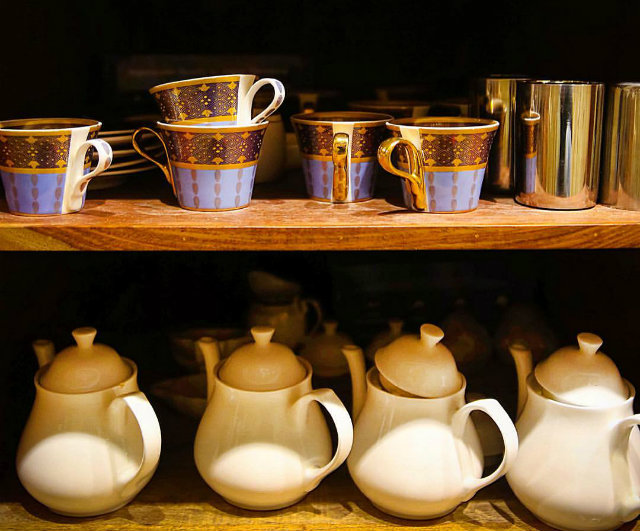 Pansaari brews chai using traditional preparations. (Photo via Facebook)
PANSAARI: First things first: chai means tea in Hindi. If you order a “chai tea,” it’s redundant. In the popular imagination, “chai” is spiced Indian tea, which is technically true, but don’t conflate two preparations. Chai is sweet, milky Indian tea with fresh cardamom. This is what the chaiwallahs pour in “Slumdog Millionaire”—the classic street drink. The more complexly spiced chai is masala chai, “masala” meaning spice blend. Both of these (and more) are served at Pansaari, which rigorously sources its ingredients and brews its chai according to tradition. In terms of flavor, the basic chai is a comforting hug with a cardamom zing. Masala chai is punchy enough to cure your hangover. The spice-forward blend begins with a ferocious roar and intensifies as it travels to the back of the tongue. The culprit is imported black pepper that blasts in and shoots to kill. If it doesn’t revive you, check your pulse. Counterintuitively, the adrak (ginger) chai is less penetrating. Adding fresh ginger balances the flavors, resulting in an energetic but harmonious chai. The menu also includes pots of hot tea, south Indian coffee(!) and tea-free housemade herbal blends. —Andrea Adleman
Pansaari is located at 1603 17th Street NW
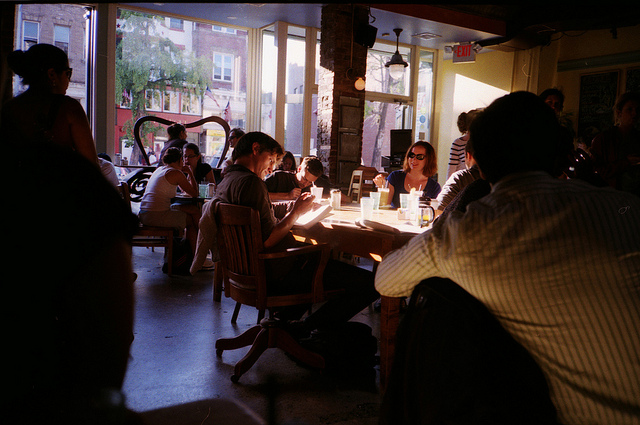 The lively space at Tryst. (Photo by Yonas Hassen
TRYST: Tryst, perhaps most known as Adam’s Morgans quirky coffee house hangout of choice, also has a small selection tea drinks. Get comfy with a matcha green tea or chai latte or sip on City Harvest green and black teas—20 percent of all proceeds benefit the City Harvest nonprofit. —Travis Mitchell
Tryst is located at 2459 18th Street NW.
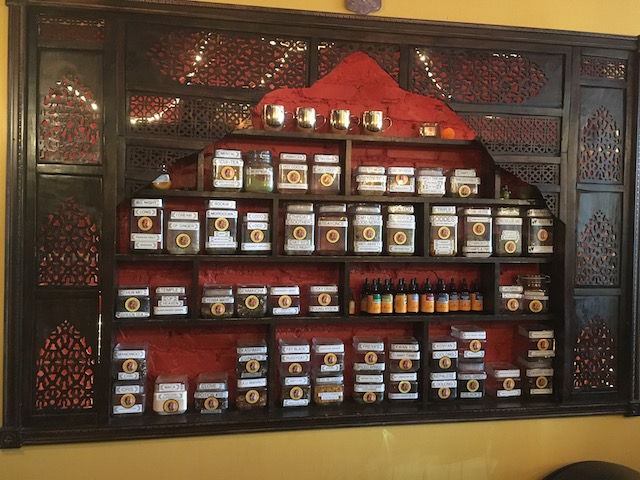 Calabash Tea & Tonic has a decorative stash. (Photo by Nathan Wilkinson.)
CALABASH TEA & TONIC: The difference in Calabash’s approach to tea is subtle but immediately apparent when the server asks you “How are you feeling today?” not, “How are you doing?” This is followed by, “is there anything about your health you would like to work on?” Calabash Tea & Tonic emphasizes the tonic, or herbal remedy, aspect of teas and other plants. It’s the brainchild of Dr. Sunyatta Amen, an herbalist who specializes in holistic medicine. She has blended teas from the roots and herbs of her Jamican, Cuban, and Moroccan ancestry, with the intent of curing what ails you. Blends with fun names like All Night Long with green tea, ginseng, and passion fruit and Love Potion #10 with Assam black tea, ginger, and spices will get you in the mood for love. My Last Nerve is a blend of St. John’s wort, chamomile, and hops that aims to reduce anxiety, and Kwan Yin with ginger, chamomile, and peppermint will calm a sensitive stomach. The décor mixes Asian and North African rugs and upholstery patterns, and the hypnotic music makes Calabash a much-needed escape from the hustle of 7th Street. —Nathan Wilkinson
Calabash Tea & Tonic is located at 1847 7th Street NW.
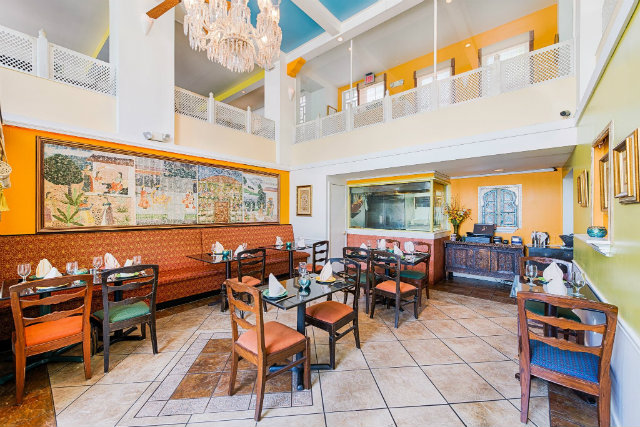 Photo via Facebook
INDIQUE: High-quality tea houses generally aren’t suitable for laptoppers and may not offer a premium cup to go. Indique solves both problems. After 10 a.m. on weekdays, the acclaimed Indian restaurant serves housemade masala chai to go. The chai blankets the senses with a handcrafted spice blend that leaves you wanting more—which is entirely possible since it is unlimited for members of Indique’s new Chai & Wifi coworking space. Workspace and freeflowing chai are available from 10 a.m. to 4 p.m. on weekdays. If you must, there’s also coffee, bagged tea and herbal infusions. But, why, when there’s chai?!—Andrea Adleman
Indique is located at 3512-14 Connecticut Avenue NW
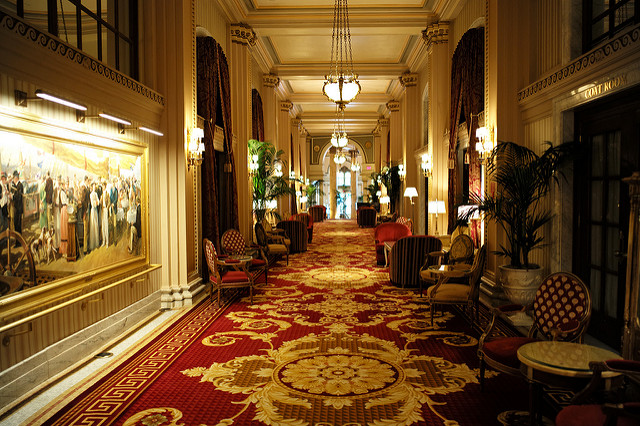 The Willard Intercontinental Hotel is the standard for high-class low tea. (Photo courtesy of Flickr.)
PEACOCK ALLEY: Luxury hotels have a tradition of putting on extravagant tea services since the British Empire stretched across the globe. The Willard Hotel’s longstanding afternoon tea, served Friday through Sunday from 1 to 4 p.m., is a sumptuous service in their elegantly appointed Peackock Alley, at tables along the hotel’s heavily draped main hallway. Teas are steeped in individual pots and scones, pastries, and tea sandwiches deck the three-tiered silver trays. This is a reservations-only experience and one should dress for the occasion. Afternoon teas are priced at $49 dollars for adults and $22 for children between the ages of 3-12. The Willard Hotel also does a holiday tea every day throughout December (excluding December 24, 25, and 31st) that has become a popular pastime for families who like to enjoy the Christmas cheer in style. —Nathan Wilkinson
Peacock Alley is located at The Willard Intercontinental Hotel 1401 Pennsylvania Avenue NW.
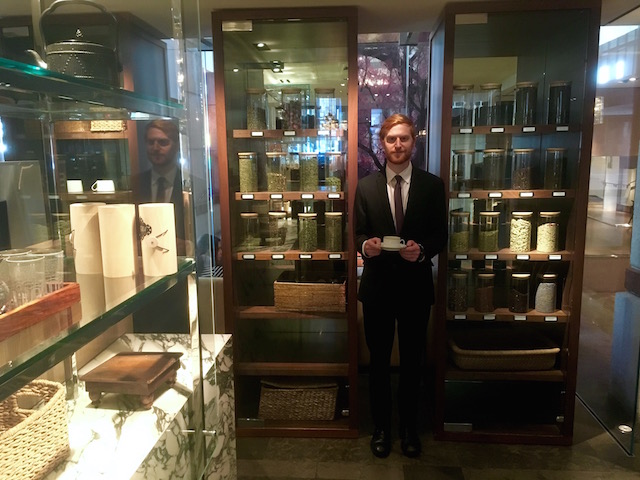 Tea expert Christian Eck in Blue Duck Tavern’s Tea Cellar curates some of the finest teas in the city. (Photo by Nathan Wilkinson.)
PARK HYATT HOTEL: Another opulent hotel tea service, Park Hyatt Hotel puts their focus on the rare tea selection served in their Tea Cellar, a well-lit space surrounded by wall-length glass humidors of tea equipage, jars of loose leaves, and the finest quality aged tea bricks. While any of these excellent teas can be purchased by the pot throughout the week, Blue Duck is beginning fall and winter tea service on Sundays from 3 to 4:30 p.m. For $55 dollars, enjoy a three-course selection including scones, muffins, and croissants, served with lemon curd, raspberry jam, and Devonshire cream. This is followed by savory items such as lemon pepper macaroons with smoked salmon, a roast beef with horseradish and watercress with brioche bun, or trout rillette with pickled vegetables. The third course is a choice of seasonal fruit tart, chocolate bonbon or truffle, and other pastries.
Park Hyatt’s tea expert, Christian Eck, explains that this table service tea, known as “low tea,” is traditionally the more aristocratic social gathering associated with afternoon tea. “High tea,” as it is mistakenly called, refers to more proletarian afternoon breaks where tea and snacks are taken while standing. A pot of house tea is included with the meal, but Eck encourages guests to try one of their more select pourings, which range from $10 to $30 dollars or more (these come at a $10 dollar discount with the Sunday service.) “Here we are pouring some of the very finest teas you will never see poured in a tea shop,” Eck says. One look at the aged Pu-Ehr section of the menu confirms it with their priciest Emperor’s Masterpice, which goes for $300 dollars a pot and can be infused many times over. Eck is currently accepting reservations for an exclusive “master tasting” of teas on December 17 for $85 dollars. He will lead guests through a variety of Asian and Western teas paired with food designed to showcase the multifarious flavors and preparations of tea. —Nathan Wilkinson
Blue Duck Tavern is located in the Park Hyatt Hotell, 201 24th Street NW.
TOLI MOLI: This is literally a teaser. Can’t touch this (yet). This winter, the Union Market stall best known for its sweet dessert drinks will brew hot Burmese tea. Toli Moli will serve the traditional Burmese preparation, a sweet, milky cup of imported tea. Make a mental note and stand by for the changeover from iced tea. Or go ahead and try the iced version to satisfy your curiosity about this lesser known South Asian tea.—Andrea Adleman
Toli Moli is located at 1309 5th Street NE