The Manhattan is the go-to favorite of the year-long whiskey drinker. But for bars and restaurants hoping to appeal to Manhattan lovers, putting the cocktail on the menu is not a simple decision.
This granddaddy of cocktails is really easy to make at home and it’s the DIY drink of choice for most whiskey fans. They will still order one when they go out, but when it comes to stirring three ingredients (whiskey, sweet vermouth, bitters) together, the home bartender is often nearly as skilled at this cocktail as the professionals. So what can bartenders do to a Manhattan to get whiskey drinkers to pay top dollar for their “usual?” The answer is to put it in a barrel.
Something magical happens to grain alcohol when it is aged in oak barrels. The liquor soaks into the wood staves and absorbs vanillin, the chemical compound that gives whiskey a vanilla-like flavor. The spirit becomes darker, its sharp flavor notes more rounded, and its scent softer and more appealing. This is great for making whiskey, but does it really do anything for a cocktail? After all, aren’t the whiskies used in Manhattans already aged?
To be sure, aging a cocktail in oak isn’t a guarantee of quality. In fact, it can be a risky endeavor. With each barrel you use there’s a danger that the drink will come out of the barrel tasting worse, or, almost as bad, no different from when it went in. Given that barreled cocktails age between four and eight weeks, there is the potential for a lot of time wasted with nothing to show for it.
Much of the difference with aging cocktails has to do with how a barrel was used previously. If it is a new barrel, you can expect the cocktail to pick up plenty of oak flavor. If the barrel formerly held whiskey, some of the old whiskey will be present in the mixture. And if a Manhattan was previously in the barrel, you get something very close to your last batch, which is good for consistency.
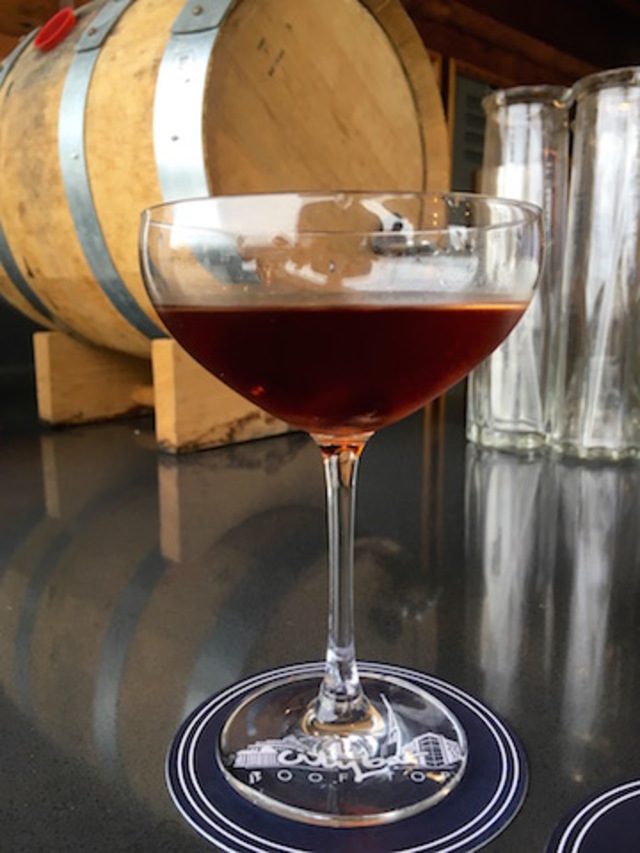
But the question still stands: “Does the barrel make the Manhattan?” When done well, the answer is a resounding “yes!”
Take The Heights, (3115 14th St. NW) a neighborhood restaurant with a burgeoning but solid barreled cocktail program. They make their Manhattan with Evan Williams bottled in bond bourbon, a spirit that tastes a little young by itself but has a pleasant hazelnut aroma. Aging it with sweet vermouth and bitters gives the whiskey maturity, softens the harshness of the 100-proof heat, and lends a sort of cohesiveness to the drink where none of the ingredients clash with each other—which can be a problem with young whiskies.
Of course, you can also improve much older whiskies, which is what The Rye Bar (1050 31st St. NW) has been doing for years with their Dad’s Hat rye, Dolin sweet vermouth, and Byrrh Quinquina Manhattan. After a number of weeks, beverage manager Diego Zeballos decides when the cocktail is mature enough to move it into a glass barrel to prevent it from over-aging. The result is a very rich but pleasingly bittered Manhattan with barreled wine notes from the Byrrh, an aged wine aperitif flavored with cinchona barks. Rye Bar’s Manhattan is $22 dollars and worth every penny.
At District Commons (2200 Pennsylvania Ave. NW), barreling a Manhattan means blending its own whiskey recipe. The bar takes 32 different whiskies, Quady Vya sweet vermouth, and orange bitters and make them get along with each other for four to six weeks. This feat produces a one-of-a-kind drink simply because the combination of ryes and bourbons is unique to this restaurant. Despite this accolade and their indulgent pours from the barrel, their Manhattan is a steal for only $14 dollars.
When does a gin drink become a whiskey drink? When you age it in oak. Gin can never technically become whiskey because of its herbal infusions, but it picks up whiskey flavors from the barrel’s wood and so becomes closer to whiskey over time. That’s the idea behind City Bar’s (400 E St., SW) barreled Martinez. The Martinez is the sweet vermouth forerunner of the Martini and a close cousin to the Manhattan. Aging Bombay Sapphire (with bitter Carpano Antica vermouth and a hint of Grand Marnier) produces a whiskey-like cocktail with only subtle gin notes and an oaky roundness that one doesn’t find in dry gins. If you go to the rooftop bar of the Hyatt Place in Southwest, don’t miss this beauty for $15 dollars.
Byrrh Barrel Manhattan
Buying a small, six-bottle, barrel for home aging is easier than ever now that there’s a whole industry behind it. Check out Deep South Barrels for products and tips on curing barrels and aging cocktails. Byrrh (pronounced beer) is already aged in oak. It ties the vermouth and whiskey flavors together and lends an interesting whiff of black currants to the mix. For DIY aging, don’t bother with bitters until you pour out the drink and stir it on ice. When blending spirits, use four bottles of bourbon or rye (or both) a bottle of sweet vermouth and a bottle of Byrrh. Leave it in the barrel for at least four weeks, if you can keep from drinking it for that long.