Rachel Kurzius
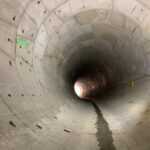
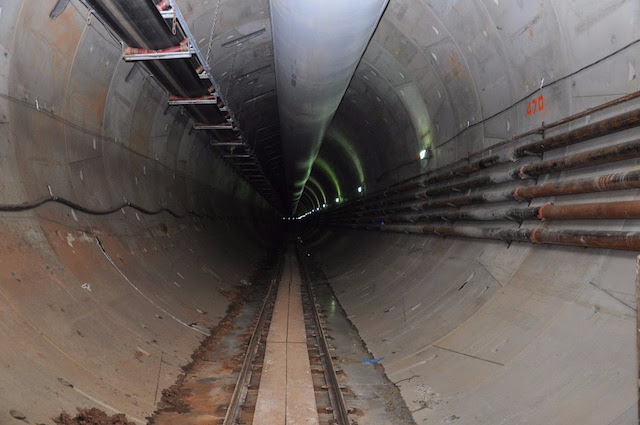 Inside the Anacostia River Tunnel. (Photo courtesy of DC Water)
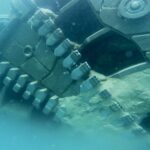
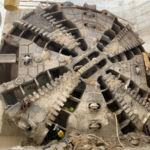
A year and a day after it started, the boring machine known as Nannie completed its work on the Anacostia River Tunnel on Saturday.
The 1,248 ton machine created a 23-foot diameter tunnel beginning at RFK Stadium that ends at the Poplar Point Pumping station in Southeast, approximately 100 feet underground. It goes underneath the Anacostia River, CSX railroad tracks, and the Green Line. Named for a prominent black educator and activist from D.C., Nannie began work on the tunnel last November.
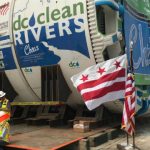
The tunnel is part of a larger plan: the Clean Rivers Project, which DC Water says is the largest city infrastructure undertaking since the construction of the Metro system. Like many older cities, D.C.’s sewer system carries both sewage and storm runoff, which can lead to flooding on land and waste in nearby rivers. (The historically polluted Anacostia got an “F” this June in a scorecard from the Anacostia Watershed Society.)
The entire project—which traverses underground 13 miles from Bloomingdale to DC Water’s Blue Plains Wastewater Treatment Plant in Southeast—is designed to supplement the existing sewer system by capturing excess storm water and curb area flooding.
After phase one, the Anacostia River Tunnel will serve as a storage tank for water until the storms pass—it can hold more than 38 million gallons of combined sewage, according to DC Water.
By the end of phase two, expected to occur in 2022 or 2023, storm water will be piped to Blue Plains for treatment before its release through the Northeast Boundary Tunnel. That’s the final of the project’s four major tunnels, utilities construction of which has already begun.
Lady Bird finished the anchor of the Clean River Project after two years and four-and-a-half miles of tunneling from Blue Plains, to which the Anacostia River Tunnel connects.
Lucy Diggs Slowe, the machine for the First Street Tunnel project finished boring last December, after breaking ground in June 2015, though construction in the Bloomingdale area continued through this October.
While the First Street Tunnel is just about ready for use and will stand on its own until the Northeast Boundary Tunnel is done, there is still work underway until the connected tunnels from Lucy and Lady Bird can go on line, says DC Water spokesperson John Lisle. Specifically, they need to finish work on the pumping station and treatment facilities by Blue Plains. The completion of that will mark the end of the first phase.
DC Water says the project will ultimately reduce sewer overflow in local rivers by 96 percent, including 98 percent in the Anacostia. Lisle says the final price tag for the project is still close to the $2.6 billion price tag estimated in 2005.
As for the machine itself, Nannie belongs to the project’s contractor, says Lisle. It’s up to Salini-Impregilo, Healy, and Parsons whether to disassemble the machine and recycle it for parts, as Lucy was, or brought back to the surface like Lady Bird.
1 year and 1 day after my journey started, I have completed the Anacostia River Tunnel. Take a time lapse look at my handiwork. pic.twitter.com/z71OB1B6vU
— Nannie (@NannieTBM) November 7, 2016
Updated with information from DC Water spokesperson John Lisle, who initially said the price tag for the project had increased.