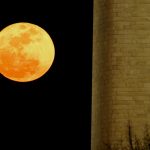
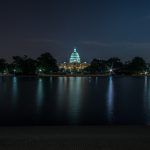
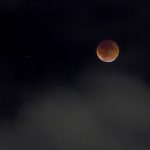
Last night, D.C. saw the biggest supermoon since 1948. And Washingtonians captured photos at scenic locales from Constitution Gardens to the National Arboretum.
The moon appeared 221,524 miles away from the center of the Earth—which is just 85 miles from the closest it can possibly approach us. On average, the moon and Earth are about 238,900 miles apart.
The supermoon was visible yesterday evening, reaching its closest point at 6:15 a.m. this morning.
If you missed last night’s shot at the moon, you’ll have another opportunity to see it this evening (although under cloudier conditions). “The difference in distance from one night to the next will be very subtle,” according to Noah Petro, deputy project scientist for NASA’s Lunar Reconnaissance Orbiter (LRO) mission. “Any time after sunset should be fine. Since the moon is full, it’ll rise at nearly the same time as sunset, so I’d suggest that you head outside after sunset, or once it’s dark and the moon is a bit higher in the sky.”
Astrologer Richard Nolle coined the term supermoon in 1979—it means a full moon coincides with with perigee (the moon’s closest point to Earth). According to NASA, there won’t be another one this large until 2034.