Rachel Kurzius
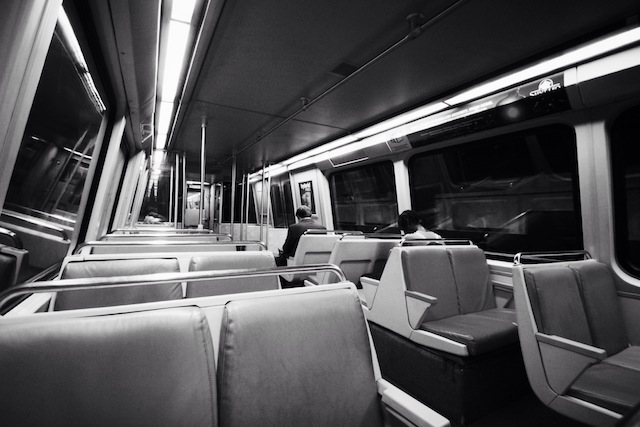 Photo by Paul Cortez.
Metro has made it clear that, once SafeTrack is over, it wants to trim hours of operation for the system on a more permanent basis so that it has more time to perform maintenance on the tracks.
In other words, late-night service is on the chopping block.
Now, after providing four different ways to cut back eight hours of service, Metro has decided which one it will recommend for approval at Thursday’s board meeting.
The system currently opens at 5 a.m. on weekdays and 7 a.m. on weekends. Prior to SafeTrack, Metro operated through midnight from Sunday through Thursday and through 3 a.m. on Fridays and Saturdays. But under Proposal 3, the hours would be:
- Monday—Thursday: 5 a.m. through 11:30 p.m.
- Friday: 5 a.m. through 1 a.m.
- Saturday: 7 a.m. through 1 a.m.
- Sunday: 8 a.m. through 11 p.m.
The change would kick in July 1, 2017.
Here are all four options that Metro floated:
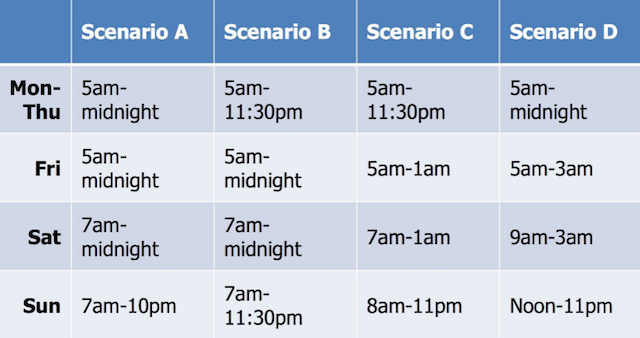 Image via Metro.
Metro says that Proposal 3 (scenario C in the chart above) was the most popular of the choices, with 45 percent of respondents preferring it to the others (though a “none of the above” option doesn’t appear). Among those people who favor the third option are low-income, minority, and “greatly impacted” customers, per the agency.
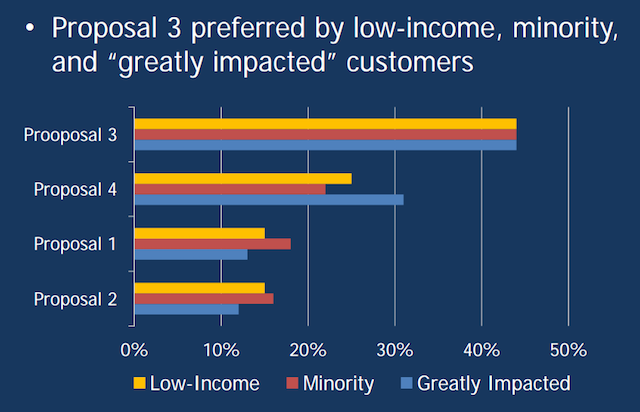 Image via Metro.
The agency says that those figures come from the almost 16,000 public comments it received during October, the majority of which were submitted online. During a nearly 10-hour public hearing in late October, people pushed for the agency to reconsider.
Cutting late-night service has received significant pushback from local public officials. The D.C. Council passed a resolution introduced by Board Chair and Ward 2 Councilmember Jack Evans to to “declare the sense of the Council in support of maintaining late night service hours.” Mayor Muriel Bowser publicly questioned the need for additional maintenance hours.
We’ve reached out to Evans for a response, and will update if we hear back. He has said in the past that he’d oppose anything that would shorten operating times for the system. Evans added the proposal to tomorrow’s council breakfast agenda, reports Martin Di Caro of WAMU.
Maryland officials have also expressed their concern “about the long-term effect of … service changes,” including impacts on public safety, people who work late-night shifts, and developments built around Metro stations. However, both Virginia and Maryland WMATA board members have signaled in recent days that they would back late-night cuts.
Metro says it will make up for the decrease in train services with additional bus routes and more frequent service, to the tune of an estimated $2 million a year. A budget proposal released in November, however, did not include the supplemental bus service.
A wide majority—85 percent—of respondents told Metro that the they wouldn’t uses buses as a primary alternative to trains, with 33 percent saying they’d “never” use the buses as an alternative.
For those who eschewed buses, 44 percent preferred taxis and ridehailing services, 22 percent cars or carpooling, and 22 percent said they’d opt not to take the trip or do so at a different time.
Metro Span of Service Recommendation by Rachel Kurzius on Scribd