The holiday season can be an emotionally overloaded time for many families, regardless of faith or tradition. Getting together during the December holidays may not be easy, but here are some tips from InterfaithFamily.
This year, the first night of Hannukah falls on Christmas Eve. If you need tips and pointers about this holiday, use the InterfaithFamily Hannukah Booklet so everyone knows what’s going on.
Here are eight tips to navigate this holiday season (one for each night of Hanukkah!)
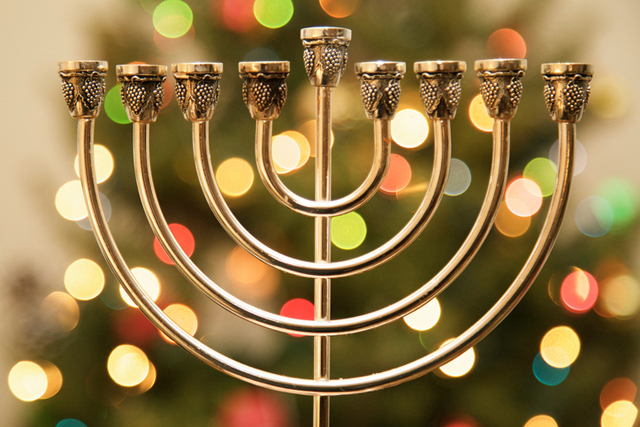
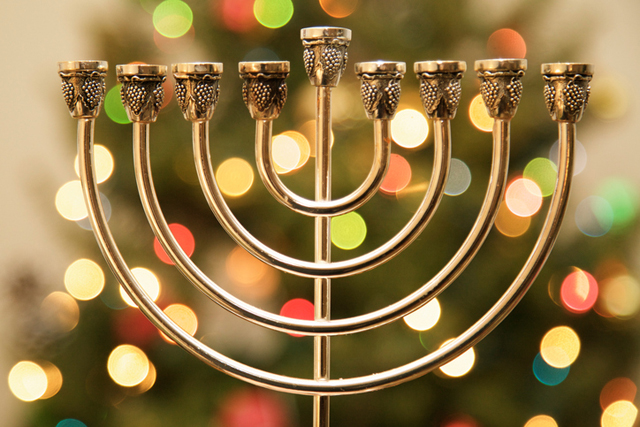
1. You can bring a menorah to Christmas
Sharing your holiday traditions with others, or inviting your partner to share theirs, can be a great way to incorporate everyone, but make sure you check with the host first and do not pressure anyone who isn’t interested to participate.
2. Make sure everyone can understand
To go along with #1, if you plan to say blessings or sing songs in Hebrew or another language, be sure to explain what the words mean. Here are some resources that can help.
3. Don’t bring a ham to Hanukkah dinner
In this age of multiple dietary needs (gluten-free, dairy-free, paleo, locavore, or what have you) most people are sensitive to the foods they serve or bring to holiday gatherings. Here are some ideas.
4. Be equal opportunity
Who doesn’t love a good holiday cookie?! Why not bring a selection of both Hanukkah and Christmas cookies? Check out some recipes here.
5. The right attire might be an ugly sweater
Maybe everyone in the family really loves those cheesy sweaters – and you’re in luck because now you can find both Christmas and Hanukkah sweaters!
6. Don’t light the Christmas tree on fire with the Hanukkah candles (or the cat’s tail)
Never leave open flame unattended.
7. Assume good intentions
When mishaps and misunderstandings occur (and they will, because well … that’s life), give the other person the benefit of the doubt. Heartfelt conversation is much needed this time of year.
8. Check on expectations ahead of time
Have you noticed a theme here? The best way to get through an interfaith holiday season is to clearly communicate about expectations. If you are hosting, let others know what is in store. If you are a guest and unsure, then ask. Need some help? Check out InterfaithFamily’s holiday guide.
And beyond the holiday season, if you and your partner are in an interfaith relationship, come discuss all of what that means at InterfaithFamily’s upcoming Love and Religion workshops or check out other events in the DC area.
This post is brought to you by InterfaithFamily/DC in partnership with The Jewish Federation of Greater Washington.