 Rachel Sadon
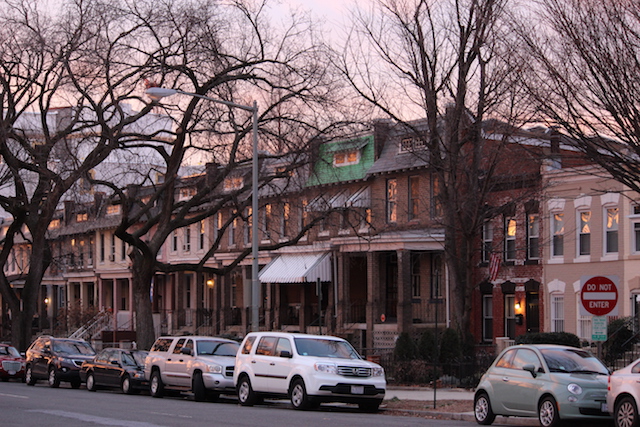 A rash of robberies in Hill East and concerns over repeat offenders prompted a local ANC commissioner to seek conviction rate data from the U.S. Attorney’s Office. (Photo by Jim Havard).
The Department of Justice has handed over prosecution data that an ANC commissioner had been requesting for more than a year, the culmination of her battle to learn more about conviction rates in D.C. With the data finally in hand, though, Denise Krepp says it is just a “starting point” in her efforts to address violent crime.
Like others in her community last year, Krepp was growing increasingly alarmed by crimes committed in Hill East, including a rash of armed robberies and a brutal rape. Hundreds of people turned out to a crime meeting to express their fears—and concerns that arrests weren’t leading to safer streets.
“I could find information about the number of arrests, but not the number of prosecutions,” Krepp says. D.C.’s U.S. Attorney’s Office is the only one in the country that does not release its prosecution data. So she asked for them, to little avail, before filing a Freedom of Information Act with the DOJ.
When the department responded that it could be a costly endeavor, Krepp decided she was willing to foot the bill of $1,000 on her own. Instead, neighbors pitched in and helped raise nearly double that amount through a bake sale that garnered media attention.
But when the DOJ responded to the FOIA request, the department said that it doesn’t keep track of the information that Krepp sought: prosecution data by ward. Believing that the information existed, Krepp filed a lawsuit in May.
Two months later, the DOJ provided the same statistics that she was looking for—except they were sorted by police district rather than ward—to the Senate Judiciary Committee.
D.C.’s police districts intentionally don’t line up to ward boundaries, so it is much more complicated to track crime and prosecution data that way. “There is no correlation between the District and the wards because we don’t want to have any political influence,” according to MPD spokesomwan Karimah Bilal.
Krepp said that the statistics by police district would satisfy her request, but the DOJ continued to withhold the information.
In October, chair of the Senate Judiciary Committee Sen. Charles Grassley (R-IA) sent a scathing letter to U.S. Attorney Channing Phillips accusing the department of failing to embody the administration’s proclaimed ‘spirit of cooperation.’”
“Because of the Department’s stonewalling and its imposition of unnecessary, bureaucratic hurdles, Ms. Krepp and the residents of her neighborhood have been deprived of access to important information and the Department is wastefully expending taxpayer dollars,” Grassley wrote. “I urge the Department to promptly produce the responsive data to Ms. Krepp that the Department produced to this committee more than three months ago.”
Krepp says that a judge was less sympathetic to her request in court last week, since the Judiciary Committee had already made the data available.
“She demanded to know why I was still in court when I already had the information,” Krepp says. “My response to that is [the DOJ] just gutted the principal of FOIA by doing that. When you submit a Freedom of Information Act, usually the individual who submits the request gets it. Not everybody is going to have a Senator Grassley who is going to send a letter. There’s like a .001 percent chance of that happening.”
In a recess, the DOJ agreed to turn over the information if both sides handled their own legal fees. But in a cover letter with the file, an assistant U.S. attorney wrote that it shouldn’t be viewed as a response to the FOIA request.
“As we explained all along, the U.S. Attorney’s Office does not compile information in the way that it was originally, and repeatedly, requested,” spokesman William Miller told DCist in a statement. Hill Rag first reported on the conclusion of the case.
For Krepp, though, the battle was never meant to be about obtaining the data. “It was a starting point,” she says, in an effort to address what she believes is an alarming failure to prosecute repeat offenders.
When Cathy Lanier stepped down from her position as police chief, she sounded a similar warning. “The criminal justice system in this city is broken,” Lanier told The Washington Post in an exit interview. “[Residents] want more police. They want more arrests … But if we’re arresting the same people over and over again, there’s got to be some questions being asked.”
A recent series of Post stories raised some of those issues, including a lengthy examination of how a man convicted of rape repeatedly fell through the system and another on the Youth Rehabilitation Act, which can result in shorter sentences and expunged records for some young offenders.
Krepp plans to go after the YRA next, working with several other ANC commissioners to draft a piece of legislation that would limit the act to non-violent offenses. “My hope is that once the councilmembers see the number of ANC representatives that support this, they’ll understand that this is a citywide issue,” she says.
As for the data that the DOJ finally turned over, Krepp says that she has handed it over to victims’ rights groups to analyze it against MPD data. “I’m not the only one that DOJ has tried to stonewall in the past … now we know how to ask for it in the future.”
DOJ Prosecution Data by RachelSadon on Scribd