 Rachel Sadon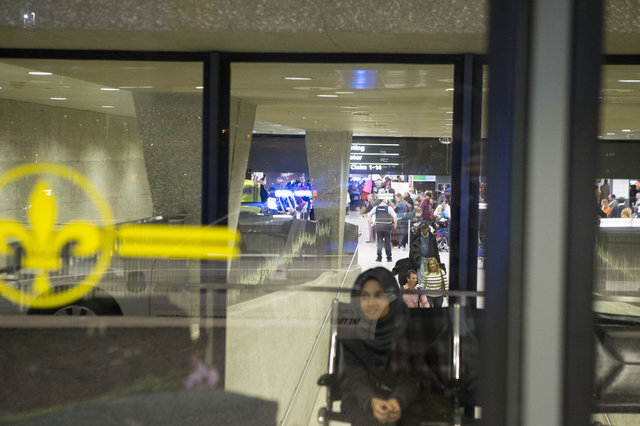
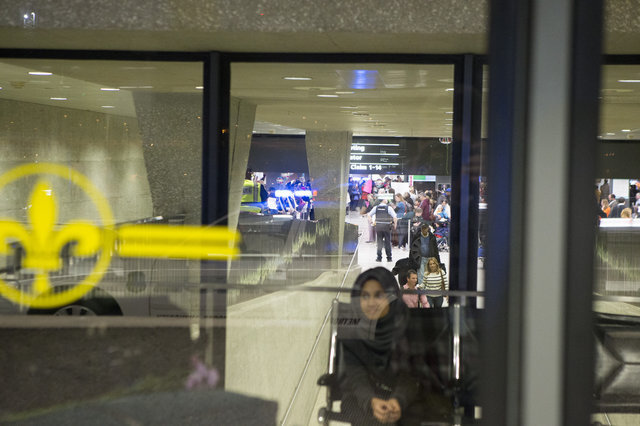 (Photo by Alex Edelman)
A federal judge has ordered the federal government to turn over a list of all Virginia residents who were denied entry or deported since President Donald Trump signed an executive order barring people from seven majority-Muslim countries from entering the United States.
“This is an encouraging development because the fact is we still don’t know just how widespread the damage from this ban is,” said Virginia Attorney General Mark Herring, who filed the request as part of a motion that puts the onus on border officials to prove they’re not in contempt of a federal court order. “I’m glad we’re finally going to get some answers about exactly what happened in the chaotic hours when this ban was first being implemented.”
On Saturday, a federal judge ordered that lawyers gain access to legal permanent residents at Dulles International Airport’s secondary inspection area. It followed a lawsuit filed by the The Legal Aid Justice Center and Mayer Brown on behalf of the Aziz brothers, two Yemeni green card holders denied entry to the U.S., and 60 other John Does.
Customs and Border Protection denied that it was detaining any legal permanent residents, but the agency does not define holding people in secondary as detainment.
Lawyers counter that legal residents were not free to go, and were therefore detained. But without access to the secondary detention area, they lacked proof of who or how many people were being held.
Representatives and senators who attempted to speak with CBP officials at Dulles were rebuffed through intermediaries. “When you are not willing to answer questions, I can only conclude that you’re violating law and in contempt of court,” Congressman Gerry Connolly (D-VA) told DCist. “I think it shows a special arrogance that somehow they think they’re above the law.”
Herring formally requested information about how many Virginia residents—including lawful permanent residents, students, and individuals with work visas—were affected by the travel ban at Dulles earlier this week, but did not hear back. Judge Leonie Brinkmena ordered that the government turn that information over by February 9.
Earlier, she also extended the temporary restraining order—which states that lawyers must have access to legal permanent residents at Dulles International Airport’s secondary inspection area—and allowed the commonwealth to join the Aziz v. Trump case. That means that the lawsuit can continue even if the individual plaintiffs’ cases are resolved.
“It’s quite clear not all the thinking went into it that should have gone into [the executive order]. As a result, there was chaos,” Brinkmena said.
The uncertainty has continued—with different government agencies citing different figures for how many people were affected by the travel ban (a DOJ attorney said 100,000 in court today; the State Department says it is less than 60,000). Moreover, it remains unclear if the visas are permanently or temporarily revoked for the 90-day period. When asked at a press conference today, Press Secretary Sean Spicer said “I’ll have to get back to you.”