Rachel Kurzius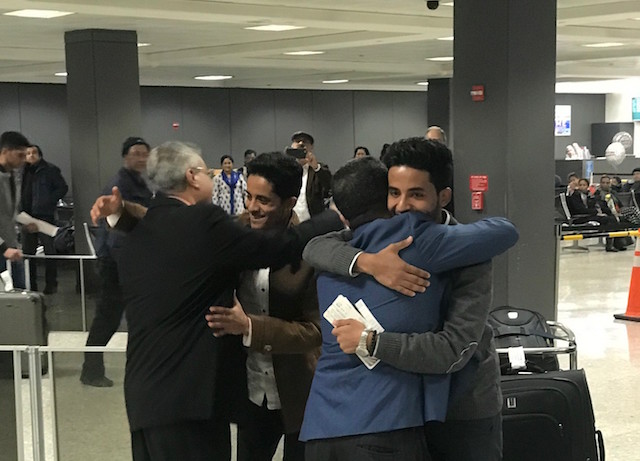
Aziz Brothers Arrive at Dulles from Legal Aid Justice Center on Vimeo.
After more than a week of uncertainty and legal motions, Tareq and Ammar Aquel Mohammed Aziz embraced their father Monday morning at Dulles International Airport.
“Thank you for every single person who tried to help bring my kids back,” said father Aqel Muhammad Aziz at a press conference at Dulles, as people behind him waved the American flag. “I’m so happy. This is America. America is for the people.”
The Aziz brothers, age 19 and 21, are green card holders from Yemen who were slated to join their father after spending a year and a half clearing the necessary security checks to become legal permanent residents.
Two hours into their flight from Ethiopia, Donald Trump signed an executive order that temporarily barred citizens and refugees from seven majority-Muslim countries from entering the country. When they arrived at Dulles on January 28, the brothers were handcuffed and detained, they say.
Lawyers with the Legal Aid Justice Center and Mayer Brown filed a lawsuit against the Trump administration in their name on Saturday morning—one of the first such suits in the country.
By the time a Virginia federal judge issued a temporary restraining order that evening, the Aziz brothers were already on a flight back to Ethiopia. They had signed away their green cards after Customs and Border Protection officials at Dulles told them they’d otherwise be barred from the U.S. for five years, according to court filings.
Had lawyers been able to advise the Aziz brothers, they would have told them not to sign anything. (The court order gave lawyers access to legal permanent citizens being detained at Dulles, though attorneys and lawmakers say CBP has not been complying.) Instead, the brothers were stranded for days in the Addis Ababa airport before getting deported to Djibouti.
The complaint says that as many as 60 John Does faced similar experiences.
While the Aziz brothers are now in the States, the suit in their name will continue to move forward. The commonwealth of Virginia has joined the lawsuit, and in court last Friday U.S. Federal Judge Leonie Brinkema ordered that the federal government must provide a list of all Virginians who were denied entry or deported as a result of Trump’s ban by February 9.
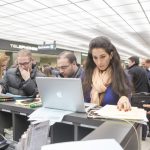
In addition to the work of LAJC, hundreds of lawyers have been volunteering with efforts to help people affected by the executive order. Calling themselves Dulles Justice, the attorneys involved say that a federal judge’s ruling to block the ban nationwide hasn’t slowed their work.
“Even if the order continues to be stayed, we still have issues with enforcement,” says D.C. attorney Sara Dill. Dulles Justice is coordinating with attorneys’ efforts at other airports in the U.S. as well as internationally, where they’re receiving reports that airlines continue to block people from boarding planes.
The group has a new concern—”that even if people are brought to the U.S. under immigration law, if Customs and Border Protection and Immigration and Customs Enforcement assert suspicions of terrorism or national security threat, they can detain people,” says Dill.
That’s one reason why lawyers continue working shifts at Dulles and other airports.
“If individuals are coming into U.S. and are potentially at risk, reach out to attorneys ahead of time,” says Dill. “The best thing for people to know is to get in touch with a lawyer before they board the plane.”