 Rachel Sadon
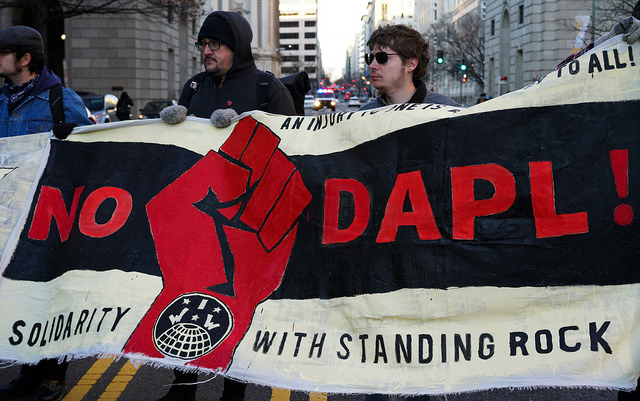 (Photo by Victoria Pickering)
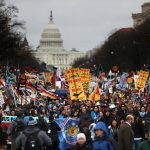
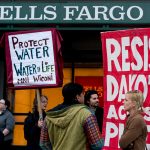
Usually the protests happen outside 1600 Pennsylvania Avenue NW. This afternoon, though, a crowd will rally up the block, at the Wells Fargo branch on 1700 Pennsylvania Avenue NW, part of a growing call to cut ties with the bank over its investments in the Dakota Access Pipeline.
“We really want to show the people with the money to fund these pipelines it is not okay to invest in these projects that are going to contribute to climate change and infringe on indigenous and human rights,” says Charlie Jiang, an organizer with the local chapter of 350.org.
350 DC is joined by Rising Hearts, Black Lives Matter DC, Showing Up for Racial Justice DC, and other groups in a new coalition that will lobby for the D.C. government to divest from Wells Fargo.
The campaign follows moves in other cities to end relationships with the bank. The Seattle City Council voted unanimously last week to stop doing business with Wells Fargo; the city will pull $3 billion after its contract expires in 2018. The City Council in Davis, California also voted unanimously to withdraw its business, and both Santa Monica and West Hollywood are also considering doing so.
Jiang says the coalition is still trying to figure out exactly how much business D.C. has with Wells Fargo, but the group has already begun having preliminary conversations with D.C. councilmembers about the call to divest.
“We are hopeful and at this point optimistic that D.C. will become a part of this movement and actually divest from Wells Fargo. We believe in our city,” Jiang says. He declined to name councilmembers who have expressed interest, though, saying they are still in early stages of the conversation.
The rally this afternoon, at 4:45 p.m., is the formal launch of the campaign.
Today’s date wasn’t chosen at random: it is the deadline for opponents of the pipeline to vacate the encampment at Standing Rock.
Wells Fargo isn’t the only financial institution with ties to the pipeline, but Jiang says they are targeting the bank because of the size of its DAPL investment, along with allegations of predatory lending, its investments in private prisons, and recent fraud cases. The bank hasn’t responded to a request for comment.
“We hope that there’s a way to stop the Dakota Access Pipeline,” Jiang says. “But more than that, we want to send a message that any future attempts to invest in this type of dirty infrastructure will have consequences—financial and public shame.”
More information about the protest is available here.